


Stories from the hanging village
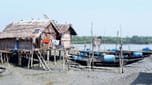
Sagar Sardar and Nasima Begum have no time off. After working outside all day, they now have to repair their house. Their home has collapsed under the pressure of a sudden tide. If they cannot repair it, all the family members will have to live under the open sky. Here, people build hanging houses supported by bamboo poles. River water flows beneath the wooden floors of their homes.
This is the reality in Kalabagi village, set beside the Sundarbans in Dakop upazila of Khulna district on the west coast of Bangladesh. The people of this village live in elevated houses to escape the tidal water. The Fakirkona part of the hanging village became an island after Cyclone Amphan. More than a hundred families are now completely isolated. During high tide, the houses of the hanging village appear from a distance as if they are floating on the water. Once upon a time, people in this area farmed and fished in the river for a living. Now some still fish in the river and work in the Sundarbans. However, many are forced to go elsewhere in search of work. Sagar Sardar and Nasima Begum are among them.
 For all latest news, follow The Daily Star's Google News channel.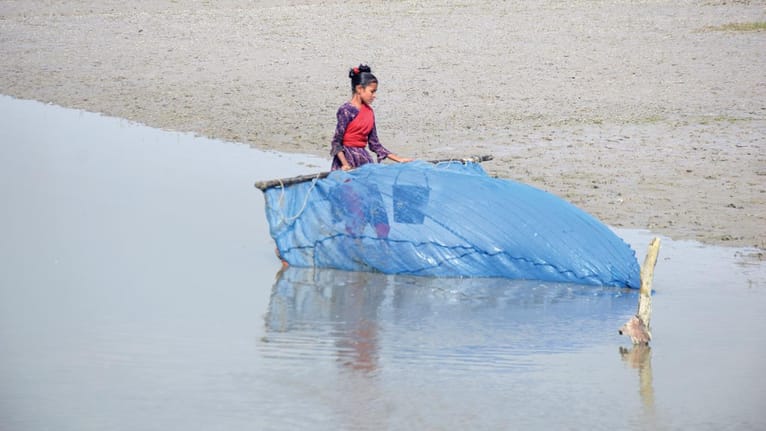
'My house was here, where the waves of the Shibsa River now flow. My days were going well with work. I used to cover my family expenses by cultivating a little land. But Cyclone Aila came and wiped out everything. We lost our land. Now our means of income are gone. We do not even have a place to live. In the end, we build a house like this. When the tide rises, we raise the wooden platform. Now this is our house. But it is temporary. It breaks down again and again,' said Sagar Sardar, pointing towards the Shibsa River.
Hanging village, Cyclone Aila's wound
Like Sagar Sardar's house, hundreds of homes in Kalabagi village hang from bamboo poles. People have been living in these structures for years. No, no one taught the people of this area this survival technique. They learned from disasters that if they want to live here, they must build houses in this way. All the houses in this village were once on land. There was no need for such hanging structures. Back then, there were courtyards in front of the houses. Children used to play in those courtyards. There were vegetable gardens around the homes. But that life was taken away by the devastating Cyclone Aila in 2009. These were the words of Mobarak Hossain, 65, a daily wage worker from the hanging village.
Abdus Sobahan Gazi, 70, lives in a small hanging house next to Kalabagi market. Even at this age, he goes to the river by boat. He earns his living by catching crabs. He has changed houses ten times in his life. Once he had a house on solid ground. Now he lives in a hanging house. Sobahan Gazi said that the 1988 cyclone caused the most damage in this area. After that came Cyclone Sidr. The 2009 Cyclone Aila caused extensive damage to Sutarkhali and Kamarkhola unions of Dakop upazila. Among them, Sutarkhali union suffered the most. The area remained underwater for about five years. The houses of Kalabagi were turned into hanging houses after Cyclone Aila struck. The village, once surrounded by greenery, has now become a barren expanse.
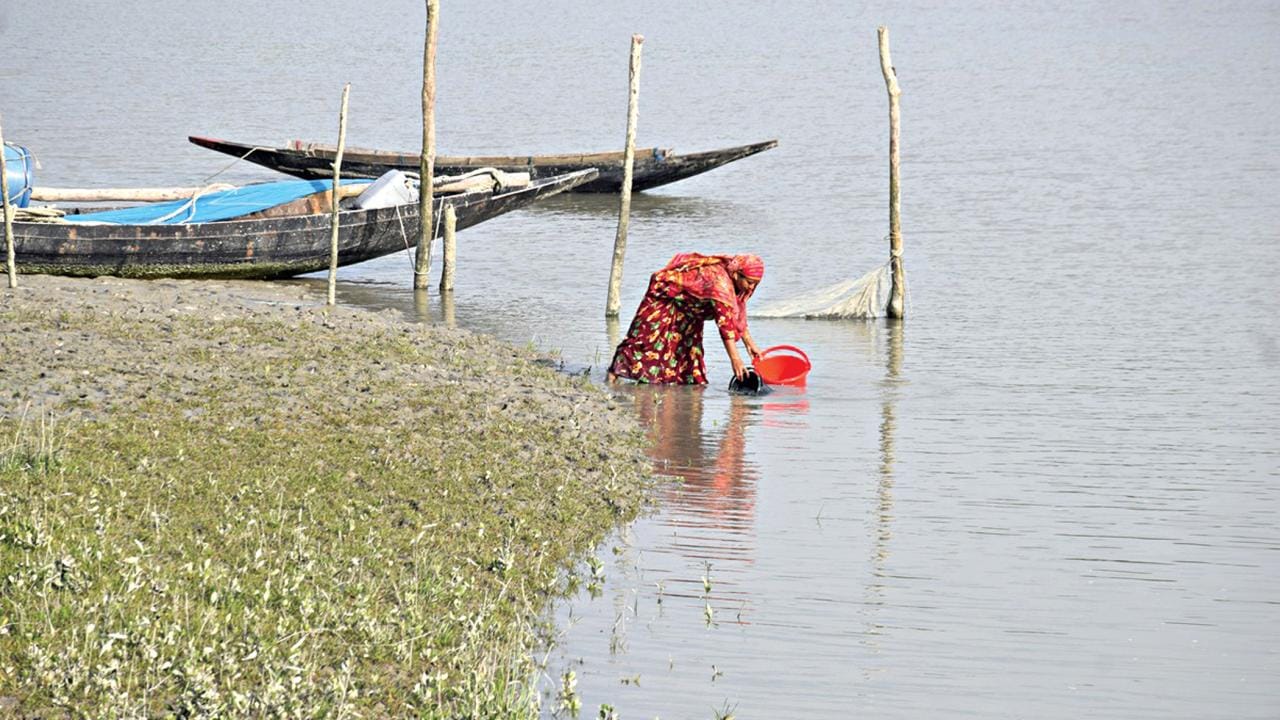
Cyclone Aila took away the good times of the people here. Kalabagi earned the new name, 'hanging village'. The village changed even more after Cyclone Amphan on May 20, 2020. The hanging village broke into two parts due to the strong impact of the cyclone. Now a portion of the village has become an island. About 100 families live on that small island adjacent to the Sundarbans. Local residents said that the level of the tidal waves gradually increased. Finally, people began building houses on high platforms to survive the rising tide. They have been living a very inhuman life for a century.
The misery is increasing
'The hungry river is coming towards us. Where will we go now? Our village has been completely destroyed. We have changed houses five times since Cyclone Aila hit. Natural disasters have changed the field of work and reduced income. Our precarious life is becoming more precarious,' said Solaiman Sheikh, 65, of Kalabagi village. Similar experiences were shared by Nani Gopal Mandal, 30, Arun Mandal, 50, and Kamrul Islam, 45.
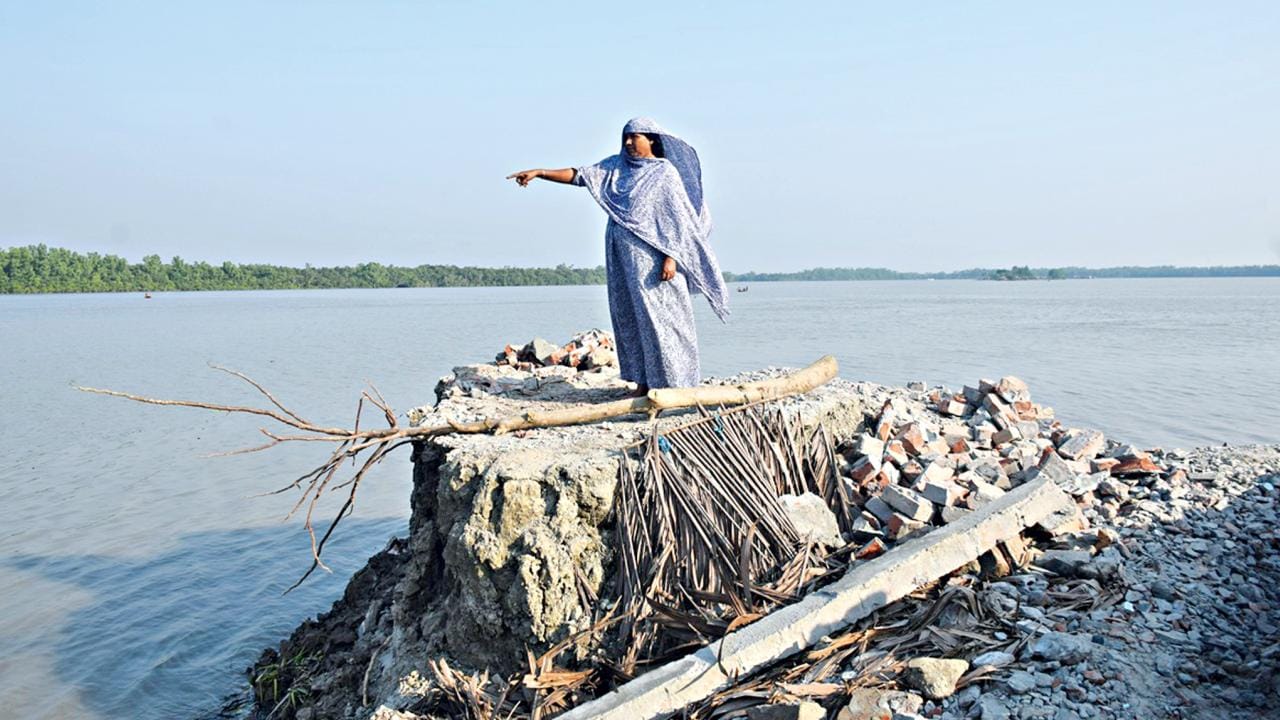
Solaiman Sheikh said, 'Whenever a disaster strikes, we face some kind of loss. And we need money to overcome that loss. Employment opportunities have also shrunk because of the disaster. There is no longer any chance to earn a living by working in the area. Collecting shrimp from the river was our main source of income. But for a few years, the government has banned catching shrimp from the river. As a result, we have to go to outside cities for work. We cannot earn the necessary income there either. Now it has become difficult for us to pull our lives together.'
Rafiqul Islam Khokon, executive director of a Khulna-based non-governmental development organisation, said, 'After Cyclone Aila, this area has become more vulnerable. Local residents have lost their land due to erosion. As a result, their suffering has increased. It has become difficult to take initiatives to solve their problems because land is needed to work on infrastructural development. If we want to develop them, we will have to take steps to relocate them.'
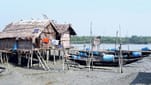
In Kalabagi, survival has become a quiet innovation. As land disappeared and tides rose, residents developed their own ways of living with disaster rather than escaping it. With no higher ground left, they built homes above the water, creating the hanging houses that now define the village. While other coastal areas rely on raised platforms or ropes to brace against storms, families here refine their own strategies—keeping wooden boxes ready, planning swift exits, and adjusting their homes as the river demands. These are everyday acts of resilience in a place fighting simply to survive.
Rafiqul Islam Montu is an award-winning independent journalist focusing on environmental issues, climate change, and coastal communities.
Send your articles for Slow Reads to slowreads@thedailystar.net. Check out our submission guidelines for details.
Comments