The Tofail Bhai I knew
Veteran politician Tofail Ahmed is no longer with us. His passing marks the departure of a bright star from Bangladesh's political sky.
My relationship with him goes back more than six decades, to the mid-sixties. In terms of age and academic standing, I was a few years junior to him. I always addressed him as Tofail Bhai.
Tofail Ahmed rose to prominence during the turbulent student movement of the late 1960s against Pakistan's Ayub regime. The historic mass uprising of 1969 provided the decisive context for his emergence as a national leader.
Before the uprising, he was not widely known as a charismatic or even a particularly popular student leader. He was an ordinary Chhatra League activist at the then Iqbal Hall, now Sergeant Zahurul Haq Hall. In those days, DUCSU elections were held through indirect voting. There were one or two DUCSU representative posts from each hall, whose holders were elected, along with the members of the respective hall unions, through direct voting. It was these representatives who subsequently elected the VP and GS of DUCSU through indirect election.
Under a rotational arrangement, it was decided in advance which hall would hold the VP or GS post for a particular term. That year, the VP position was allocated to Iqbal Hall. Although the Chhatra Union won in most of the university's other halls, the Chhatra League emerged victorious in Iqbal Hall. As Tofail Ahmed was the only elected DUCSU Representative from that hall, he became DUCSU VP unopposed. Meanwhile, Nazim Kamran Chowdhury of the NSF was elected GS of DUCSU.
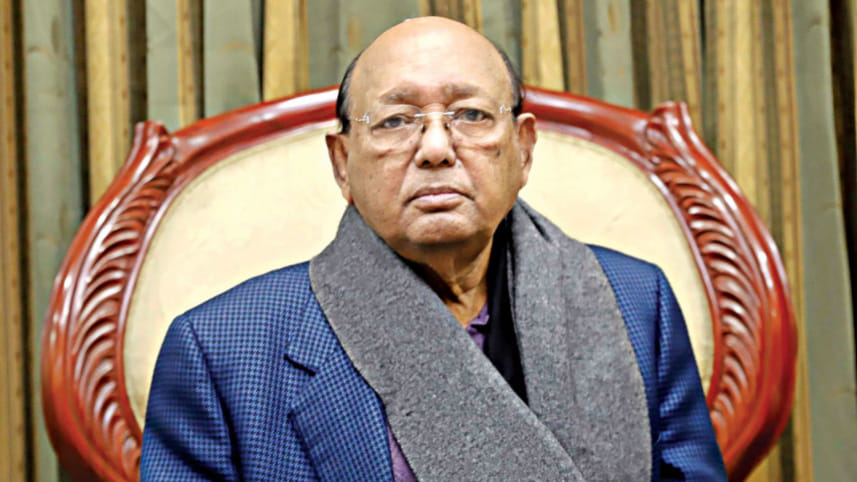
During the historic mass uprising of 1969, the Chhatra Sangram Parishad was formed, bringing together the four major student organisations, and the famous 11-Point Programme was adopted. It was decided that the DUCSU VP would serve as the spokesperson of the Chhatra Sangram Parishad. In that capacity, Tofail Ahmed emerged as the movement's principal voice. He conveyed its decisions, programmes, and calls to action to people across the country with remarkable effectiveness. Through this role, he rose from student leader to a widely known and highly respected public figure.
The foundation of my relationship with Tofail Bhai was laid on the blood-soaked path of struggle, beginning in the days of the anti-Ayub movement. Although I shared a wonderful personal rapport with him, we had ideological differences throughout our lives. I was committed to the goal of socialism and communism and was a patriotic, progressive, radical political activist fighting to establish a society free from exploitation. Tofail Ahmed, on the other hand, was committed to the ideals of bourgeois liberalism and Bengali nationalism. Yet this ideological distance never stood in the way of our working together on specific national issues or common demands.
Our relationship may be described as one of "dialectical intertwining of contradiction and unity". This is why, despite our loud political debates, we were able to be comrades-in-arms during picketing on the streets, in confrontations with the police, in the imprisoned life of jail, and through so many other episodes of our lives. We were fighters, fighting shoulder to shoulder for a common cause. We understood where we stood together and where we differed irreconcilably. For this, it was never necessary for either of us to move even an inch away from our respective class positions and ideologies.
Our relationship may be described as one of "dialectical intertwining of contradiction and unity". This is why, despite our loud political debates, we were able to be comrades-in-arms during picketing on the streets, in confrontations with the police, in the imprisoned life of jail, and through so many other episodes of our lives.
After independence, Bangabandhu Sheikh Mujibur Rahman appointed Tofail Ahmed as his political adviser. At that time, he had an enviable influence over the government's operations. However, tragic events such as the killing of student leaders Matiul and Kader in police firing on 1 January 1973, and later the Seven Murders at Mohsin Hall on 5 April 1974, created a deep distance and sharp differences between the leftists and the government of the time, including Tofail Ahmed. Incidents like these created difficult conflicts, but the objective situation also necessitated moving forward in unity.
After the 1975 political changeover, Tofail Ahmed was imprisoned. While in jail, and later after his release, he played an important role in reorganising the Awami League, resolving internal conflicts within the party, and bringing Sheikh Hasina into the party leadership. During the struggle against Ershad's military autocracy, we once again fought together on the streets. In 1986, when a section of the 15-party alliance, including the Awami League, decided to take part in the election while the movement was still ongoing, he could not accept the decision. As a result, he became marginalised within the party. That parliament, however, did not last long. After it was dissolved, the united movement against the autocratic Ershad regime needed to be resumed with renewed energy.
At that time, I was entrusted with the responsibility of drafting the "Three Alliances' Framework", and in that historic task, I received extremely valuable advice from Tofail Bhai.
Tofail Ahmed did not regard manipulated elections as legitimate. After he won in one such election, I met him, shook his hand, and said, "Tofail Bhai, congratulations." He replied, "Selim, don't embarrass me anymore." Perhaps he could not accept, in his heart, the idea that "the Awami League government has to be kept in power forever by all means, fair or foul".
After the Awami League came to power in 1996, Tofail Ahmed held important ministerial responsibilities. However, after the party won the 2008 election and formed the government in 2009, he gradually found himself increasingly excluded from its core policymaking circles. Tofail Ahmed did not regard manipulated elections as legitimate. After he won in one such election, I met him, shook his hand, and said, "Tofail Bhai, congratulations." He replied, "Selim, don't embarrass me anymore." Perhaps he could not accept, in his heart, the idea that "the Awami League government has to be kept in power forever by all means, fair or foul". I would occasionally tell him, "Why don't you say openly in public what you believe? You are not some rootless leader!"
In his personal life, Tofail Bhai was an extremely amiable person. His memory was astonishingly sharp. He could recall any matter instantly, even someone's telephone number. It reached a point where, if we forgot our own numbers, we would ask Tofail Bhai for them. He would immediately tell us the numbers from memory.
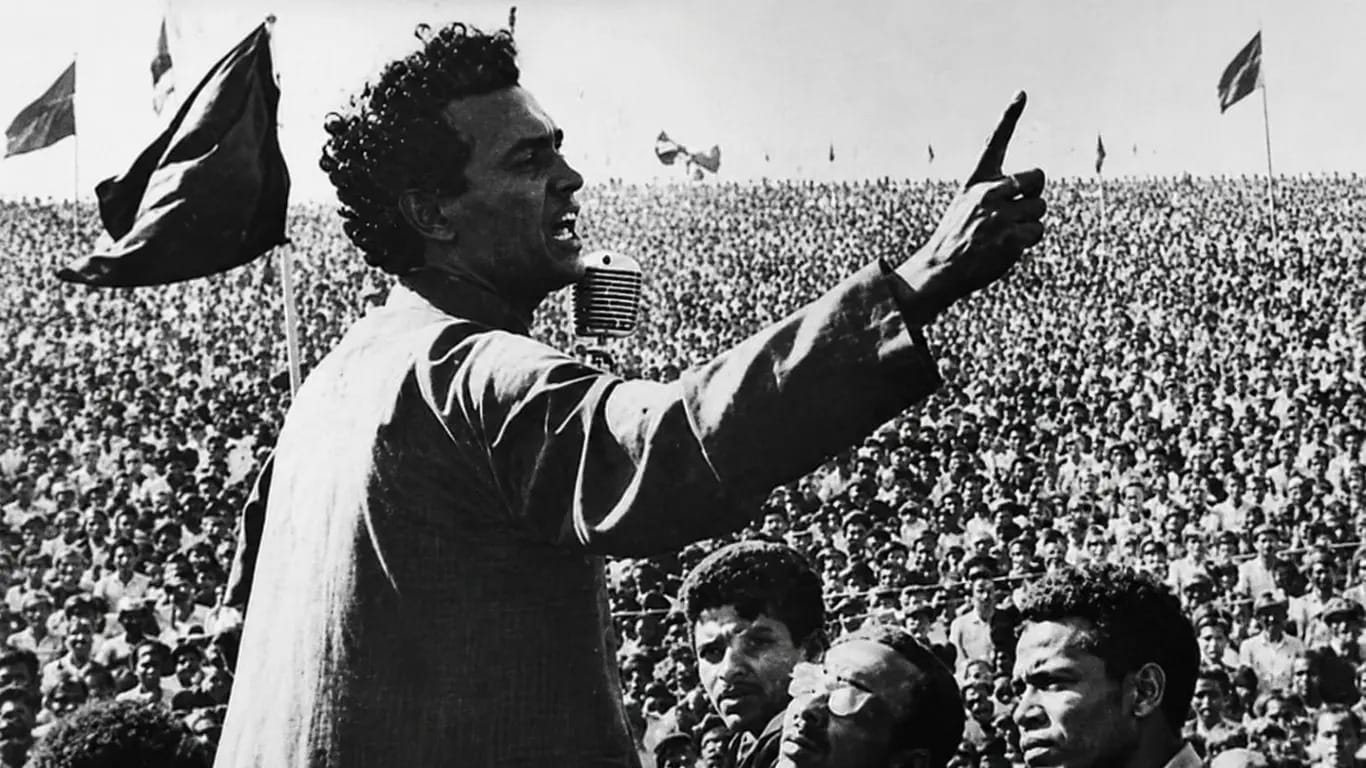
Tofail Bhai had a keen sense of dress. He took particular pleasure in ensuring that his suit, tie, belt, socks, and shoes were carefully coordinated, and he remained faithful to this habit throughout his life.
At heart, Tofail Bhai was a family man. He had profound love and affection for his wife, his only daughter, and his son-in-law. I had the opportunity to observe closely the devotion with which he fulfilled his responsibilities towards Bhabi, his wife. Her passing left him deeply shattered, both mentally and physically. For a considerable period afterwards, he remained bedridden.
Despite our political differences, Tofail Ahmed was a deeply trusted, dependable, and sincere comrade-in-struggle in the broader democratic movement and in the pursuit of national goals. Although we belonged to different political traditions, whenever we agreed on an issue, we found in each other a highly reliable companion. My memories of working alongside him, with all their rewarding and challenging moments, remain an invaluable source of experience and learning. As a liberal bourgeois political leader, he deserves, in my view, all the honour and respect that such a figure may rightfully command.
Had he lived a little longer, perhaps he would have realised this truth: that the bourgeois liberal forces of Bangladesh have lost their capacity to bring our country out of the systemic crisis in which it is engulfed. To achieve this, it is now necessary to establish the political leadership of an alternative class and social force, namely the broad coalition of left, progressive, patriotic, and democratic forces in our country.
Mujahidul Islam Selim is the former President of the Communist Party of Bangladesh (CPB) and former Vice-President of the Dhaka University Central Students' Union (DUCSU)
Send your articles for Slow Reads to slowreads@thedailystar.net. Check out our submission guidelines for details.

A crime history of Bengal: When rivers became a haven for dacoits

Mohajir manuscripts: Field notes from Dhaka Aliya Madrasa

What has changed since the USA ’94 World Cup? Almost everything

Historic Six-Point Movement: The photographs they suppressed

Mustafa Zaman Abbasi: The man who heard music in the wind
K.A.M. Saaduddin: Architect and activist of anti-imperialist sociology and social movements in Bangladesh
Abdul Quadir and the lost art of editing

Rakhal Das Banerji: The Bengali explorer who changed history

Why Roid stays with you long after the film ends