Mustafa Zaman Abbasi: The man who heard music in the wind
In life, all comes to dust in the invincible windmill of God, but I still find it hard to reckon that it has been a year since my father, guru and best friend, Mustafa Zaman Abbasi, a man with too many gifts, passed on to the other world.
A man of many dimensions left his mortal nest on May 10, 2025. A singer, folklorist, writer, scholar and social reformer. I could carry on.
I have taken up the pen or brush to write or paint in small strokes on a tiny canvas of Abbasi’s larger-than-life landscape.
I recall a humid evening when I was sitting in his spacious living room. It was stuffed with books and instruments, and I was feeling uncomfortable due to the humidity of our naughty summer. Abba asked, “Have you noticed?”
I replied, “What?”
There was a third person with us, noted singer Sunny Zubaer. Abbasi said, “Did you just feel a gush of breeze come through the south window with the orange-white bougainvillea? It carried Raga Khamaj.”
Sunny nodded. I could not understand, although I too had learnt it for sixteen years.
Abba was talking of the classical Raga Khamaj, which is performed in the evening, at times denoting romance or devotion. Its Arohi (ascent) has Shuddha Nishad (Ni), but its Avarohi (descent) has Komal Nishad (soft Ni). This makes it playful.
That was him. Often immersed in thoughts of a different realm, mind and sensory perception. When the adhaan called, he had to run to the masjid as if sleepwalking. A simple-hearted, lovely, joyous man with immense depth, his life was not a pursuit of happiness but of purpose.
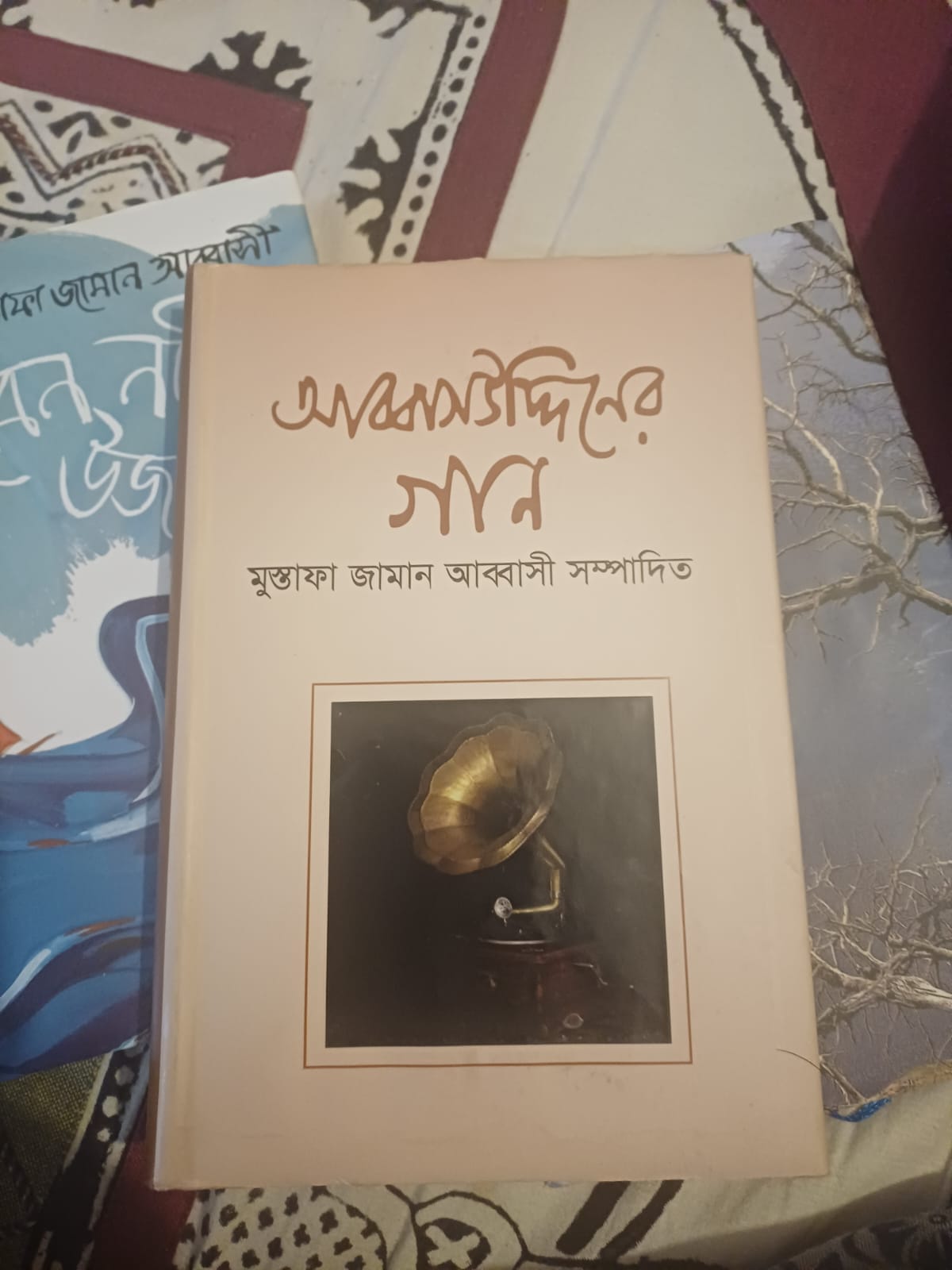
I found that throughout his life he carried a deep penchant for the bygone rivers Kaljani and Torsha. Thus, he poured his heart and hard labour of love into ensuring that the songs of the riverbanks, mustard fields, fishermen and the pain of rural women, etched in folk songs across both Bengals, would not be lost in the neurotic pace of modernism.
He was brilliant as a student, gifted with varied talents, and could have chosen other sectors and reached their zenith with fame and worldly prosperity. But he did not want that. He took up his father’s baton and devoted his time, talent and spirit to a road less travelled.
I vividly recall how Abba used to drop my elder sister and me at school at 7:30 am and pick us up at 1:30 pm before heading home. He did not work more than what was necessary for a solvent life, but never in pursuit of affluence.
Bangladesh, though a forgetful nation, might remember him not only as a singer, scholar, writer, folklorist and cultural thinker, but also as a devoted custodian of the country’s heritage. Born into the glorious legacy of Abbasuddin Ahmed, Abbasi carried throughout his life both the treasure and the duty that few could shoulder with such sincerity. He gladly accepted the inheritance and gradually transformed it into a seamless lifelong journey that eventually bore fruit.
He carried a deep penchant for the bygone rivers Kaljani and Torsha. Thus, he poured his heart and hard labour of love into ensuring that the songs of the riverbanks, mustard fields, fishermen and the pain of rural women, etched in folk songs across both Bengals, would not be lost in the neurotic pace of modernism.
His brother, Chief Justice Mostafa Kamal, and his quintessential sister, singer Ferdausi Rahman, were equally committed to carrying their father’s dream and values, and they too reached the zenith of their respective fields.
Many of the popular folk songs now sung by young people in fusion forms were predominantly collected, documented and transmitted by Mustafa Zaman Abbasi. “Maya Lagaiche, Piriti Shikhaise” of Abdul Karim, and “Bhromor Koiyo Giya” of Radha Raman were among his important discoveries and contributions.
He conducted two folk music programmes on BTV for two decades: Amar Thikana and Bhora Nadir Baake, during prime hour. Oh, what a spirited team it was: singers, anchors, musicians and a zealous producer travelling in a dilapidated BTV microbus! They crossed our land like a band of gypsies, journeying from village to village, from one riverbank to another in our land of hundreds of rivers.
He used to say that rivers are life and that civilisation forms around them. The Nile gave birth to Egyptian civilisation. Our Padma, Meghna and Jamuna gifted us a rich civilisation of our own.
He would often say during stage shows attended by foreigners, while depicting Bangladesh, “Who says we are poor? We are rich. Rich in our heritage, culture, food, values, traditions, music, literature, clothing and spirituality.”
He was besotted by Alan Lomax, the legendary American folklorist.
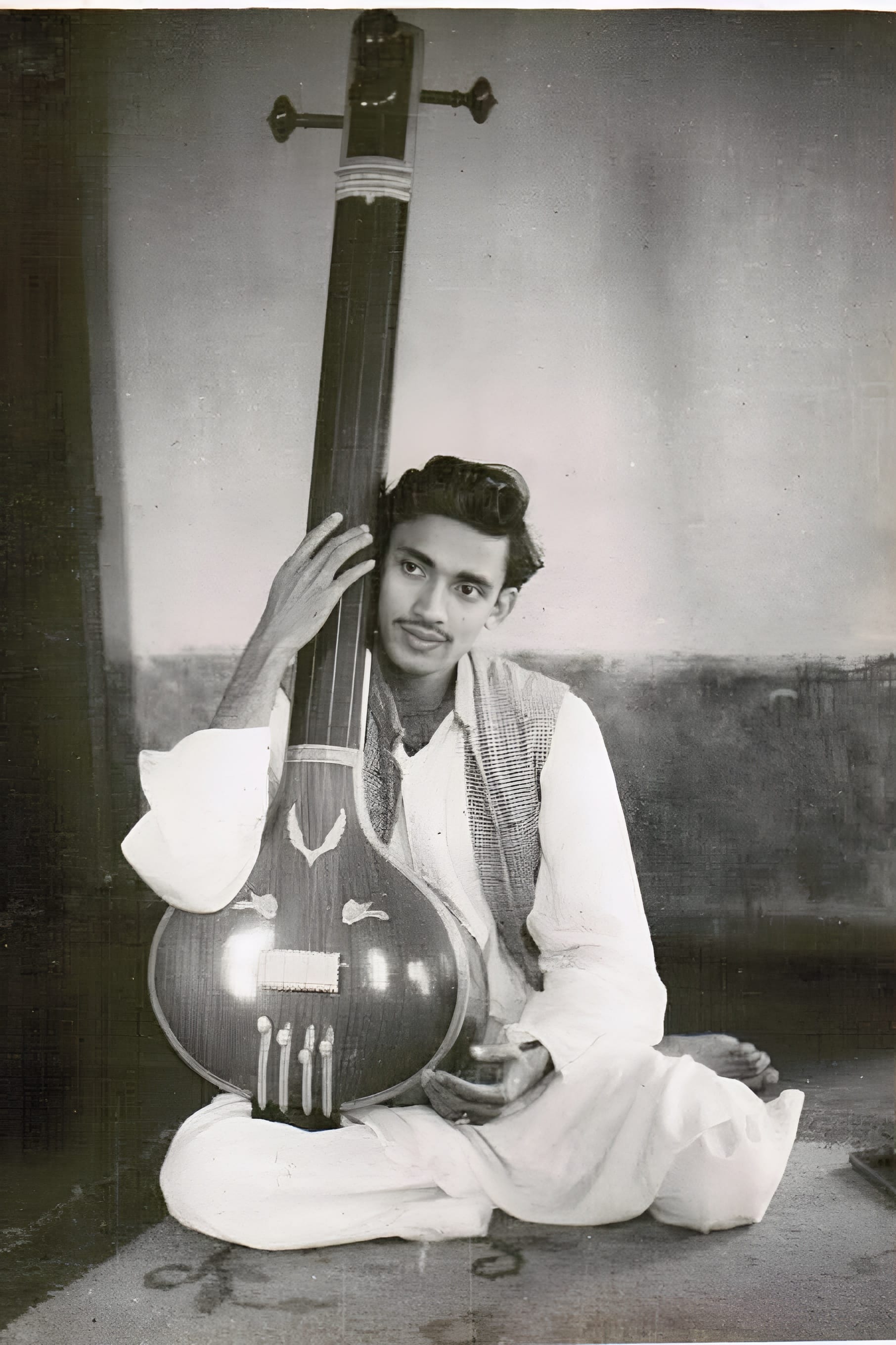
At the ripe age of sixty, Abbasi took up the pen and nestled himself in his reading and music room and started writing. His first book on Prophet Muhammad (SAW) was remarkable. His narration of the Prophet was lyrical, profound and mind-blowing. He wrote on countless subjects across nearly fifty books.
Detouring from the known facts familiar to many, I intend to share a little of his journey into Sufism. As he read, so did I, and at times he would keep talking about the essence of the mystical dimensions of Islam. How fortunate I was to be beside him.
His life partner, our mother, Professor Asma Abbasi, was the woman behind the success of his unusual pursuits. She encouraged, propelled and sustained them. He was deeply devoted to his sister, the living legend Ferdausi Rahman. They were star siblings, and their on-stage duets (jugalbandi) captivated audiences from city to city - Dhaka, Kolkata, Lahore and Karachi.
Many of the popular folk songs now sung by young people in fusion forms were predominantly collected, documented and transmitted by Mustafa Zaman Abbasi. “Maya Lagaiche, Piriti Shikhaise” of Abdul Karim, and “Bhromor Koiyo Giya” of Radha Raman were among his important discoveries and contributions.
Volumes can be written about his multidimensional work and life. He plunged into the research and study of the mystical dimensions of Islam. Mevlana Jalaluddin Rumi was his entry point. He studied Rumi’s six-volume Mathnavi, known as the Quran of Persia, along with all of his other works.
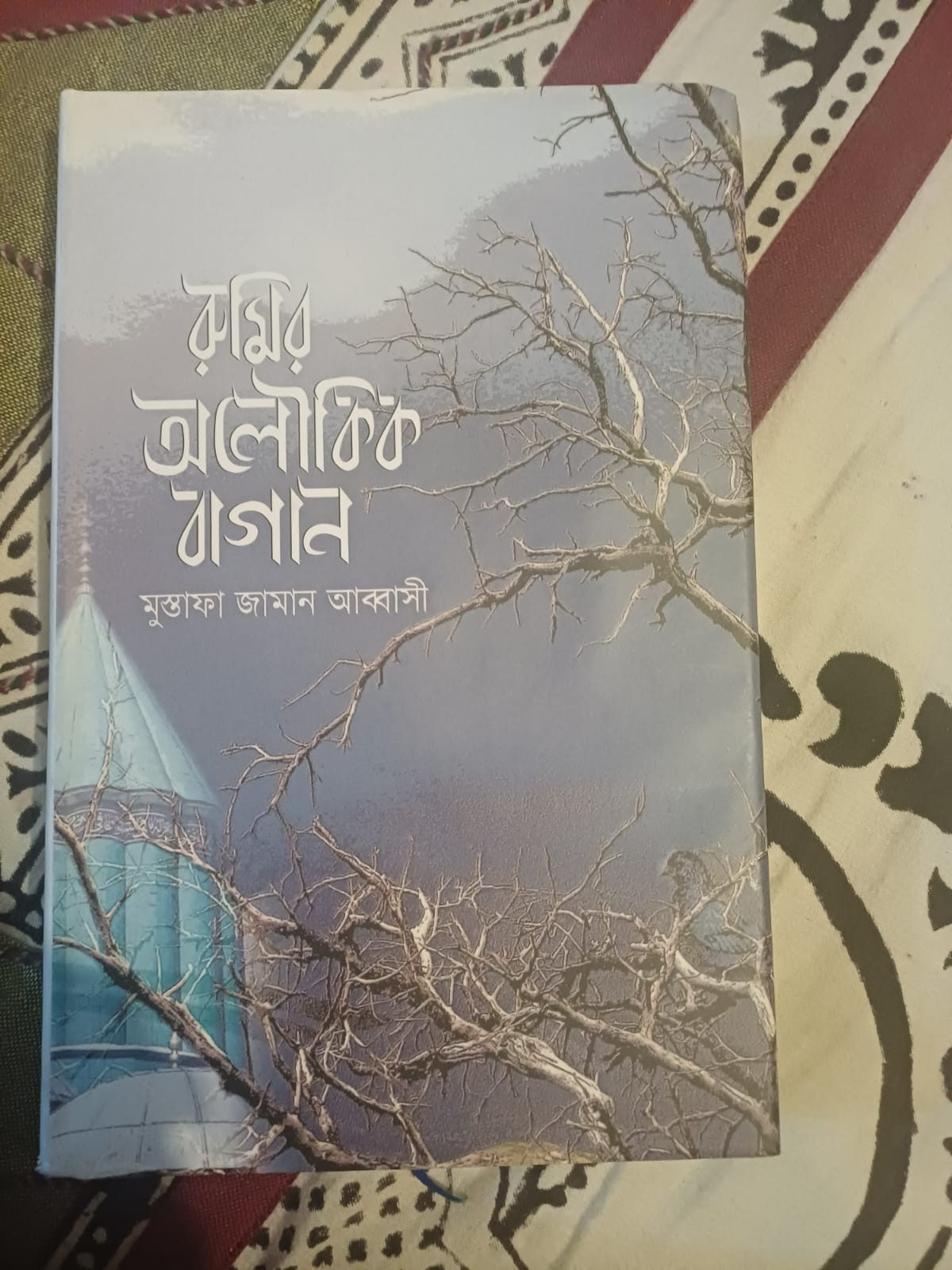
He travelled to Konya, Rumi’s resting place, and gathered material while researching the great mystic. He also immersed himself in the writings of illustrious scholars such as Annemarie Schimmel and William Chittick. He met Coleman Barks whose English translations helped make the world fall in love with Rumi.
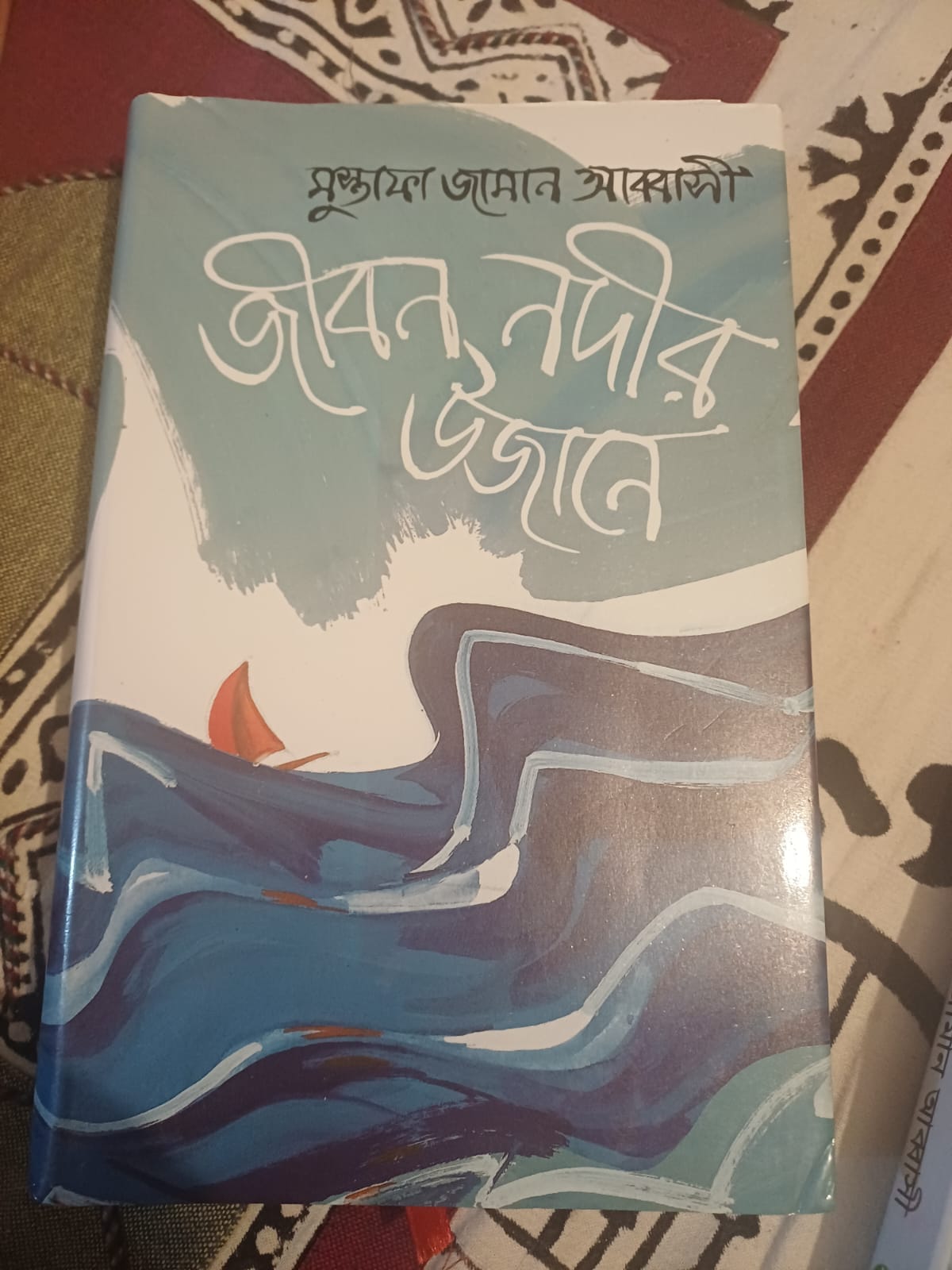
Abbasi wrote his autobiography titled Jibon Nadir Ujane. However, he once told me that Rumi’s life had been grasped and written by his son, Bahauddin. The very thought that he entrusted me with such a task saying, “You know me better than I know myself” remains a badge of honour. It is also a daunting proposition for me. But perhaps one day, somewhere in time, through tears of joy, I will, keeping the flame alive.
In the last years of his life, he wrapped himself in a green shawl of spiritual sweet surrender. Perhaps he had become annihilated in fana, the silent ecstasy of union with his Creator. He could still move about on his own and take his place at the dining table, yet he rarely spoke, spending most of his time in silence. Until he breathed his last, his beautiful slanted eyes, once resplendent with energy and curiosity, transformed into a calm noor, carrying a faraway gaze.
If I close my eyes, I can still vividly see him. His handsome, sage-like face and silhouette. I see my father in a boat with colourful sails and patches, gliding gently across the waters until he reaches the Almighty’s port of eternal spring.
Sharmini Abbasi is a lawyer and writer.
Send your articles for Slow Reads to slowreads@thedailystar.net. Check out our submission guidelines for details.
K.A.M. Saaduddin: Architect and activist of anti-imperialist sociology and social movements in Bangladesh
Abdul Quadir and the lost art of editing
Rakhal Das Banerji: The Bengali explorer who changed history

Why Roid stays with you long after the film ends
How earthquakes, disease and war shaped Bengal’s slave trade
The first reports of a political assassination: Revisiting newspaper coverage of Zia's killing
Why Zia still matters in today's Bangladesh

More than a saree: The living legacy of Tangail
Tagore’s “Balaka” and the decolonial poetics of becoming