


The magic of Khaleda Zia
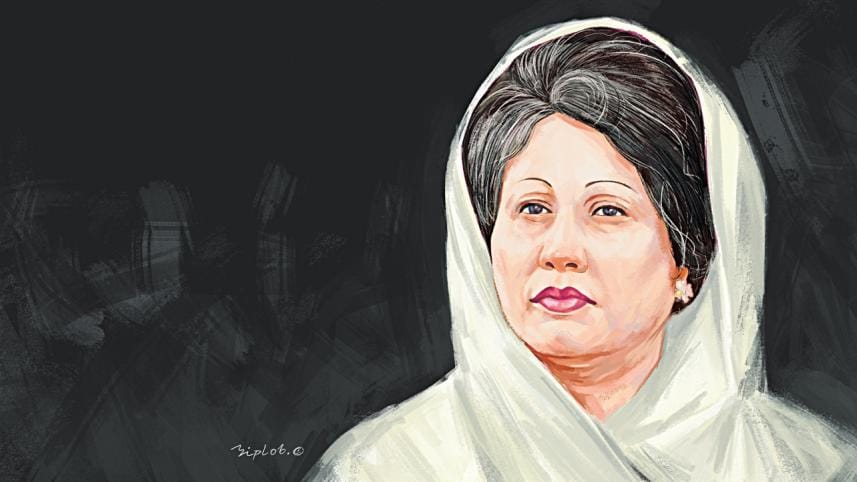
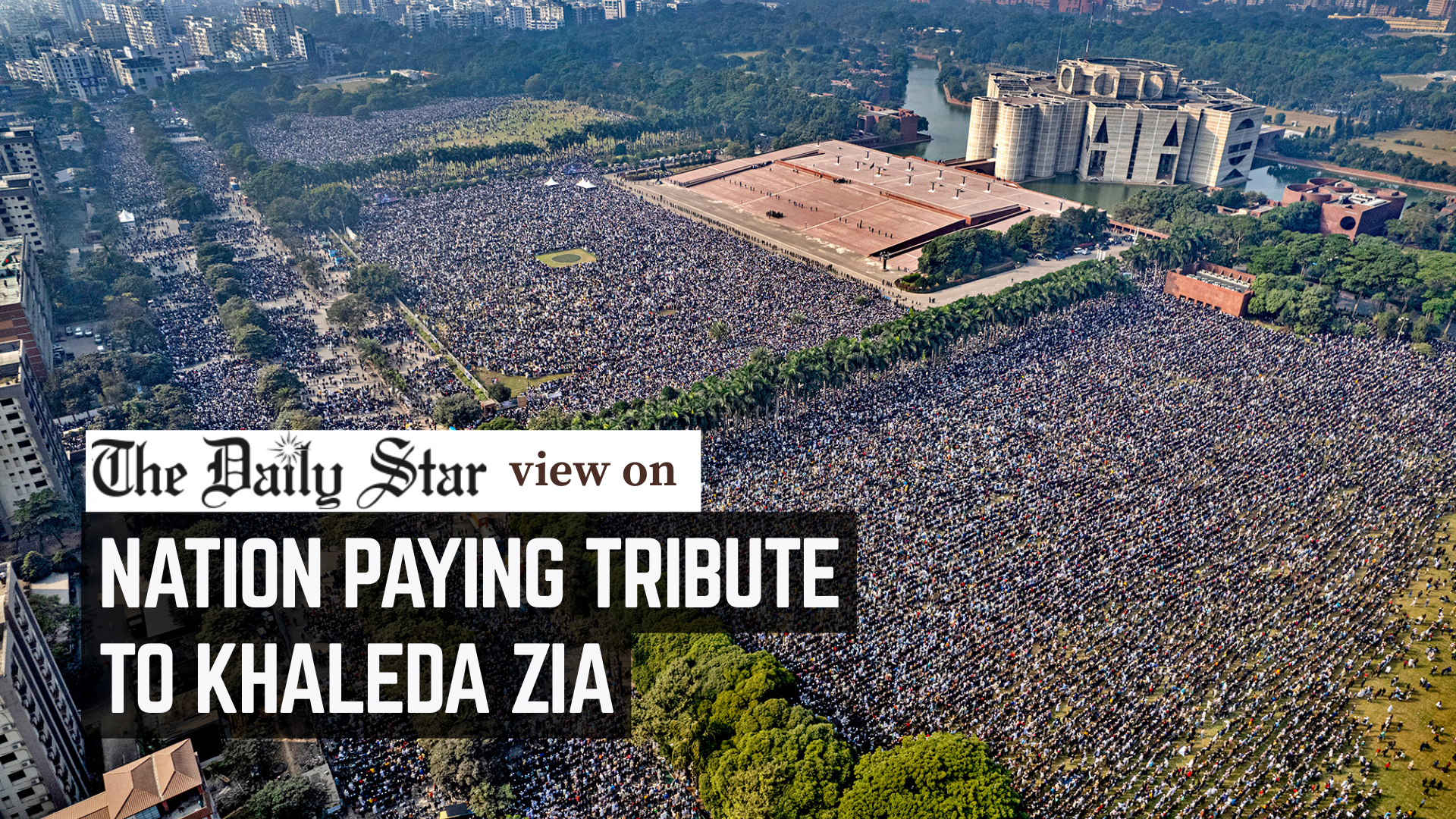
People's presence said it all. The millions who poured in last Wednesday at her namaz-e-janaza did so out of a love for her that cannot be measured by the usual standards applied to political leaders. They came spontaneously, driven by an inner urge to show their respect to a person who they felt represented them. The bonding was more subconscious than political, and definitely not partisan, for most of the people who attended the janaza were members of the public in general. It was quite unbelievable how magically she had touched the hearts of so many ordinary people.
Since the road in front of our office was closed to traffic, I had the privilege of being part of the stream of people heading towards Manik Mia Avenue. As I walked along, I felt a sense of sorrow that sprang from a far deeper feeling than one usually witnesses on such occasions. People maintained a dignified silence as they walked on, showing with every step a deep sense of loss they did not quite know how would be filled. Obviously, there can be no reliable estimate of how many people attended the janaza, but the eye estimates by my colleagues and me converged on millions, as we also put in our headline the next day. Despite the sheer scale of the gathering and the pressures it must have created, the overall discipline was striking. They came, they mourned, and they left, all with a dignity and composure that represented the most important values Khaleda Zia symbolised. There was a calmness in her persona, which she seemed to have conveyed effectively to her supporters.
 For all latest news, follow The Daily Star's Google News channel.
When considered against the background that she had been out of power since 2006, in jail and under house arrest for seven of her later years, and consistently and cruelly vilified by the Hasina regime for most of the 15 years of Awami League rule, the honour displayed to her memory at the janaza is nothing short of a miracle. It seems the more Hasina vilified her, the more people's love for Khaleda Zia grew. In our political culture, being out of sight—which is what being out of power means—is usually being out of mind. But in Khaleda Zia's case, the oppression meted out to her only increased her popularity, and public respect grew by leaps and bounds. That sentiment remained hidden until people could finally express it at her janaza.
On August 7, 2024, within two days of Hasina's fall, Khaleda Zia addressed her first public meeting since her arrest in 2018 via Zoom. Her main message—apart from thanking the students for the movement and her party workers for their support—was that we must build a "knowledge-based, democratic Bangladesh" "free from exploitation," with "merit and competence" by "strengthening the hands of our youth." However, the most important message was her call for a politics of "no destruction, no revenge, no retaliation, but one of love, peace, and a knowledge-based society." In her second address on February 27, 2025, again on Zoom from London, where she had gone for advanced medical treatment, she recalled her husband Shaheed President Ziaur Rahman's statement that "the party is bigger than the individual, and the country is bigger than the party." She also reiterated her earlier message of shunning the politics of revenge and retaliation and replacing it with mutual love and camaraderie to build a new Bangladesh.
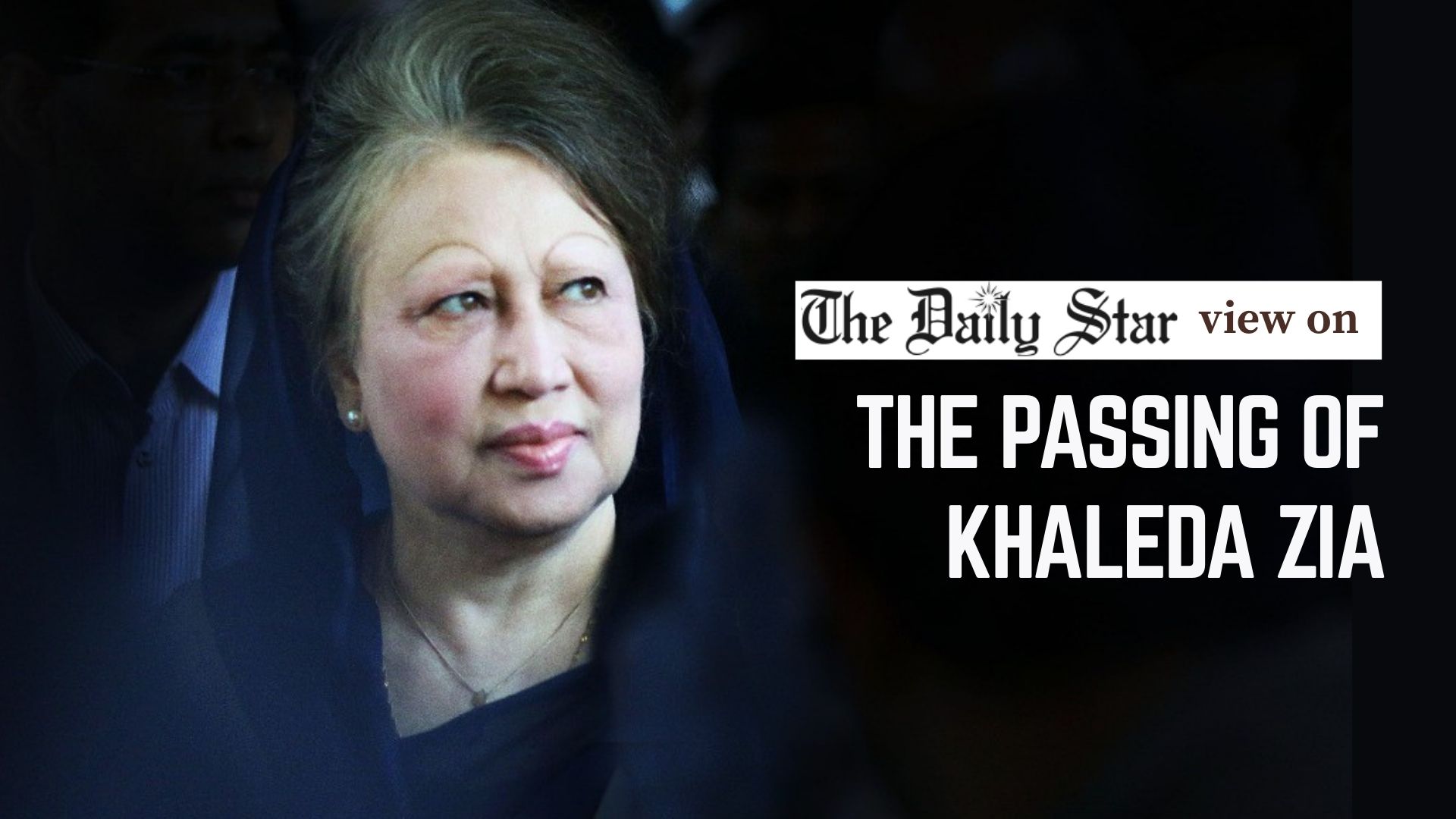
The reason we refer to the above two speeches is Khaleda Zia's insistence that we should all— including her own party—shun the politics of revenge and retaliation. It is perhaps the most important message the country needs at this moment: to move away from a mob culture that seems to be engulfing us across various sectors. It is a testimony to her wisdom, tolerance, maturity, and democratic values. When we consider our political tradition, especially since 1991, it has been one of rivalry that gradually became so bitter that it transformed the two rival parties into enemies engaged in mutual destruction, prompting The Economist to term Khaleda Zia and Sheikh Hasina's politics as "The battling begums." As neither side fully accepted election verdicts under the caretaker/interim governments in 1991, 1996, 2001, and 2006, the institutions of elections—and voters' freedom to choose their representatives freely—were progressively weakened. Their logic, as we once noted in an article, appeared to be that "an election is only free and fair if I win it…" With every election, mutual hostility became more and more visceral, and politics reduced itself to "revenge and retaliation."
Since this piece is not an evaluation of her total political legacy, we will write about her successes and failures separately. Today, our purpose is to focus on the significance of her last messages before she embarked on her eternal journey.
What makes her recent statements particularly valuable is that such messages are rare and, as stated earlier, urgently required at this moment. We need to build Bangladesh anew, and we need to start immediately, the urgency of which will be proved by holding a free and fair election. A similar message has also come from Tarique Rahman. He has every reason to be bitter and hateful towards Sheikh Hasina and her government. The exile, the many cases, and the personal humiliation he suffered—including a court order that prevented the media from publishing any statement made by him—could easily have made him vengeful. Yet, so far, in his numerous virtual speeches made from London, and in the speech he delivered at the mammoth welcome gathering upon his return on December 25, his messages have focused more on the future than the past. This indicates political maturity, signalling an essential shift away from the kind of politics that has harmed us in so many ways.
In our view, the most meaningful way to pay tribute to the memory of Khaleda Zia is to take her last messages seriously and embark on the path of rebuilding Bangladesh with love, compassion, and understanding. The first and foremost step is to unite behind democratic values and norms, the most crucial of which is holding a free, fair, and inclusive election. Any attempt to postpone or disrupt it should be exposed for what it really is: an attempt to harm Bangladesh.
The interim government should have gone for an election much earlier. To make up for that error of judgement, it should now tolerate no attempt to disrupt our journey towards the election, which, thankfully, it seems to be doing. The quicker we can transition to a government elected by the people, the faster our development process can restart. The law and order situation is presently at its worst, which has created a sense of uncertainty and fear among the public. This is the first and most fundamental function of any government. Stability in governance requires the early restoration of an elected government. The practice of mobs creating terror by hurting individuals and institutions must be stopped. Whatever public grievances exist should wait until the coming of an elected government.
It could be that the election will have many flaws. In Third World countries, they usually do. The non-inclusion of Awami League in it will obviously generate debate. However, it should be remembered that the AL expressed no regret whatsoever over the deaths of 1,400 ordinary people (UN findings), including many students and children, within the final weeks of its rule. This has further alienated it from the people.
We have had an almost year-long process to agree on reforms. There were numerous discussions on the July National Charter and its final approval. We now have a decision to go for a referendum. Unfortunately, this will complicate election-day proceedings. Most concerning is the fact that the referendum on the July charter remains largely undecipherable for ordinary voters because of the language used.
What concerns us even more is the lack of clarity in party manifestos. We have heard some generalities about post-election plans, but specifics remain elusive. Bangladesh's economy rests on three pillars: agriculture, expatriate labour earnings, and the RMG sector. Our farmers mostly do not receive their due, with profits pocketed by middlemen. A section of our expatriate workforce remains trapped in the grip of inhuman exploitation. We talk a great deal about RMG, yet real solutions to its fundamental problems remain ignored. These three sectors must receive due importance in political parties' plans.
We have heard almost nothing from political parties about addressing the challenges related to the climate crisis, despite Bangladesh being on the frontline. It remains a mystery why the Professor Yunus-led government did not place sufficient focus on this existential issue. Another vital area requiring emphasis is employment generation, especially for our youth. Here again, the relative inaction of the present government is inexplicable. There should have been a special effort on these issues to prepare recommendations for immediate implementation by the elected government.
Let us be clear: without adequate preparation to face the climate crisis, and without ensuring sustained economic growth, Bangladesh's future will remain extremely vulnerable.
Mahfuz Anam is editor and publisher of The Daily Star.
Follow The Daily Star Opinion on Facebook for the latest opinions, commentaries, and analyses by experts and professionals. To contribute your article or letter to The Daily Star Opinion, see our guidelines for submission.
Comments