


A second chance for Pangaon, but can it unlock its potential?


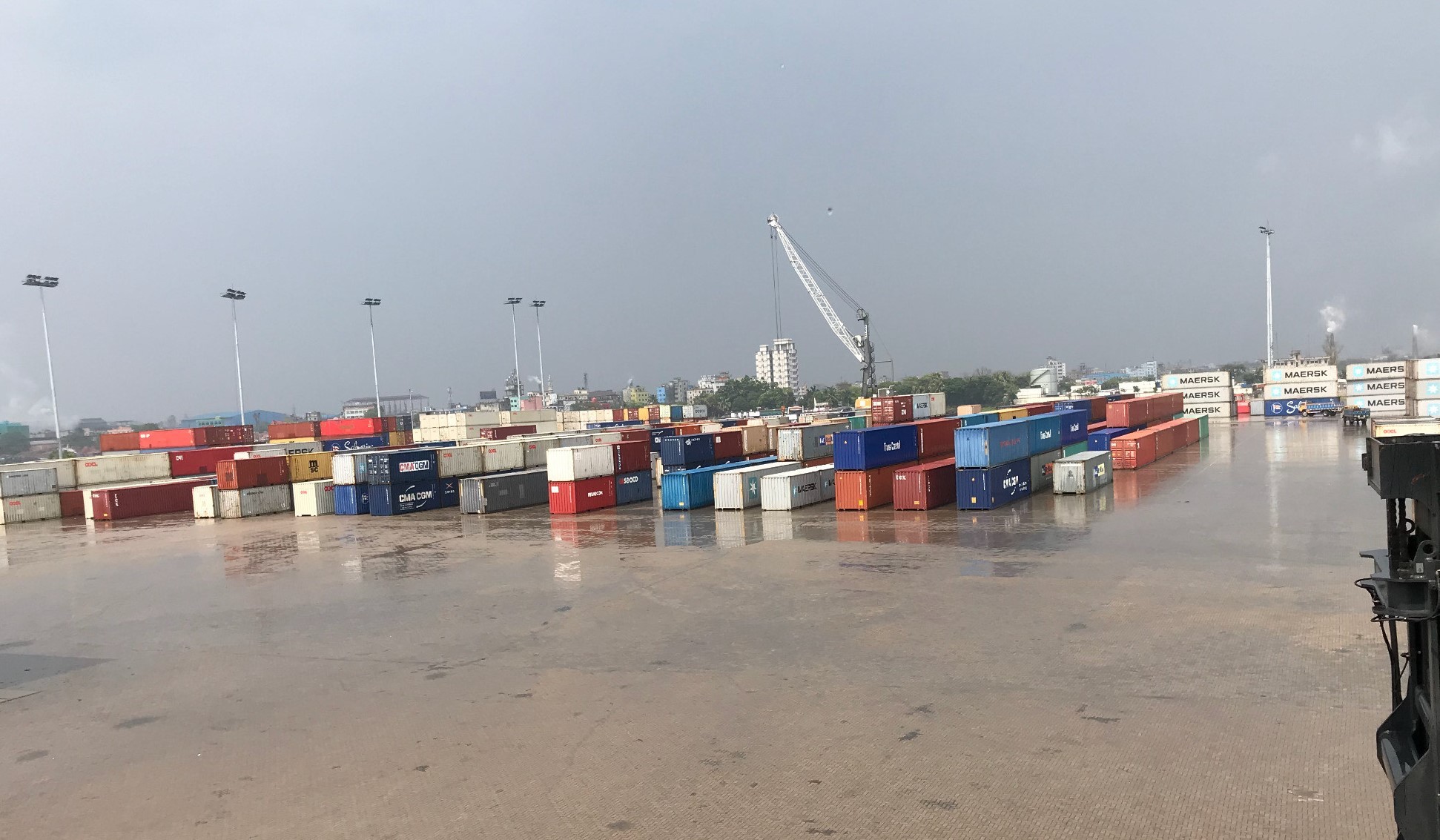
Bangladesh's container-logistics landscape has just crossed a defining threshold. What has long been discussed as a likely outcome is finally a signed reality: the operating contract for the Pangaon Inland Container Terminal (PICT) has been formally awarded to the Swiss-based Medlog SA, the logistics arm of the Mediterranean Shipping Company (MSC). The 22-year concession agreement between the Chittagong Port Authority (CPA) and Medlog Bangladesh Private Ltd will shape how Dhaka connects with global maritime supply chains. For Pangaon, long criticised for its underutilised potential, this is more than a change of operator; it is a second chance to become the inland gateway we once envisaged.
That ambition dates back to 2013, when PICT was built at a cost of about Tk 157 crore and designed to handle 116,000 TEUs (Twenty-foot Equivalent Units) annually. In practice, the terminal has consistently struggled, sometimes operating below 20 percent of its capacity. The reasons for the failure remain familiar: operational bottlenecks, inconsistent scheduling, weak multimodal integration, and policy gaps that failed to match the rhetoric of shifting cargo from road to river. In the concession process, Medlog emerged as the sole technically qualified bidder, receiving a perfect technical score, while the competing bid from HR Lines was deemed non-responsive. When the government extended the proposed tenure from 12 years to 22 years in July 2025, it cleared the way for this transition.
 For all latest news, follow The Daily Star's Google News channel.
A report by The Daily Star has added further details about the deal. Medlog reportedly plans to increase Pangaon's annual handling capacity by 160,000 TEUs—a substantial boost that, if executed properly, could redefine Pangaon's role in Bangladesh's logistics chain. To strengthen multimodal connectivity, Medlog will also charter inland barges from PICT to link Pangaon with other river terminals and seaports. The project, as per the company, aims to stimulate trade, enhance supply-chain resilience, and elevate Bangladesh's logistics sector to globally competitive standards. These commitments go beyond earlier public disclosures and signal a more ambitious operational roadmap.
The timing of this concession aligns with Bangladesh's gradual efforts to modernise its logistics ecosystem. Medlog has previously expressed interest in major inland and coastal terminal investments, with estimated upgrades of around $400 million. This mirrors a global trend where ocean carriers invest in inland logistics to secure network reliability. PICT offers such an opportunity, provided that the surrounding infrastructure supports, rather than constrains, it.
This perspective connects with arguments from my previous article where I emphasised the potential synergy between Pangaon and the Matarbari Deep-Sea Port. Pangaon serves as Dhaka's inland gateway, while Matarbari offers the deep water needed for large vessels that Chattogram and Mongla cannot accommodate. Together, the two could form a corridor supporting triangular service models—such as Pangaon-Matarbari-US/Europe—reducing reliance on transshipment hubs and deepening Bangladesh's integration into global shipping networks. The concession agreement keeps that possibility alive, although substantive progress will depend on structural and systemic improvements.
For that, PICT must first achieve credible operational standards. Its theoretical handling capacity of 116,000 TEUs does not reflect its functional capability. During the Covid-19 lockdowns—when cargo was diverted from Kamalapur Inland Container Depot (ICD)—the terminal's actual static capacity proved to be roughly 1,550 TEUs, far below the stated 2,400. The overflow yard remains unequipped, and continues to serve informally as truck parking.
Moreover, Pangaon-bound vessels still lack dedicated berthing windows at Chattogram port, causing export containers to miss transshipment connections to Singapore or Colombo. This unpredictability discourages exporters, especially in the time-sensitive RMG sector. Systemic barriers such as limited jetties for inland vessels at both Pangaon and private terminals have seen only incremental progress.
Riverine constraints further compound the challenge. The Buriganga-Shitalakshya corridor, for instance, suffers from insufficient draft of around four metres, sharp bends near Fatulla, and vessel-length restrictions of roughly 83 metres. These limitations prevent typical 350-TEU feeder vessels from accessing Pangaon. Overcoming such barriers requires proper river dredging and training as well as modern navigational aids.
Connectivity by road remains another bottleneck. Although Pangaon lies only 13 kilometres or so from central Dhaka, poor road links blunt its geographic advantage. The incomplete Middle Circular Road—particularly the crucial Kalakandi-Hemayetpur stretch—continues to restrict integration with industrial zones across Savar, Tongi, and Gazipur. Completing this link could significantly reduce transit times and support a meaningful modal shift to inland waterways.
The economic case for such reforms is compelling. Moving a container between Dhaka and Chattogram costs $800-1,000 per TEU, which is among the highest inland logistics costs in Asia. In comparison, India's inland waterways operate at $250-300 per TEU. Efficient utilisation of Pangaon could reduce Bangladesh's logistics cost per TEU by up to 30 percent, strengthening export competitiveness at a time when margins for key sectors like RMG are tightening.
A long-term concession offers a realistic path forward, but success hinges on close cooperation between Medlog and government agencies. The authorities must introduce fixed berthing windows at Chattogram, ensure scheduled dredging, complete the Middle Circular Road, and accelerate digitisation of customs and port processes. Medlog can bring global best practices, but only a supportive ecosystem will translate those capabilities into measurable gains.
Concerns about foreign involvement in strategic national assets are understandable and merit attention. These can be addressed through transparency, proper tariff oversight, regular performance audits, and robust regulatory safeguards. But the goal should not be to automatically dismiss foreign operators but to align any concession with national interests.
So if the recently inked agreement delivers even part of its potential, the impact could be transformative. A revitalised Pangaon could ease pressure on highways, offer exporters predictable alternatives, and lay the foundation for an integrated Pangaon-Matarbari corridor. This could ultimately support direct Bangladesh-US/EU services through a triangular model.
The signing of the concession therefore brings cautious optimism. The true measure of its success will lie in how quickly Pangaon begins to handle meaningful volumes, how reliably it links with Matarbari, and how transparently its benefits reach shippers. With Medlog's capability and coordinated national support, Pangaon can still evolve into an important pillar of Bangladesh's next-generation logistics system.
Ahamedul Karim Chowdhury is adjunct faculty at Bangladesh Maritime University and former head of the Kamalapur Inland Container Depot (ICD) and the Pangaon Inland Container Terminal under Chittagong Port Authority.
Views expressed in this article are the author's own.
Follow The Daily Star Opinion on Facebook for the latest opinions, commentaries, and analyses by experts and professionals. To contribute your article or letter to The Daily Star Opinion, see our guidelines for submission.
Comments