


All agree on efficient ports, but debate over deal timing, details


Discussions, debates and demonstrations have intensified after the government recently awarded the operations of Laldia Container Terminal in Chattogram and Pangaon Inland Container Terminal near Dhaka to two foreign operators.
Two issues mainly dominate the debate. One concerns the timing of the deal signing, while the other focuses on the details of the agreements.
 For all latest news, follow The Daily Star's Google News channel.
 Critics say the authorities acted with unusual haste and kept key information confidential, which they claim indicates a lack of transparency. However, government officials argue that the documents cannot be made public due to legal issues.
Under the recent agreements, Denmark-based APM Terminals will build and operate the Laldia terminal for 30 years. Switzerland-based Medlog will manage Pangaon for 22 years.
The interim government insists that the agreements protect national interests. However, political parties and activists question why an interim authority with a short mandate rushed to take such long-term and sensitive decisions.
They have also demanded an immediate halt to the move to lease New Mooring Container Terminal to UAE-based DP World.
PAST GOVT BEGAN APPOINTMENT OF FOREIGN FIRMS
The previous Awami League government initiated the plan to appoint foreign operators across Chattogram port.
The port, Bangladesh's main external trade gateway, currently has four terminals. Those are the New Mooring Container Terminal (NCT), Chittagong Container Terminal, General Cargo Berth and the newly-built Patenga Container Terminal (PCT).
Awami League's initiative covered Patenga, the proposed Laldia terminal and two planned terminals under the Bay Terminal project. There were also discussions with DP World over managing the New Mooring Container Terminal.
In 2023, the past government signed a 22-year concession agreement with Saudi firm Red Sea Gateway Terminal (RSGT) to run Patenga Container Terminal, now known as RSGT Terminal.
The interim government apparently did not launch new ones; it just continued earlier plans. In this regard, economist and activist Professor Anu Muhammad questions why the interim government felt the need to speed up the leasing process initiated by the Awami League.
He said expectations were high that the interim government would break from previous tendencies involving secrecy, irregularities and contracts that allegedly failed to prioritise national interest.
Instead, he argued, similar actions are being repeated. "Rather, it was the responsibility of this government to see why the previous government was so interested in these companies," said the former economics teacher of Jahangirnagar University.
Mohammad Zafar Alam, a former member of the Chittagong Port Authority (CPA), said political governments usually take longer to complete such agreements. "It was possible to complete the deals [with the foreign operators] in a short period because of the interim government."
CONCERNS OVER NATIONAL INTERESTS
For months, several organisations have been protesting the decision to hand over container handling responsibilities at Chattogram port to foreign operators.
These camps include Sramik-Karmachari Oikya Parishad, Democratic Rights Committee, Jatiyatabadi Sramik Dal, several left-leaning parties, Bangladesh Jamaat-e-Islami and lately, the Hefazat-e-Islam.
They raise concerns over national interests, strategy and procedure.
They argue that the country should develop national capacity and retain control of Chattogram port, which is the country's main economic lifeline and a key asset for national security and regional strategy.
They also criticise the interim government for choosing operator appointments through government-to-government deals instead of competitive tenders.
Humayun Kabir, former assistant publicity secretary of Jatiyatabadi Sramik Dal (port unit), said foreign operators could support new greenfield projects such as Bay Terminal or Laldia, where fresh investment is needed.
But he argued there is no reason to bring in foreign management for New Mooring Container Terminal, which was built with the port authority's funds and already has equipment worth around Tk 2,000 crore.
Kabir said that leasing the terminal could allow a foreign operator to collect most revenues while paying only a small handling fee.
Other critics say the promised investment could have been raised domestically, keeping all revenue within the country instead of sharing earnings with foreign companies.
FOREIGN MANAGEMENT WILL MODERNISE SYSTEM, SAYS GOVT
Ashik Chowdhury, executive chairman of the Bangladesh Investment Development Authority (Bida), said global expertise will modernise port operations, reduce corruption and shorten ship waiting times.
In a Facebook post, he said that corruption and delays are the main challenges for Bangladeshi ports, while competitors such as Vietnam have climbed global rankings by adopting technology-driven management from international operators.
He wrote that Vietnam has taken Cai Mep Port to 7th place globally, while Chattogram stands at 334th.
The Bida chief said young Bangladeshi professionals will gain skills from foreign partners and eventually assume leadership roles.
He added that ownership of the ports will certainly remain with Bangladesh.
APPAREL EXPORTERS IN SUPPORT OF FOREIGN FIRMS
The readymade garment sector, the country's largest exporter, is the main user of Chattogram port.
Mahmud Hasan Khan, president of the Bangladesh Garment Manufacturers and Exporters Association (BGMEA), welcomed foreign investment and said the appointed operators are globally renowned and efficient.
He hoped port efficiency would increase and business costs would fall.
He mentioned that logistics costs are higher in Bangladesh due to current inefficiency. "It is not expected that these global operators would charge a higher tariff so that the cost rises."
Regarding the non-disclosed terms in the already signed concession agreements, Khan said nothing in the agreements should go against national interests.
Syed M Arif, chairman of the Bangladesh Shipping Agents Association, said efficiency must improve, regardless of whether operators are local or foreign. Vessels currently take three to four days to clear New Mooring Container Terminal, compared with one day in neighbouring ports.
He hoped that Medlog's appointment at Pangaon would boost cargo movement, which has struggled for years.
Amir Humayun Mahmud Chowdhury, convener of Chattogram Port Users' Forum, welcomed APM Terminals for the Laldia project and said the terminal could become globally competitive.
He urged transparency over the New Mooring Container Terminal deal and called for ensuring the jobs of the current workforce.

Even if we allow foreign operators, it should be time-bound and structured in a way that helps build our national capacity so that we can eventually take over these operations ourselves.
'APPOINTMENT SHOULD BE TIME-BOUND'
Mustafizur Rahman, distinguished fellow of local think tank Centre for Policy Dialogue (CPD), said improving port efficiency is a must for global competitiveness.
He said that decisions on major infrastructure must be transparent and open to public scrutiny, arguing that secrecy has fuelled doubts.
The CPD fellow called for competitive processes and said any foreign management should be time-bound and structured to build national capacity.
"Even if we allow foreign operators, it should be time-bound and structured in a way that helps build our national capacity so that we can eventually take over these operations ourselves," he said.
M Masrur Reaz, founder and chairman of Policy Exchange of Bangladesh, said developing and operating new, modern port facilities through globally recognised companies under a build-finance-operate-transfer model is a welcome step.
He acknowledged that the details of such commercial public-private partnership contracts are rarely published due to legal and contractual obligations.
However, he said the government could have done more to engage relevant stakeholders, explaining the process, objectives, benefits and safeguards of the agreements.
He urged the government to consider implementing strategic stakeholder engagement initiatives going forward to build trust and transparency around similar projects.
Build own port capacity, preserve nat'l control
Star Business Report
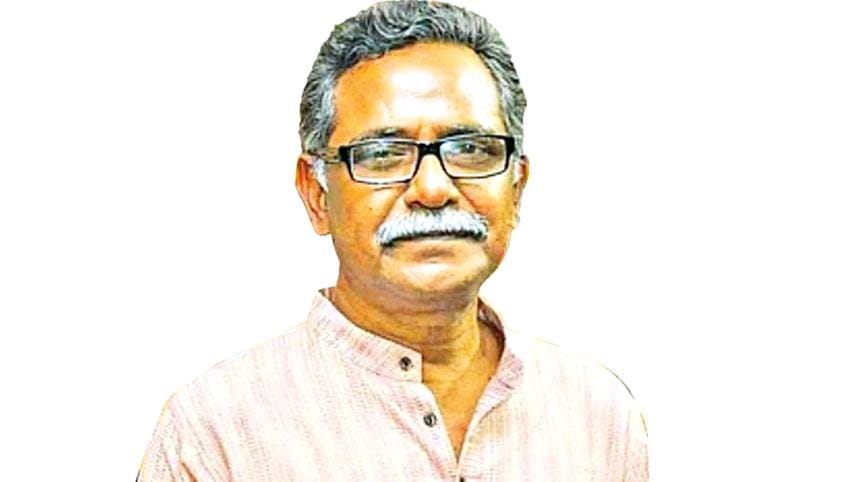
Anu Muhammad
Former professor of economics at
Jahangirnagar University
Signing contracts for the Laldia and Pangaon terminals amid secrecy, a lack of transparency and excessive haste raises serious questions. Why did the government feel the need to complete these deals only three months before the national election?
The government should reflect on the processes that made these foreign firms world-class. If we follow similar principles, Bangladesh can achieve the same standards.
State-owned institutions in Abu Dhabi or Singapore, widely recognised as world-class, did not rely on foreign operators to run their ports. They built their own national capacity.
Creating an inferiority complex, suggesting that we cannot achieve anything on our own, and then using that as justification for engaging foreign operators is neither fair nor necessary.
The expectation from this government was that it would break with past practices, including a lack of transparency, irregularities, secrecy, and contracts made against national interest for commission gains. Instead, the same patterns are being repeated. Talks continue with companies that were already engaged during Sheikh Hasina's tenure.
It was the government's responsibility to examine why the previous administration prioritised these companies. Instead, by framing the ports as corrupt and planning to hand them over entirely to foreign firms, the government is imposing a stigma on the country.
Global operators such as PSA Singapore, with whom the government is negotiating, belong to nations that first developed their national efficiency. Any private firm, local or international, can provide support, but central control must remain with state-owned organisations, which should be strengthened based on national expertise and capacity.
This is not about rejecting foreign investment; it is about ensuring Bangladesh builds its own efficiency, preserves national control, and develops the skills needed to manage world-class ports independently.
Ownership of the ports will remain with us
Star Business Report
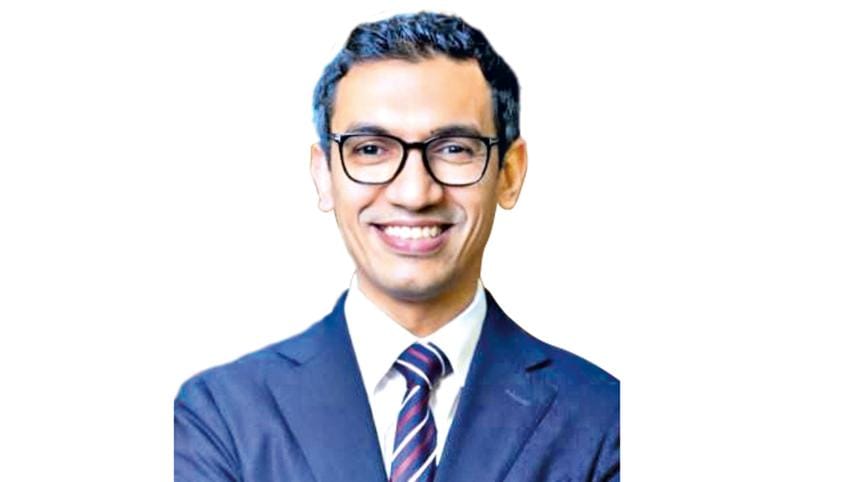
Ashik Chowdhury
Executive chairman of Bangladesh Investment Development Authority
The main challenges facing the country's ports are corruption and delays, while competitors such as Vietnam have climbed global rankings by adopting technology-driven management led by international operators.
Bangladesh now needs operators who can introduce modern technology and efficient processes to deliver better results. Young professionals will learn port management from foreign partners and eventually take leadership roles at home and abroad. The initiative offers hope for a corruption-free port environment.
The ownership of the ports will remain with Bangladesh.
Denmark-based APM Terminals will design and build a new terminal at Laldia using its own investment. Construction is expected to take three years. After completion, APM will manage the facility for a fixed period before handing control back. This arrangement is like hiring a driver for a car, while the vehicle remains with the owner.
APM Terminals is a fully owned subsidiary of the AP Moller Maersk Group, which operates ten of the top twenty ports in the world. It currently runs more than 60 terminals across 33 countries, including Vietnam, Singapore, China and several European states.
The Laldia project is a public-private partnership. APM will invest fully, including Tk 250 crore as signing money and around Tk 6,700 crore during construction. The government will provide no funding or guarantees.
The operator will pay a fixed fee per container handled, with a minimum volume guarantee to protect national interests. The Chittagong Port Authority will act as the regulator.
The 30-year contract is not excessive. Mumbai Port in India has a 60-year deal, Shanghai Port in China 50 years and Cai Mep in Vietnam 50 years.
Legal restrictions prevent any government from releasing full PPP documents, as disclosure could affect future tender processes and reveal confidential business information. Key details, including ownership and revenue structure, have already been shared through press briefings.
Global expertise can increase port efficiency
Star Business Report

Mahmud Hasan Khan
President of the Bangladesh Garment Manufacturers and Exporters Association (BGMEA)
The readymade garment sector is the country's largest exporter, and Chattogram port is central to keeping our supply chains moving. Any improvement in port operations directly affects the country's competitiveness and costs.
Apparel exporters have always welcomed foreign investment in port development. Global operators appointed to manage key terminals are both reputable and efficient.
These are companies with international experience and proven track records. Their involvement will improve the efficiency of port facilities, reduce delays and ultimately bring down the cost of doing business.
Currently, inefficiencies in the port system have made logistics more expensive, and goods take longer to move. These global operators are not expected to increase tariffs in a way that raises costs. Instead, they can introduce modern management practices and technology to make operations faster and smoother.
I understand that the terms of the concession agreements have not been fully disclosed. While transparency is important, what matters most is that nothing in these treaties should compromise the national interest.
We must ensure that the arrangements protect Bangladesh's economic and strategic priorities, and that local stakeholders benefit from the improvements.
Foreign operators can bring expertise and efficiency, but the ultimate goal must be to strengthen national capacity and support our workforce. If managed correctly, this partnership will not only improve port operations but also give young Bangladeshi professionals the chance to learn from global best practices.
Comments