


As Saarc remains dormant, South Asia must look elsewhere

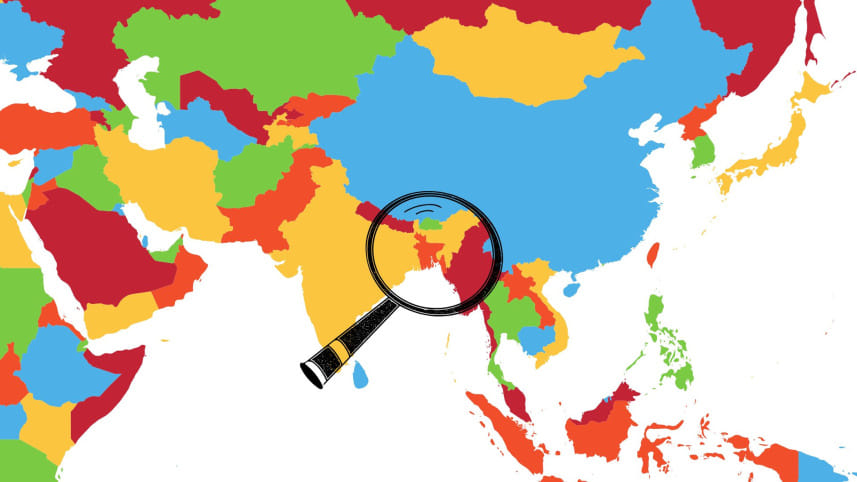
In this part of the world, we often maintain appearances while the foundation rots. The South Asian Association for Regional Cooperation (Saarc) faces a similar fate. The four-decade-old regional instrument has been idling since 2014, following the last summit in Kathmandu, while the rest of the world speeds ahead towards sophisticated multipolarity.
The numbers disappointingly represent an indictment of a shared, regional setback. While blocs like ASEAN have managed to weave their economies together into a 25 percent intra-regional trade powerhouse, South Asia remains a collection of neighbours who share a fence but refuse to trade through the gate. Our intra-regional trade is barely five percent. We have chosen to pay “poverty taxes” through expensive global shipping routes over building the simple, logical corridors using our own geography.
 For all latest news, follow The Daily Star's Google News channel.
 At the centre of this paralysis lies a gaping hole that no amount of diplomatic tea can fix. We must confront the paradox of power defining India’s role in this region. By sheer physical mass and strategic weight, India is undeniably the centre of gravity. Despite this perceived power, India has failed to take its neighbours into confidence using the “Neighbourhood First Policy.”
The India-Pakistan rivalry, a relic of a 1947 divorce that never truly ended, continues to hold the aspirations of billions of people hostage. We’ve allowed a bilateral grudge to function as a regional veto. India must realise that asserting dominance is the quickest way to lose a neighbour; only trust and equitable partnership can build a prosperous region.
On the other side, China is already a neighbour to five Saarc states. Through the China Pakistan Economic Corridor, China has helped create the backbone of Pakistan’s energy and transport. In Bangladesh, China has partnered in many critical infrastructure projects, from power plants to bridges. In Sri Lanka, Nepal, and the Maldives, China’s footprint is measured in billions of dollars in infrastructure financing. To talk about “South Asian cooperation” while pretending China isn’t a central actor is a form of geopolitical delusion.
By formalising the inclusion of China into a revamped bloc—perhaps a SAC+ (South Asian Cooperation Plus) or ASIA CORE—we can create a platform that limits the monopoly of any single state. Yes, there are risks of debt dependency, but we must consider the benefits of enhanced connectivity and bargaining power that smaller countries can get through the existing Belt and Road Initiative.
The other country to consider is the United States. From maritime security in our chokepoints to climate diplomacy for our sinking islands, the US provides a necessary “geopolitical counterbalance.” By bringing in “plus partners” such as the US, Japan, and Australia, we will be able to dilute the regional friction and gain access to the technology and markets that can lift our people out of poverty.
We should consider SACNet (South Asian Cooperation Network), a name that suggests flexible, modular cooperation, or BIPSA (Bay of Bengal–Indo‑Pacific–South Asia), which anchors us in the maritime reality of our future. We need “issue-based working groups” that can bypass political deadlocks. If two capitals won’t speak, let the scientists, the environmentalists, and the academics build a SAC+ network that functions on an “opt-in projects” basis. This is “flexible regionalism”—a system where cooperation isn’t an “all-or-nothing” gamble.
The failure of our regional blocs has a visceral, human cost. It is seen in the eyes of the Rohingya, who remain displaced because we lack a collective regional response. It is seen in our vulnerability to global crises—from the Ukraine war to the Gaza conflict—which hit our economies harder because we have no regional buffer, no shared prosperity to lean on.
Our current inter-state relations are held hostage to the political parties in power, rather than a reflection of the people’s aspirations. The common citizen of South Asia doesn’t understand international relations based on borders; they care about the cost of electricity, the survival of their farms against climate change, and the ability to travel and learn from their neighbours. We must transform these shared “vulnerabilities into collective strength.”
Bangladesh has a unique moral authority in this discussion. We were the ones who perceived and proposed this vision. We are the bridge for peace and prosperity in a region that is currently building moats. Our role is to lead with vision and inclusivity, pushing for a forum that is open to form and not limited by rigid numbers. If one forum is blocked by a rivalry, we should have another in parallel. We need a secretariat with actual autonomy and stamina to pursue the purpose, not a place where ambitious policies go to be filed and forgotten.
Saarc is dormant, but the need for cooperation is demanding our attention. We stand at a crossroads where we can either continue to be a collection of fragmented states being picked apart by global interests, or we can build a multipolar bloc that actually commands respect.
Maj Gen Md Mostafizur Rahman, PhD (LPR) is a military strategist and peacekeeping commander.
Nafis Ehsas Chowdhury is a columnist and studies human resources management at United International University.
Views expressed in this article are the author's own.
Follow The Daily Star Opinion on Facebook for the latest opinions, commentaries, and analyses by experts and professionals. To contribute your article or letter to The Daily Star Opinion, see our guidelines for submission.
Comments