


How India and Bangladesh are reinforcing each other’s extremes

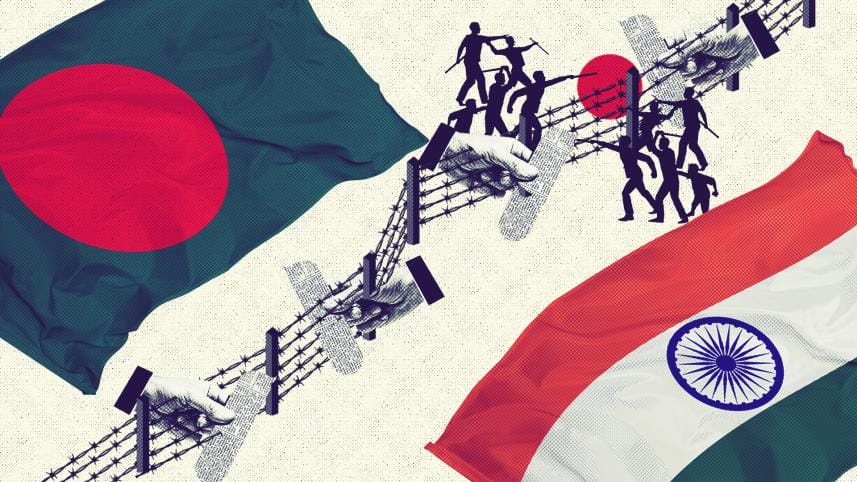
When Sheikh Hasina's long reign finally ended in 2024, Bangladesh found itself at an uncertain crossroads not just of leadership but also of identity. The void she left behind has seen the familiar symbols of Islamic politics resurface with increasingly assertive confidence. What was once confined to the periphery of religious activism is now finding its way into mainstream political conversation. And while this development owes partly to fatigue with what some view as Hasina's secular authoritarianism, it also carries the shadow of a larger regional transformation: the rise of Hindutva in India.
To understand this resurgence, one must first understand the paradox of Hasina's secularism. During the course of her rule, Awami League "transformed" secularism from an ideal of freedom into a rhetoric of control. It came to be associated with censorship, patronage, and the systematic weakening of any political opposition. When power became synonymous with a single party, the moral authority of its secular project collapsed. Into that disillusionment stepped those who could offer moral clarity, or at least the illusion of it. Islamist groups, with their grassroots welfare networks and uncorrupted image, provided a counter-narrative: faith as justice, religion as purity, and politics as moral restoration. But this internal crisis has been quietly amplified by what has been happening across the border.
 For all latest news, follow The Daily Star's Google News channel.
 As India wraps itself in the saffron robe of majoritarian nationalism, the ideological heat radiates beyond its territory. Bangladesh is often receptive or vulnerable to Hindutva's language of cultural supremacy, which asserts that India's soul is "intrinsically" Hindu and that minorities must either adapt or fade. Here, it stirs both anger and anxiety. Each time an Indian leader invokes the term "Hindurashtra," or a television channel in Delhi debates "Bangladeshi infiltrators," the emotional boundary between the two nations hardens. And in that tightening, the call for Islamic identity in Bangladesh finds further strength.
For many young Bangladeshis, the contrast feels almost inevitable. If India is unashamedly Hindu, why should Bangladesh not be proudly Muslim? If our neighbours can blend faith with nationhood, why must we keep away from our own religious heritage? These are not militant questions; they are identity questions, but they are precisely the kind of questions that Islamist politics thrives on. The danger is not in the question itself, but in the answers that populists are waiting to provide. The politics of reaction has long been a South Asian trait; we define ourselves by what we are not or what we stand against. In the 1970s, Bangladesh defined itself against Pakistan's theocracy. Today, it risks defining itself against India's Hindutva. The two stances mirror each other more than either side would admit. Each claims to protect faith from persecution, and each uses that fear to consolidate power. The saffron in Delhi feeds off the green in Dhaka, and vice versa. The border has thus become a mirror reflecting their extremes.
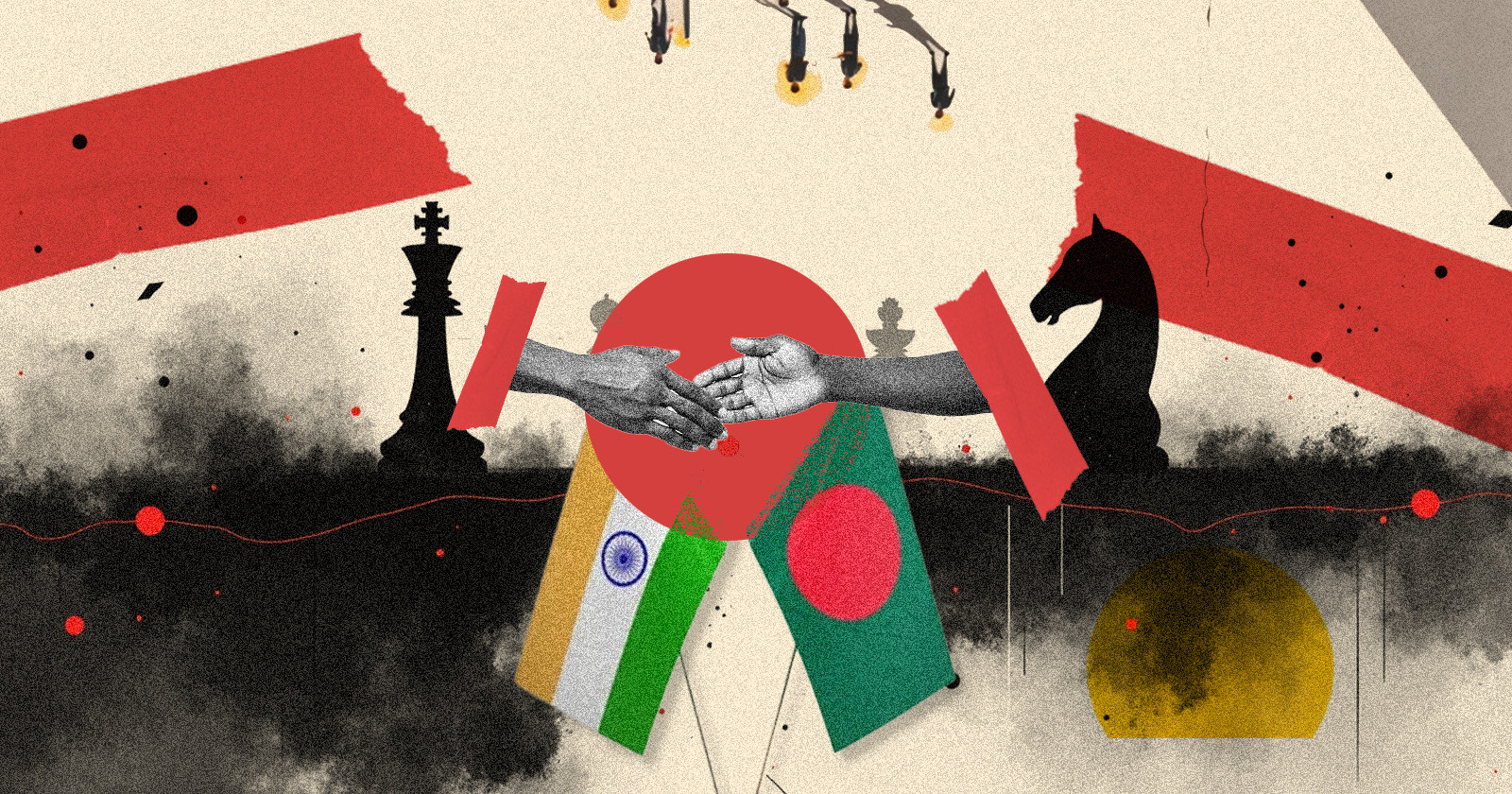
Social media has intensified this cycle. Hindutva-linked accounts amplify stories of "Hindu persecution" in Bangladesh, often distorted or fabricated, to fuel outrage at home. In response, Islamist voices in Bangladesh share clips of Indian mobs attacking Muslims, portraying them as proof that secularism is a lie and that only an Islamic order can ensure dignity. Each side validates the other's deepest suspicions in a digital duet of resentment.
None of this is to absolve Bangladesh of its responsibilities. The rise of Islamic politics here is rooted, to a large extent, in domestic discontent emanating from unemployment, inequality, corruption, and the absence of credible secular leadership. But to ignore the external dimension is to miss half the story. Majoritarianism, like any ideology of exclusion, is contagious. When a community asserts religious supremacy, its neighbours feel compelled to do the same. In South Asia's fragile mosaic, identity insecurity spreads faster than ideology itself.
The tragedy is that both nations once shared a vision of pluralism where faith coexisted with freedom, and culture transcended creed. Bengal's history is full of saints, poets, and reformers who championed a syncretic ethos that bound Hindu and Muslim communities in a shared cultural life. Today, however, the bridges built over centuries are being dismantled, and increasingly replaced by walls of rhetoric and flags of faith. But identity imposed by fear and intimidation is no identity at all.
For Bangladesh, the path ahead is delicate. It cannot afford to let the failure of one secular elite hand victory to another form of absolutism. Nor can it remain blind to the ways regional politics shape domestic sentiments. True secularism must be rebuilt from within through justice, accountability, principled politics, and respect for faith, but without surrendering to it as a state.
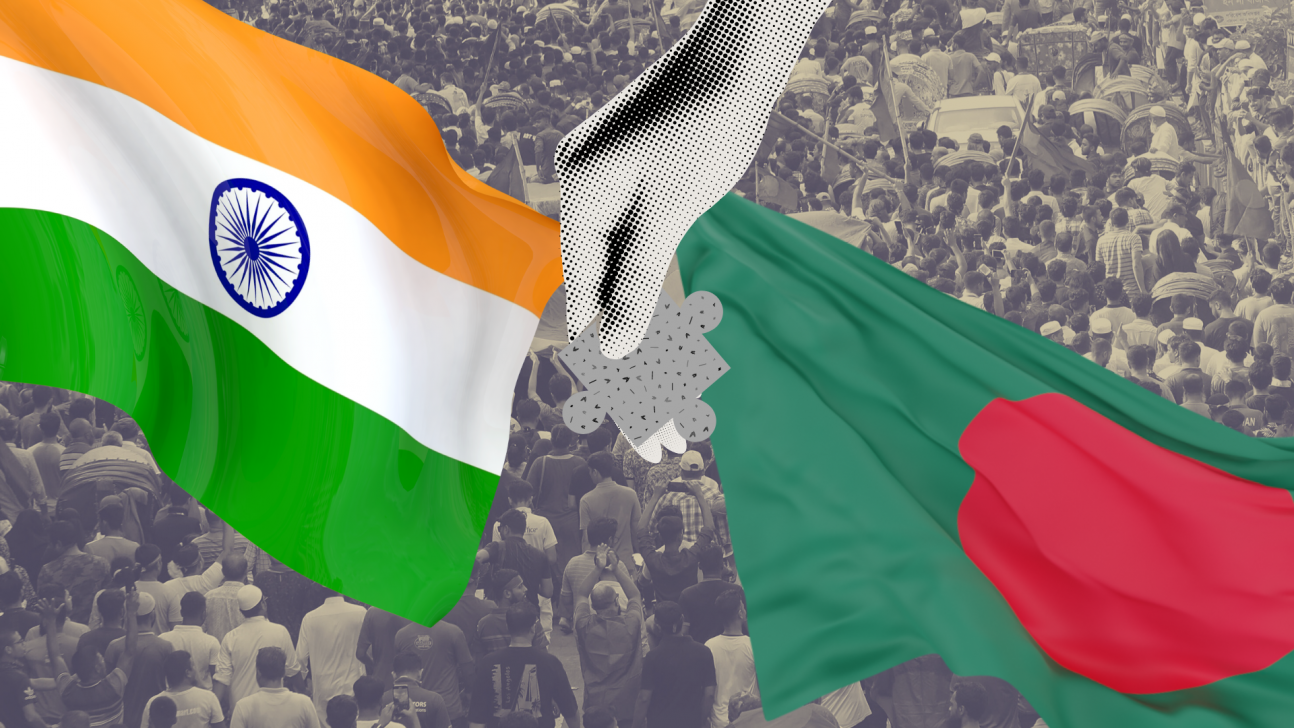
For India, too, there is a warning. Hindutva's triumphalism may rally votes, but it corrodes the region's delicate balance. The more India defines itself by exclusion, the more it empowers its neighbours' exclusionary politics in return. A Hindu India and an Islamist Bangladesh are not opposites; they are reflections of the same insecurity, dressed in different colours.
South Asia does not need another partition of the mind. What it needs is an honest reckoning with the dangerous symmetry that has emerged across its borders. Until both nations learn that faith cannot be the foundation of citizenship and that pride cannot replace pluralism, the crescent and the saffron will continue to glare at each other, serving neither nation's future.
Arman Ahmed is a research analyst specialising in geopolitics and international relations.
Views expressed in this article are the author's own.
Follow The Daily Star Opinion on Facebook for the latest opinions, commentaries, and analyses by experts and professionals. To contribute your article or letter to The Daily Star Opinion, see our guidelines for submission.
Comments