


A case for turning Dhaka's flyovers into rainwater harvesters

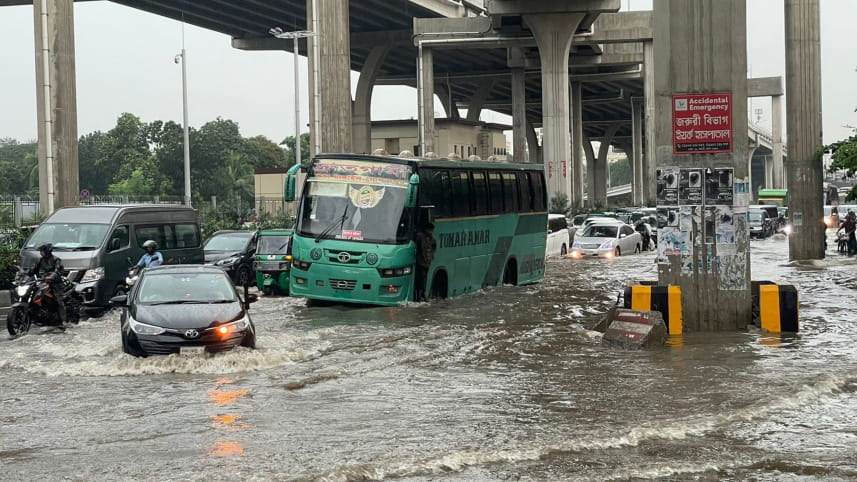
On June 12, the Bangladesh Meteorological Department said Dhaka had experienced about 43 millimetres of rain in just two hours. As usual, after heavy rain, like many spots in the city, the flyovers got flooded and water poured down from the edges. In some spots, the water looked like temporary urban waterfalls, with commuters trying to dodge them.
Most people find this phenomenon annoying. But what if we looked at it as a missed opportunity worth exploring?
 For all latest news, follow The Daily Star's Google News channel.
 Dhaka faces two major water problems: persistent waterlogging during the monsoon and a declining groundwater table year-round. The city still relies a lot on groundwater even as aquifer levels continue to drop. Meanwhile, a massive amount of rainwater is drained out of the city every year through drains, canals, and pumps.
What if we could collect some of that water and return it to the ground using the city’s flyovers?
This idea may seem unusual, but it is worth serious consideration. In many places, rainwater harvesting systems collect water from rooftops using gutters, filters, storage tanks, and recharge wells. The same idea can be applied on elevated structures like flyovers. Instead of letting rainwater run off onto the roads below, special drainage channels could guide it into filters, then into storage tanks or recharge wells.
Take a typical elevated road that is 15 metres wide and 10 kilometres long. That is a catchment area of about 150,000 square metres. If one bout of rain brings 100 millimetres of rain, or 0.1 metres, that surface could collect about 15,000 cubic metres of water, or 15 million litres, from just one spell of rainfall.
Now think about the entire network. Dhaka’s flyovers, elevated expressways, and metro viaducts together stretch over a hundred kilometres. Even if only some of these had rainwater harvesting, a big rainstorm could yield several millions of litres of water.
Similar projects are at work in many places. In India, for instance, Along the Delhi-Meerut Regional Rapid Transit System corridor, around 900 rainwater harvesting and recharge pits have been developed beneath elevated viaducts, stations, and depots. These structures capture runoff from elevated sections of the corridor and channel it through filtration systems into the ground, replenishing the local aquifers. Officials expect the system to recharge millions of cubic metres of groundwater while reducing stormwater runoff.
Singapore is another example. With limited land and water, the city has spent years integrating stormwater management into its roads, canals, reservoirs, and other infrastructure. Instead of seeing rainwater as a problem, Singapore treats it as a resource to be collected and reused.
To tackle its depleting groundwater issue, Dhaka should consider doing the same. The benefits could go well beyond just collecting water: it would mean less water entering drains during heavy rain, helping the city’s already stressed drainage system. Some of this water could be directed into recharge wells to help replenish aquifers. Stored water can also be used for landscaping, construction, street cleaning, and park and green space maintenance. In a city facing both water shortage and flooding, this solution could address several problems at once.
This is the kind of multi-purpose infrastructure that cities facing climate risks really need. As cities grow and climate change brings more extreme weather, infrastructure cannot just do one job anymore. Roads, canals, parks, and public spaces should be designed to provide a range of environmental and social benefits.
Of course, there are real concerns. Rainwater from elevated roads is not the same as water from house rooftops. This runoff can carry contaminants and pollutants. There is a solution for that too. Cities around the world use sediment traps, filters, biofiltration, and recharge wells to keep stormwater clean. Also, the goal does not have to be producing drinking water. Refilling groundwater, helping city plants, lowering flood risk, and providing water for other uses would already be significant benefits.
The economic argument is just as strong. Bangladesh has already spent thousands of crores on flyovers, expressways, and metro lines. Adding rainwater harvesting to future projects or current upgrades would probably cost much less than building new water systems later. Often, the best way to adapt to climate change is with small changes that expand the utility of the existing infrastructure. Too often, climate adaptation discussions focus on costly technologies and large engineering projects. Sometimes, the smarter move is to rethink how we use what we already have.
Every monsoon, millions of litres of fresh water fall for free onto these concrete surfaces. We watch it run onto roads and into flood drains, causing waterlogging, and then vanish. Meanwhile, we keep drilling deeper into aquifers to meet the capital city’s growing water needs. So, before approving the next flyover, expressway or big transport project, policymakers should ask one simple question: can this structure also collect rainwater?
Shafiq R Bhuiyan is vice-president and head of internal communication and CSR at BRAC Bank.
Views expressed in this article are the author's own.
Follow The Daily Star Opinion on Facebook for the latest opinions, commentaries, and analyses by experts and professionals. To contribute your article or letter to The Daily Star Opinion, see our guidelines for submission.


Comments