


Can Dhaka become a 15-minute city?


The idea of a 15-minute city has been on the table of policymakers, architects, urban planners, economists, and climate professionals worldwide for several years. Urban thinker Carlos Moreno brought the concept to global attention. It presents the idea of a city where everything we need in daily life should be reachable within 15 minutes by walking or cycling from home. This idea may sound familiar in the Bangladeshi context at first glance, yet a deeper look shows that its underlying principles and structural requirements remain far from being met in Dhaka. Interestingly, Chief Adviser Professor Dr Muhammad Yunus had mentioned a similar idea several years ago about "social-business cities," where social enterprises help provide essential services such as healthcare, housing, and education directly within communities. Both models seek a city where citizens can carry out their daily activities without being trapped in exhausting traffic for long hours. As many cities such as Paris, Barcelona and Melbourne have moved towards the 15-minute city model, a key question emerges: can Dhaka realistically achieve the core functions of such an urban framework?
The 15-minute city concept is simply about putting human needs at the centre of urban growth. It doesn't mean one cannot travel far when needed; rather, it means one shouldn't be forced to travel far for basic needs. Also, the way to reach these basic facilities should be accessible and comfortable for all groups of people. The model rests on four pillars: proximity, diversity and mixed land use, density, and ubiquity. Proximity, in terms of mobility, means that essential services should be close enough that people don't lose time in traffic just to buy groceries or see a doctor. It is measured by how far or fast people can travel easily without depending on a motorised vehicle. The diversity of land use offers different types of activities such as shops, offices, parks, schools, restaurants, healthcare, and sports facilities throughout the neighbourhood. Population density is considered an advantage in the model, if supported by good infrastructure like adequate public spaces, safe streets, clean and wide walkways, cycle lanes, etc. Ubiquity refers to the equal distribution of services among people from different socio-economic backgrounds. The model emphasises reducing disparities between affluent neighbourhoods and low-income areas.
 For all latest news, follow The Daily Star's Google News channel.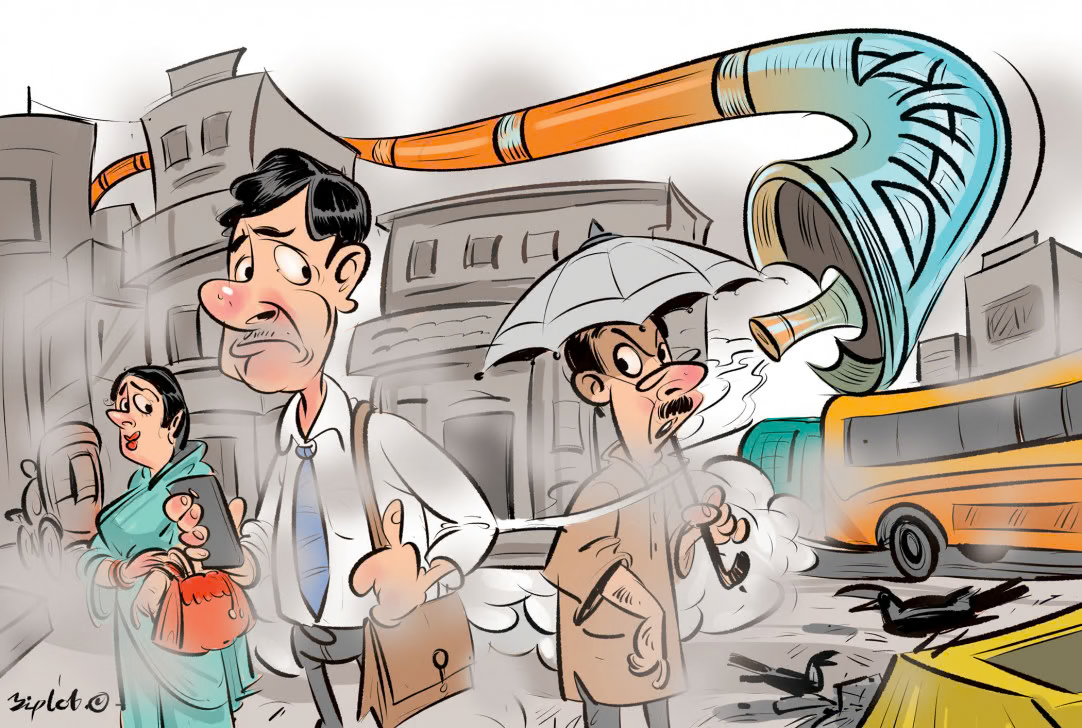
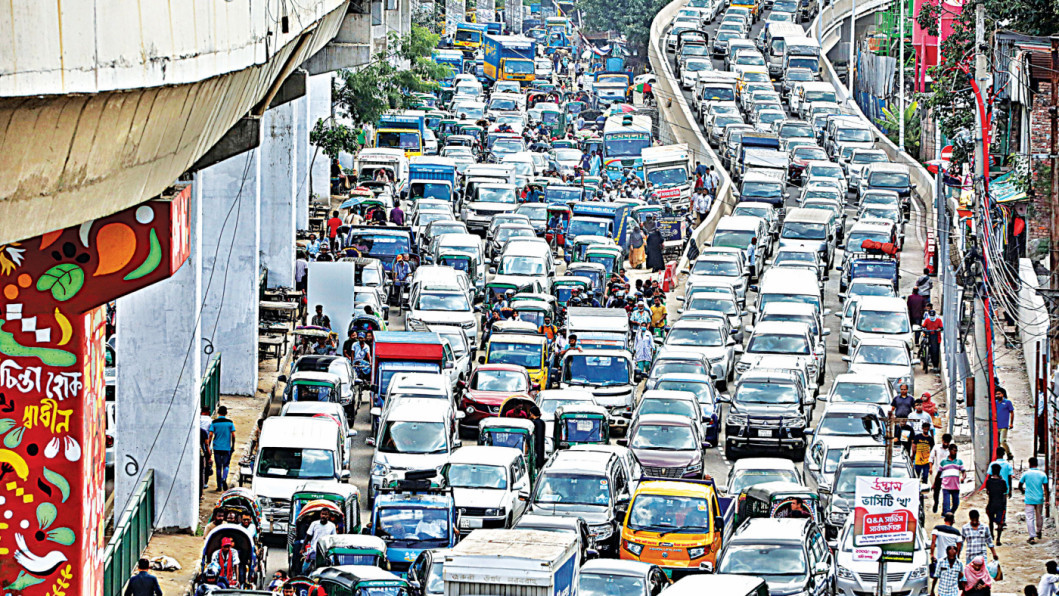
Where does Dhaka stand in this? Well, Dhaka's reality is shaped by extreme density, rapid migration, poor infrastructure and traffic management, and decades of uneven planning. According to a 2023 study by the Accident Research Institute of Bangladesh University of Engineering and Technology, the average driving speed in Dhaka in was 4.8 kilometres per hour, slower than walking pace during peak hours. Dhaka is also highly centralised with jobs, offices, government institutions, hospitals, and commercial hubs clustered in a few zones: Motijheel, Gulshan, Farmgate, Tejgaon, and Karwan Bazar. As a result, many residential neighbourhoods lack work opportunities, accessible healthcare, public spaces, or quality education. Besides, public space in Dhaka is scarce. Green areas per person fall far below global recommendations, and sidewalks are often broken or blocked, making walking uncomfortable or even dangerous.
Ironically, some aspects of Dhaka resemble the elements of a 15-minute city, but not by design. The city's dense, mixed-use neighbourhoods like Old Dhaka, Mohammadpur and Mirpur offer diverse land use with shops, schools, pharmacies, restaurants, and other services within walking distance. Informal economies and street vendors create hyperlocal access to essential goods. These areas offer community-level activities, shared places, multi-purpose buildings, small clinics and markets, and often have community-level mosques in these neighbourhoods. But density and diversity alone don't make a 15-minute city. For the model to work, this high density and diversity must be paired with high liveability, walkability, safety, and mobility choices. Walking for 15 minutes in any neighbourhood of Dhaka either feels unsafe, unpleasant, or physically exhausting for even people in good health, let alone vulnerable groups, because of narrow and obstructed footpaths, unbreathable air, unpredictable traffic, and a lack of public facilities. So, even if the services are physically nearby, they are not comfortably reachable.
So, is it possible for Dhaka to become a real 15-minute city? The answer is yes, but not in its idealised European form. Dhaka cannot retrofit itself into Paris, but it can evolve into a "15-minute neighbourhood network" in areas that already have the density and diversity, but not the liveability. Several actions are needed to achieve that. All neighbourhoods should have clean, wide, obstacle-free pedestrian walks reaching every service required. Construction policy need to be stricty enforced so that building materials do not occupy streets causing serious air and dust pollution. Streets need to be redesigned prioritising people, not vehicles. Streets must have bicycle lanes. Every community should have easy access to the nearest park and playground and for that good quality public transport needs to be available, accessible, and monitored under proper authority. A well traffic management system controlling vehicle numbers, routes backed by enforcement is also necessary.
The 15-minute city concept is not a utopian fantasy for Dhaka; it is a necessary paradigm shift with local adaptation of dense, lively, community-oriented, equitable neighbourhoods. As the city is struggling with pollution, congestion, and declining liveability, it can utilise its co-living nature and community-based neighbourhoods to become a healthier, people-oriented city. With strong political will, regulatory reform, and sustained investments, Dhaka still can begin its journey to the 15-minute model, one neighbourhood at a time.
Farzana Islam Toma is an architect and road safety professional working as a consultant for the sustainable city programme at World Resources Institute. She can be reached at Farzana.Toma@wri.org.
Views expressed in this article are the author's own.
Follow The Daily Star Opinion on Facebook for the latest opinions, commentaries, and analyses by experts and professionals. To contribute your article or letter to The Daily Star Opinion, see our guidelines for submission.
Comments