


How power and profit paralyse Dhaka’s transport system

Persistent traffic congestion, smog-choked air, and a fleet of poorly maintained buses define Dhaka's transport reality. These conditions are often described as a functional crisis. Yet, despite decades of sophisticated, internationally supported planning, efforts to modernise the city's transport system have faced continuous setbacks. This chronic disorder is not merely a technical failure awaiting the right managerial fix; rather, it appears to be a stable, politically constructed equilibrium that generates significant private rents for an entrenched political-economic network.
Evidence from the past 15 years confirms the remarkable resilience of this system. A 2009 World Bank study identified a network of bus syndicates, politicians, police, and trade unions that successfully frustrated reform. Fifteen years later, a 2024 Transparency International Bangladesh (TIB) report identifies essentially the same network of challenges, suggesting that the system is not unstable; it is a highly resilient. The immobility experienced by the public, in this view, is the external cost of a rigid and established stakeholder arrangement.
 For all latest news, follow The Daily Star's Google News channel.
 The core dynamic driving Dhaka's transport dysfunction is a consolidated private network that views public transport not primarily as a service, but as a private rent-generating asset. The bus sector is dominated by powerful owner-worker associations, which benefit from close affiliations with political parties. According to TIB's 2024 study of registered bus owners, nearly 92 percent of them are associated with political parties, with 80 percent affiliated with the then-ruling party. This level of integration gives the network the capacity to exercise influence over decision-making and to share in the resulting illicit gains.
The returns from this system are substantial and quantifiable. According to the TIB report, the economy of unregulated financial transactions linked to private bus and minibus operations amounts to nearly Tk 1,059.37 crore annually. This figure represents the price paid by operators to maintain operational flexibility, shielding them from strict safety regulations, traffic enforcement, and effective regulatory modernisation.
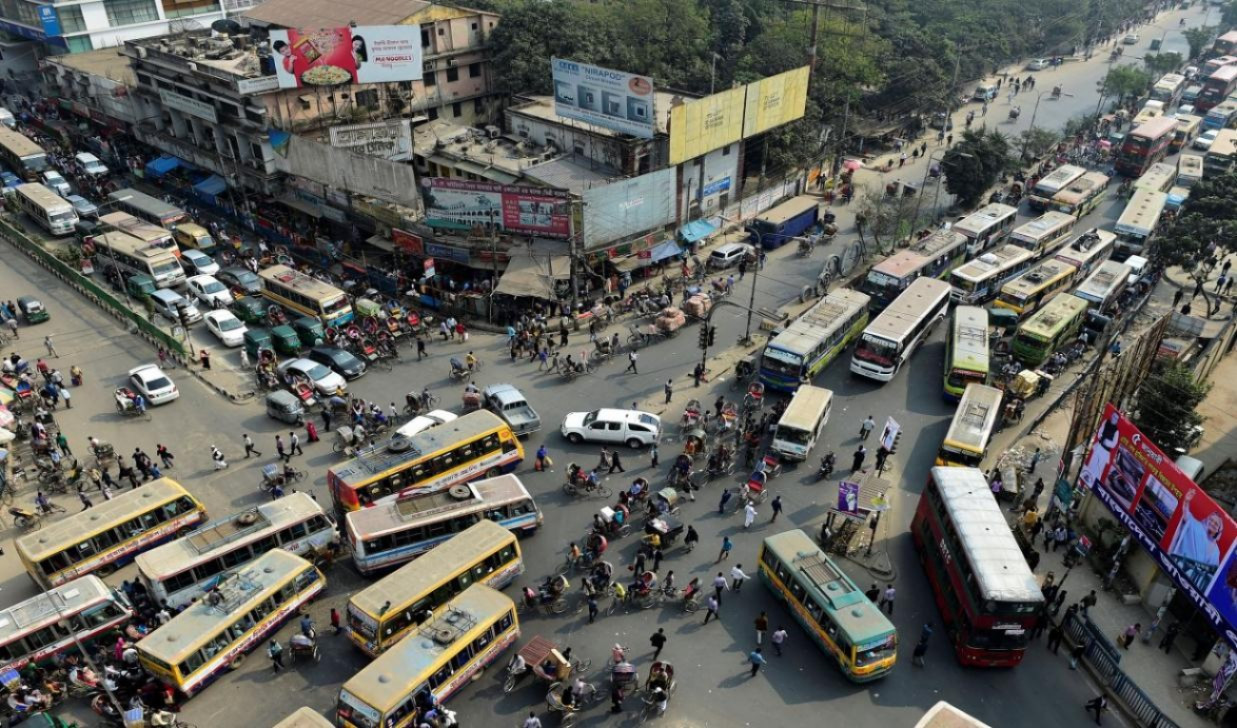
At the operational level, an estimated Tk 2.21 crore is generated daily from buses and hauliers at terminals and street-level hotspots. This massive, decentralised cash flow ensures that on-the-ground agents—enforcement bodies and local political actors—become integral stakeholders in the revenue stream rather than neutral arbiters of the law. The persistence of the entire system derives from this alignment of interests: owners secure profits, political patrons gain resources, and enforcement channels receive revenue.
Furthermore, the macro-level arrangement is protected by an institutional landscape marked by complexity and fragmented authority. Dhaka's transport sector is overseen by a wide array of institutions, including seven ministries and 13 agencies. What is often perceived as administrative inefficiency can, from a political economy perspective, be understood as a structural condition that dilutes accountability. By dispersing regulatory oversight across numerous bodies, the system effectively shields politically powerful, rent-seeking networks from meaningful state-led reform.
The Dhaka Transport Coordination Authority (DTCA), intended to serve as the central coordinating body, remains limited in effectiveness and demonstrably lacks the capacity and empowerment to coordinate effectively. The repeated failure to strengthen the DTCA, despite decades of plans calling for such reform, is viewed by some analysts as a successful defence of the profitable, decentralised rent model.
For micro-scale operation, the network's private profits are translated into everyday practice on the streets through a common contractual arrangement known as the "daily deposit basis." This practice is a central mechanism fuelling driver behaviour, congestion, and operational impunity. Under this system, the bus owner is guaranteed a fixed daily deposit, insulating them entirely from market volatility and risk. The full burden of operational costs—traffic congestion, fluctuating fuel prices, and crucially, the daily payments required to ensure operational flexibility—is transferred to low-wage drivers and conductors.
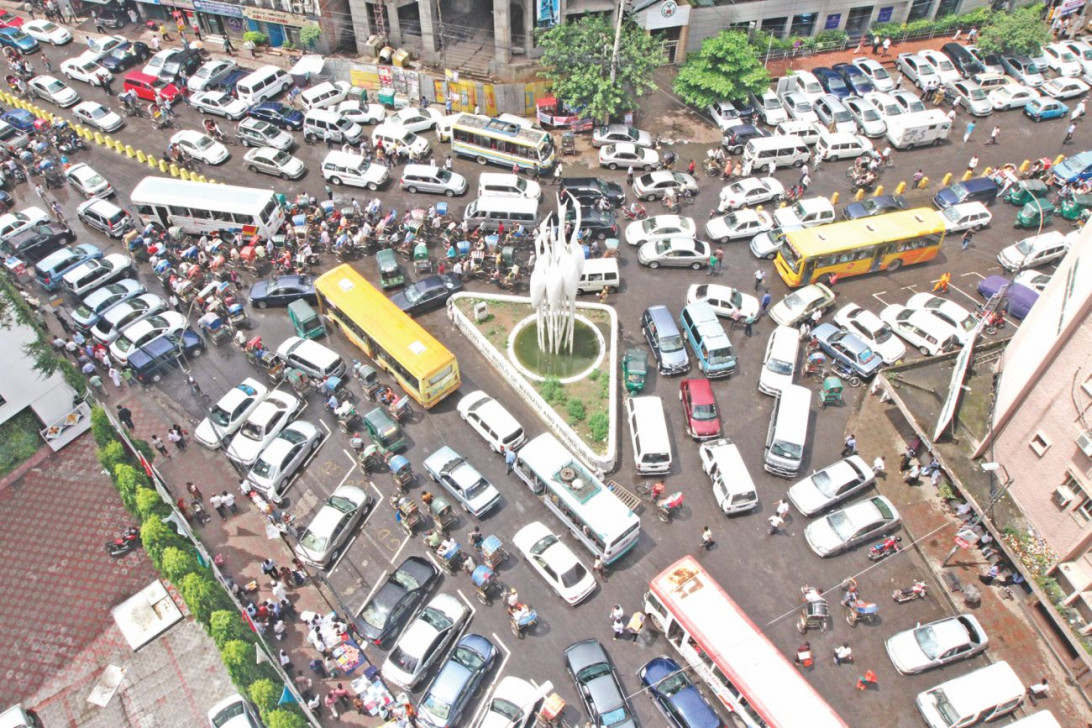
To survive financially by meeting the deposit target, covering external costs, and earning a personal income, drivers are structurally compelled to violate traffic laws, speed, and compete recklessly. This contractual transfer of risk creates an urgent pressure to maximise daily revenue. In effect, transport workers bear the operational costs while sustaining the wider political-economic apparatus through their daily earnings.
So-called "soft" reforms aimed at fixing the foundational bus service, which would directly threaten the existing daily deposit model, are consistently undermined. The 2021 Dhaka Nagar Paribahan pilot, under the Bus Route Rationalisation committee, was designed to consolidate fragmented operators into a unified franchise system, but it ultimately failed. It was defeated by significant resistance from bus operators and internal political influence.
In contrast, capital-intensive infrastructure projects, such as expressways, are actively championed because they create new opportunities for large-scale procurement and construction rents. This strategy of selective implementation allows decision-makers to project an image of modernisation and problem-solving, while simultaneously creating space for financial overruns and opaque procurement practices. In effect, political pressure and donor funding are diverted away from fundamental bus reform—the politically sensitive solution that would disrupt the persistent and profitable mechanisms underpinning the existing network.
The limited success of technical transport plans in Dhaka is a predictable outcome of deep-seated political-economic dynamics. Moving beyond this profitable equilibrium requires reform that is not merely administrative, but politically determined. Any viable path forward must confront the underlying political economy by directly challenging regulatory vulnerabilities through targeted scrutiny and enforcement of illicit transactions within key regulatory bodies. It must also establish a genuinely empowered and unified transport authority with clear executive authority to integrate planning and enforcement across the metropolitan area, overcoming institutional fragmentation. Finally, it requires reforming operational incentives by legally abolishing the structural risk-transfer model and enforcing a transparent and stable wage structure for transport workers.
Until the political and economic costs of maintaining this organised disorder outweigh the immense private benefits it generates, Dhaka's paradox of immobility will persist. The challenge is not one of finding the right technology, but of generating the political will to confront a deeply entrenched system.
Dhrubo Alam is deputy transport planner at the Dhaka Transport Coordination Authority (DTCA).
Views expressed in this article are the author's own.
Follow The Daily Star Opinion on Facebook for the latest opinions, commentaries, and analyses by experts and professionals. To contribute your article or letter to The Daily Star Opinion, see our guidelines for submission.
Comments