


An open letter to Limon and Bristy

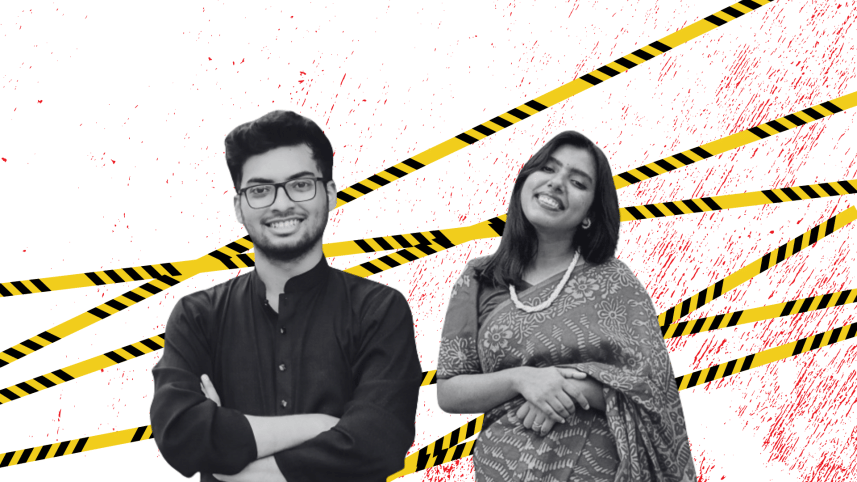
Limon and Bristy,
The attic of my thoughts is peopled by figures whom I never thought would gather to murmur in my head; these are the voices of people who should never have to meet like this.
 For all latest news, follow The Daily Star's Google News channel.
 In the corner, the brother who encouraged you, Bristy, “the lazy one” in your own words, is filled with deep regrets. He is the one who pushed you to apply for the scholarship in the US. And you thought it was in your “rizq” to move up to the First World and prove yourself as an engineer. And then, there are Limon’s parents. You, Limon, told them not to disturb you in the final hours of your thesis submission. You were just months away from adding the doctorate title before your name. The parents knew of your courtship with Bristy. You really liked that girl: decent and talented. The names, Limon and Bristy, could have been on a wedding card. Now you have become a headline.
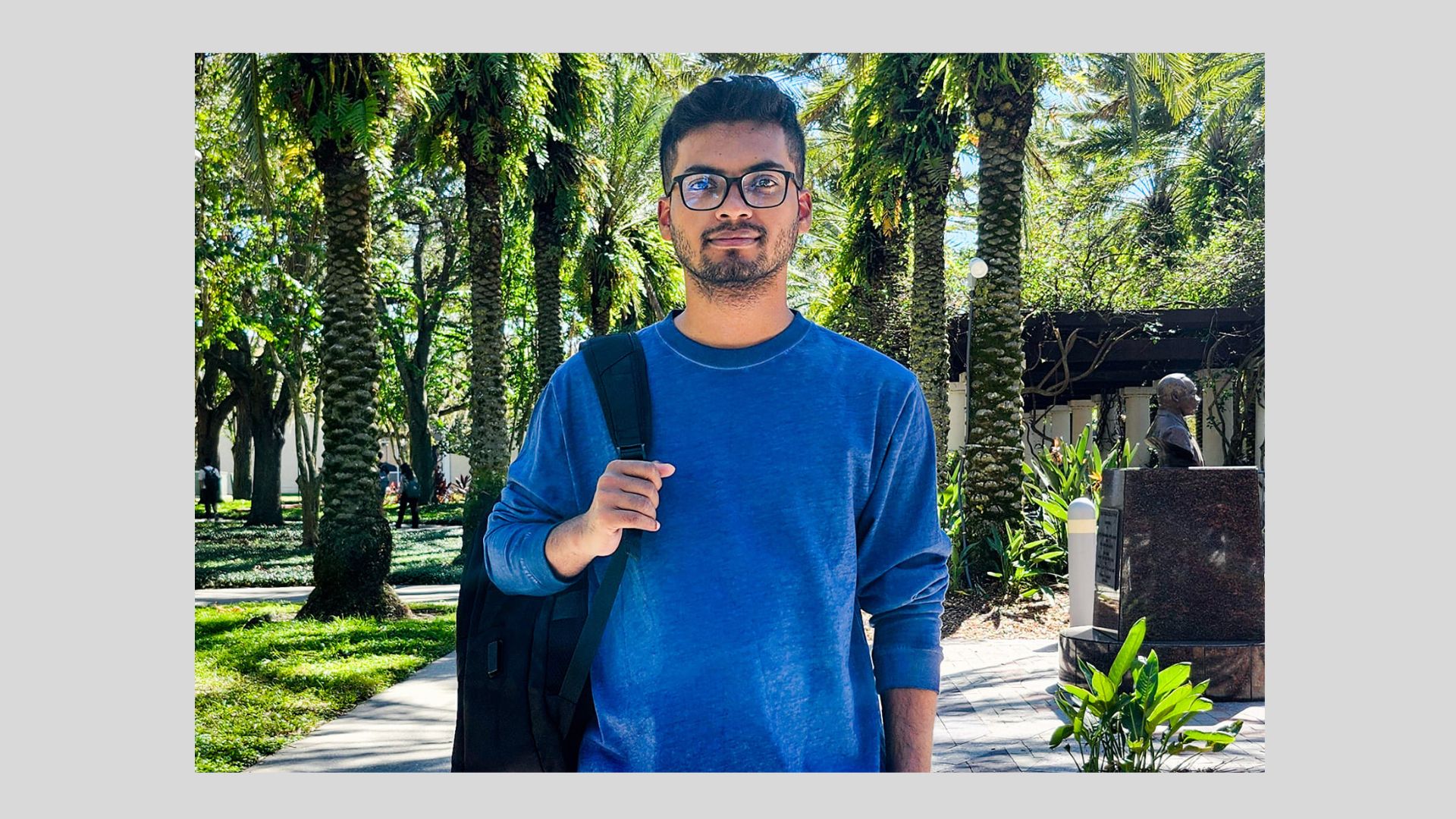
Oh, is it the teacher on the other side of my head? He was so proud of your achievements. Coming from a rural part of the country and making it to a well-known US university is no mean feat. How many times have you cited them as role models? How many times have you wished the country had the labs and resources to retain the brain? How many times have you gloated about the success of your students as your own? They almost endorsed your belief that the country has the right talent, and they can prove themselves anywhere in the world only if they are provided with the proper learning environment. A teacher speaks next, not in grief alone, but in recognition. We push our students not because the world is kind but because we hope merit might negotiate with cruelty. We tell them to read more, think harder, and go further. We imagine them returning as scholars, as mentors, as the proof that effort matters. You did everything that was asked of you—and more. You crossed that fragile threshold from undergraduate uncertainty to doctoral promise. You stood, quite literally, on the steps of success. That is where the world failed you.
Another teacher in Tampa, Florida looks at the empty lab desks and sighs. They were so close to having it all: the wonderful American Dream. Their research, their dedication impressed you. Their zest for life, too. Now they are just obituaries and memories. All eyes are now on the courtroom, with the expectation that justice would be done.
These are the students who hosted Bangladesh nights. You shared meals and late-night addas. Bristy, do they know that you have the rare talent of singing while capping a cup? On Facebook, the videos of your “cup music” are still liked by thousands. Absurd as it may seem, you are not there to thank your fans and followers. Then again, you are way beyond the fallacy of fandom. You showed them how little things can turn big. An empty paper cup filled with music can serve thousands of music connoisseurs. You turned a little country into big news. You showed them that being “from nowhere” could also mean being from everywhere.
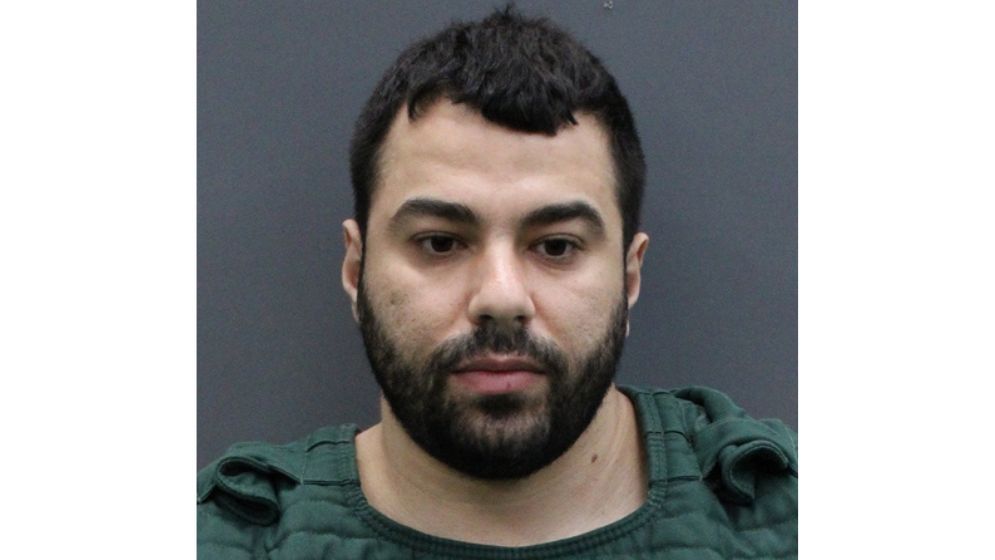
Hisham, Hisham, Hisham—you monster! What are you doing among humans? You are like the selfish giant who could not withstand that the children played in his garden. You are similar to the ancient sailor who killed an innocent bird without a reason. So, what was it? Your roommate complained about your obnoxious behaviour. Is that a crime enough to slay a fellow human being and his friend? Your family had a stay order against you. Your violent behaviour was already recorded. How could you be allowed to stay in an off-campus student accommodation? You are a school dropout. Did you watch Limon and Bristy from a shadowy distance? Did their success cause you pain? Were you sad (Schaden) to see them joyful (Freude)? Hisham, the irony is, Limon and Bristy came from a country that boasts the word “poroshrikatorota,” a close translation of which can be “schadenfreude.” They were running away from the jealousy of mean-minded people. They wanted to embrace the greatness of the country that had been a beacon of freedom for 250 years. Oh Hisham, did you know what King Charles said about America: “This land of opportunities has nourished some of humanity’s greatest minds from the industrial age to the space age.” Yes, Limon and Bristy responded to that call.

Yet you had different ideas. You asked ChatGPT how to get away with murder. You could have just watched the ABC series since you were that lonely. You must truly be a sick person to think your unhappiness must be spread to mar other people’s happiness. Your resentment and envy, a flicker of schadenfreude, surface when you say, “They had everything. They were happy.” And you had nothing. And now you will be nothing. If Edgar Allan Poe were to write of you, he would have lingered on your tell-tale heart. If Fyodor Dostoevsky were to respond, he would descend into the moral maze to gauge the collateral damage of evil. Still there would be no closure, no easy consolation.
Your crime is incomprehensible even to the machine that you used to frame. Did you do it deliberately to frame the machine? Surely, you lack a heart in that body that dismembered your own roommate. You wrote prompts to cover up your crime. Language can be used as a veil to conceal intentions, agendas, or prejudices. But no system, human or artificial, can “cover up” violence without first reflecting the world that produces it. The machine is a fast learner. Your toxicity has fed the archive. You have vitiated a system that is outpacing us in our thoughts.
So, what remains? Limon’s decomposed body was discovered by a bridge over troubled waters. Bristy, like her name, has dropped and faded. What remains is a reckoning. Two lives lost. Their stories will soon be shelved to make room for the new gossip in town. What remains is a question directed at institutions: universities, states, and communities: What does it mean to invite students into a promise of mobility and not guarantee their safety? What remains is a demand that your story not be reduced to a statistic or a cautionary footnote. What remains is a sticky memory, stubborn enough to not go away. An unprinted thesis. An empty cup devoid of music.
The people in my head ask one simple question. Can we use these tragic deaths as a means to examine not only the violence that ended these lives but also the structures that made such violence possible? A structure that hates happiness in others?
Dr Shamsad Mortuza is vice-chancellor of University of Liberal Arts Bangladesh (ULAB).
Views expressed in this article are the author's own.
Follow The Daily Star Opinion on Facebook for the latest opinions, commentaries, and analyses by experts and professionals. To contribute your article or letter to The Daily Star Opinion, see our guidelines for submission.
Comments