


Ten steps to guide Bangladesh out of the energy crisis

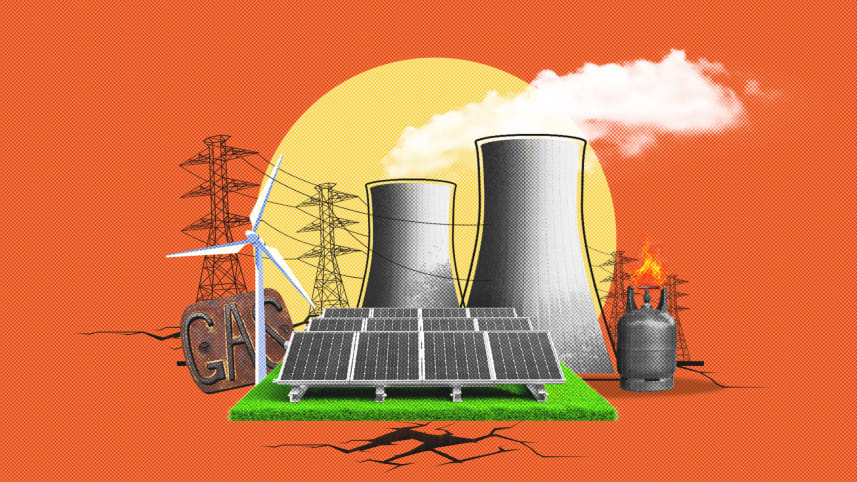
It’s good news that a special parliamentary committee has been formed to address the energy crisis by offering recommendations on the legal, institutional, and operational issues arising from it. The committee is scheduled to hold its first meeting today (May 3). One expects it to recommend not only immediate and urgent solutions but also, more importantly, medium- to long-term solutions for a sustainable transition towards clean and renewable energy development in the country. While this committee’s tenure will be for one month, it is expected to recommend follow-up and monitoring by the parliamentary standing committee on the Ministry of Power, Energy and Mineral Resources in the coming days.
The special committee should duly acknowledge the challenge of over-dependence on the import-dependent fossil fuel supply chain. The war imposed on Iran has created cracks in the oil-dependent economies of the Middle East, and the unresolved reality of the war has put the world in such a situation that even if the war stops temporarily, the crisis will return repeatedly in the coming decades. This means the global energy system has entered a kind of permanently unstable situation. As a result, the global oil market and related energy markets such as LNG, coal, and LPG will remain unstable. Therefore, it is especially important now to emphasise energy diversification in Bangladesh.
 For all latest news, follow The Daily Star's Google News channel.
As someone who has worked in the power and energy sector, I would like to recommend the following.
1. Gradually reduce subsidies in the power and energy sector
Government is under pressure to reduce the subsidy payment for the Bangladesh Power Development Board (BPDB), BPC (Bangladesh Petroleum Corporation), Rupantarita Prakritik Gas Company Limited (RPGCL), and Petrobangla. However, subsidies should not be reduced only through the adjustment of tariffs on the consumer’s end. Rather, BPC’s pricing policy should be revised to make it market-based. Much of the demand for subsidies exists due to the faulty pricing for independent power producers (IPPs) in the power sector. Hence, the government should not go for the renewal of IPPs after the contractual period is over.
2. Introduce a real-time monitoring system
From fuel import to filling stations, in the five to seven stages of the distribution process, widespread leakages and corruption have been exposed during the recent crisis. Therefore, it is very important to establish a real-time digital monitoring system from import to unloading at the depot, from the depot to the filling station, and from the filling station to consumers. Allocation should be made in the next national budget to establish this system. India and Pakistan have made significant progress using such digital monitoring systems.
3. Allocate increased expenditure for energy imports
Even if the US-Iran war is over soon, it may take more than one year for global energy prices to stabilise and return to pre-war prices. Therefore, the usual allocation for energy imports by the government will not be sufficient this time. At least 50 percent higher allocation should be made for energy imports in the next fiscal year. However, to obtain this additional funding, low-interest loans from the World Bank and the IMF may be helpful for the government. But the special committee should recommend against taking high-interest loans from the international market.
4. Urgently connect discovered gas
to the national grid
Gas found in Bhola, plus gas available in previously used residual gas wells, and gas obtained through accelerated exploration should be urgently transmitted to the national grid. It is necessary to prioritise gas well drilling. Petrobangla or Bangladesh Petroleum Exploration and Production Company Limited (BAPEX) should declare this as an emergency. Besides, Tengratila gas well can be drilled now since the Niko case is over. Petrobangla should also retender the exploration of 24 offshore gas blocks after revising the tender documents as necessary, taking into account terms that would attract gas exploration companies.
5. Suspend construction of LNG-based infrastructure
A major challenge in meeting Bangladesh’s current energy costs is expensive LNG imports, leading to permanently high government expenditure. Unfortunately, multinational banking corporations are highly interested in providing bank guarantees and bank loans for LNG imports and related infrastructure development. These expensive infrastructures are creating long-term liabilities and will continue to do so. In contrast, moving towards more accessible and sustainable renewable energy will not create such long-term liabilities. Therefore, the committee should discourage LNG imports and the development of LNG-related infrastructure as part of a medium- to long-term strategy.
6. Eastern Refinery expansion
is unnecessary
Modernisation of the existing infrastructure of Eastern Refinery is sufficient. The argument for expanding it to increase “strategic reserves” is not acceptable. Such reserves will increase import dependency further in the long run. Therefore, the committee should recommend the modernisation of the existing ERL infrastructure, instead of constructing another unit.
7. Reduce diesel use and increase solar irrigation in agriculture
The 13 lakh diesel-powered irrigation pumps currently in use in the country can easily be converted to solar-powered irrigation pumps. Due to insufficient funding, this sector is progressing slowly. Conversion to solar power will help the government reduce 12-13 percent diesel usage and thereby reduce diesel imports by three lakh tonnes. Such foreign currency savings will reduce pressure on the balance of payments and foreign exchange reserves. The committee should recommend necessary investment by the government, multilateral development banks (MDBs), and international financial institutions (IFIs) funds in this transformative journey.
8. Introduce EV-based vehicles
instead of diesel
About 66 percent of the diesel used in the country is consumed by the transport sector. If 30 percent of vehicles, especially buses, trucks, and lorries, can be converted to electric vehicles by 2030, the government could reduce diesel use by 8.3 lakh tonnes. Such an amount in foreign currency savings will reduce pressure on the balance of payment and foreign exchange reserve. To achieve this, the committee should advise converting all government vehicles to EVs, as well as reducing duties on all EV vehicles.
9. Urgently declare a plan to implement 10,000 MW of renewable energy
The current government has announced a plan to generate 10,000 megawatts (MW) of solar electricity by 2030. This would be a positive move. The committee should recommend announcing the government’s plan to achieve this target and monitoring it through the parliamentary standing committee. This may include accelerating the implementation of the existing 3,000 MW national rooftop solar programme, completing the tender process for the 5,000 MW large-scale solar projects, and setting timelines for quick implementation by the private sector. In addition, the committee should recommend completing the review of the cancelled letters of intent (LOIs) of the 31 renewable projects as per the recent office order and quickly issue implementation orders. In this case, for newly announced Power Purchase Agreements (PPAs), alternative acceptable conditions may be included instead of the “guarantee clause” to attract private sector investment.
10. Accelerate foreign investment in the renewable sector
Ensure easy one-stop service for foreign investors, introduce online-based payment and exchange of documents and information with different agencies and ensure predictability in receiving specific services on time—both in terms of quality and price. The committee should advise relevant agencies to undertake specific activities to be reported to the parliamentary standing committee. The agencies include Bangladesh Investment Development Authority (BIDA), BPDB, Sustainable And Renewable Energy Development Authority (SREDA), Bangladesh Rural Electrification Board (BREB), Bangladesh Economic Zones Authority (BEZA), Bangladesh Export Processing Zones Authority (BEPZA), Department of Fire Service and Civil Defence (FSCD), Department of Environment (DoE), Registrar of Joint Stock Companies And Firms (RJSC), Petrobangla, Titas, city corporations, etc.
Since foreign investors are interested in investing in wind-based power generation, SREDA should publish its updated wind maps of the country, establish a dedicated office for the wind sector, and create a policy framework on wind-based power generation to provide necessary predictability to foreign investors in this potential sector.
Finally, the committee should advise that the government carry out long-term planning using its own resources and not use financial support from development partners or international agencies, as this weakens national policy ownership as well as the country’s policy sovereignty.
Dr Khondaker Golam Moazzem is research director at the Centre for Policy Dialogue (CPD) and director at the CPD Power Energy Study.
Views expressed in this article are the author's own.
Follow The Daily Star Opinion on Facebook for the latest opinions, commentaries, and analyses by experts and professionals. To contribute your article or letter to The Daily Star Opinion, see our guidelines for submission.
Comments