


Banking clean-up is long overdue
For years, our banking sector has been a case study in the perils of politically connected finance. Its image has been tainted by mounting bad loans, a culture of impunity for powerful defaulters, and the anomalous status of ailing state-owned banks. Against this backdrop, the 45 proposed amendments to the Bank Company Act represent the most significant attempt at financial reform in decades. The planned changes aim to establish unified oversight by the central bank for all lenders.
Among the proposals, abolishing the "specialised bank" status for state banks is long overdue. This classification has effectively placed some banks in a regulatory no-man's-land, allowing them to operate with capital adequacy exemptions and make senior appointments without central bank approval. The result has been a disaster as state banks emerged as the primary repositories of non-performing loans, with their balance sheets crippled by politically connected borrowers. Meanwhile, the proposed ban on sitting MPs, cabinet members, and local government representatives serving as bank directors is a direct assault on the nexus of political and financial power that has dictated credit flows for decades. Similarly, the tightening of rules on family directors by narrowing the cap, broadening the definition of family, and imposing a "cooling-off" period for board members is a major step forward.
 For all latest news, follow The Daily Star's Google News channel.
 These reforms, if implemented, will dismantle the opaque corporate structures that have enabled rampant related-party lending. Reducing board sizes and mandating at least half of all directors to be independent professionals could also transform bank oversight. In a sector where boards have often been packed with relatives and political allies, this move towards professionalisation is vital. As Nazrul Huda, a former deputy governor of the central bank, rightly points out, smaller but expert boards are far more effective in governance.
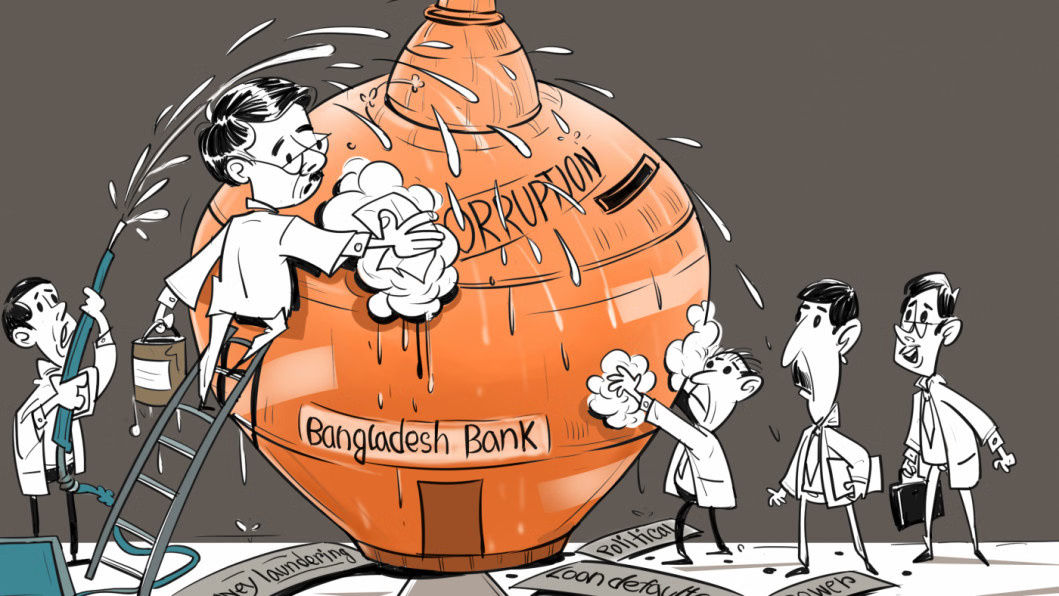
Some of the more nuanced changes also reveal a pragmatic approach. Removing the controversial "wilful defaulter" category, while seemingly a step back, is a sensible streamlining. The label, introduced in 2023, created a subjective and corruptible distinction, adding bureaucratic hassle without improving recovery rates. Maintaining a single, clear defaulter list is a more straightforward and enforceable system.
Of course, a draft law is only the beginning. The true test lies in its adoption and implementation. We must be aware that the clause barring politicians from boards, in particular, will be a lightning rod for opposition. The government must hold its nerve. To graduate from least developed country status and attract the investment needed for its next phase of growth, Bangladesh requires a stable financial system, but banking malpractices have long concentrated risk, eroded depositor trust, and ultimately necessitated costly capital injections. The proposed amendments promise to align our banking sector more closely with global standards. Thus, the interim government, and the next elected one, must see them through without wavering going forward.
Comments