


Act now to stop next dengue outbreak
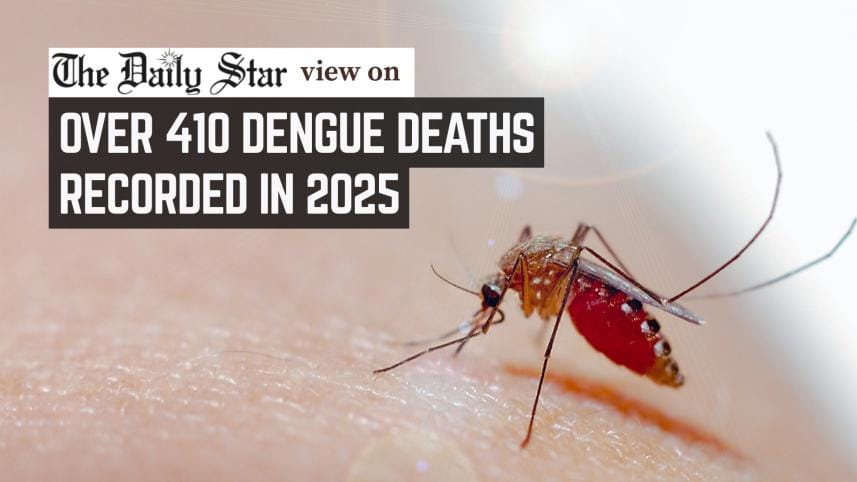
In the absence of effective dengue control policies and measures by the authorities concerned, another year has ended with a high number of dengue cases. Health authorities recorded at least 412 deaths and 102,673 infections as of December 29, 2025, exposing deep-rooted weaknesses in the state's disease prevention preparedness. Although cases declined with the onset of winter, there is no room for complacency over what has become a year-round threat in recent years. Without decisive and coordinated action right from the start of 2026, as experts have warned, the nation could again face a similar or worse situation.
At present, dengue control remains largely reactive. Authorities tend to act only after widespread transmission begins. As a result, city corporations and municipalities struggle to eliminate breeding grounds, while hospitals become overwhelmed with patients. Experts have repeatedly stressed that Aedes mosquitoes require targeted, data-driven interventions, not indiscriminate fogging with ineffective pesticides. Unfortunately, dengue continues to be treated as part of a generic mosquito-control programme rather than as a specialised public health challenge requiring dedicated planning and continuous surveillance.
 For all latest news, follow The Daily Star's Google News channel.
 Moreover, the absence of a single, accountable national authority for mosquito control has long weakened the response. Reportedly, different cities and municipalities follow different strategies, resulting in fragmented and often ineffective action. Failures in healthcare preparedness have also contributed to preventable deaths. Delayed diagnosis and late hospital admission remain common, particularly among high-risk groups. Shortages of trained nurses, inadequate logistics, and poor adherence to treatment protocols, especially in private hospitals, have further compounded the problem.
To curb dengue outbreaks, experts have emphasised the need to fully adopt an Integrated Mosquito Management System, establish a dedicated mosquito-control authority, and implement coordinated nationwide programmes. A unified system covering surveillance, source reduction, appropriate insecticide use, and community engagement must be implemented across the country under a single coordinating body. Outdated fogging practices, often carried out without scientific justification, should be replaced with targeted measures guided by real-time data. In addition, dengue care must be decentralised, with affordable testing and well-equipped facilities available outside Dhaka. Strengthening district-level hospitals and ensuring proper training for doctors and nurses are also critical to reducing mortality.
However, dengue control cannot succeed without strong community involvement, which must be prioritised going forward. This cannot wait for an elected government, though we do hope the upcoming government will give priority to strengthening the dengue control drive. Dengue is a preventable disease, but prevention demands consistency and commitment. Another year of fragmented efforts and delayed responses would be an unforgivable failure.
Comments