


LPG supply disruption likely to continue


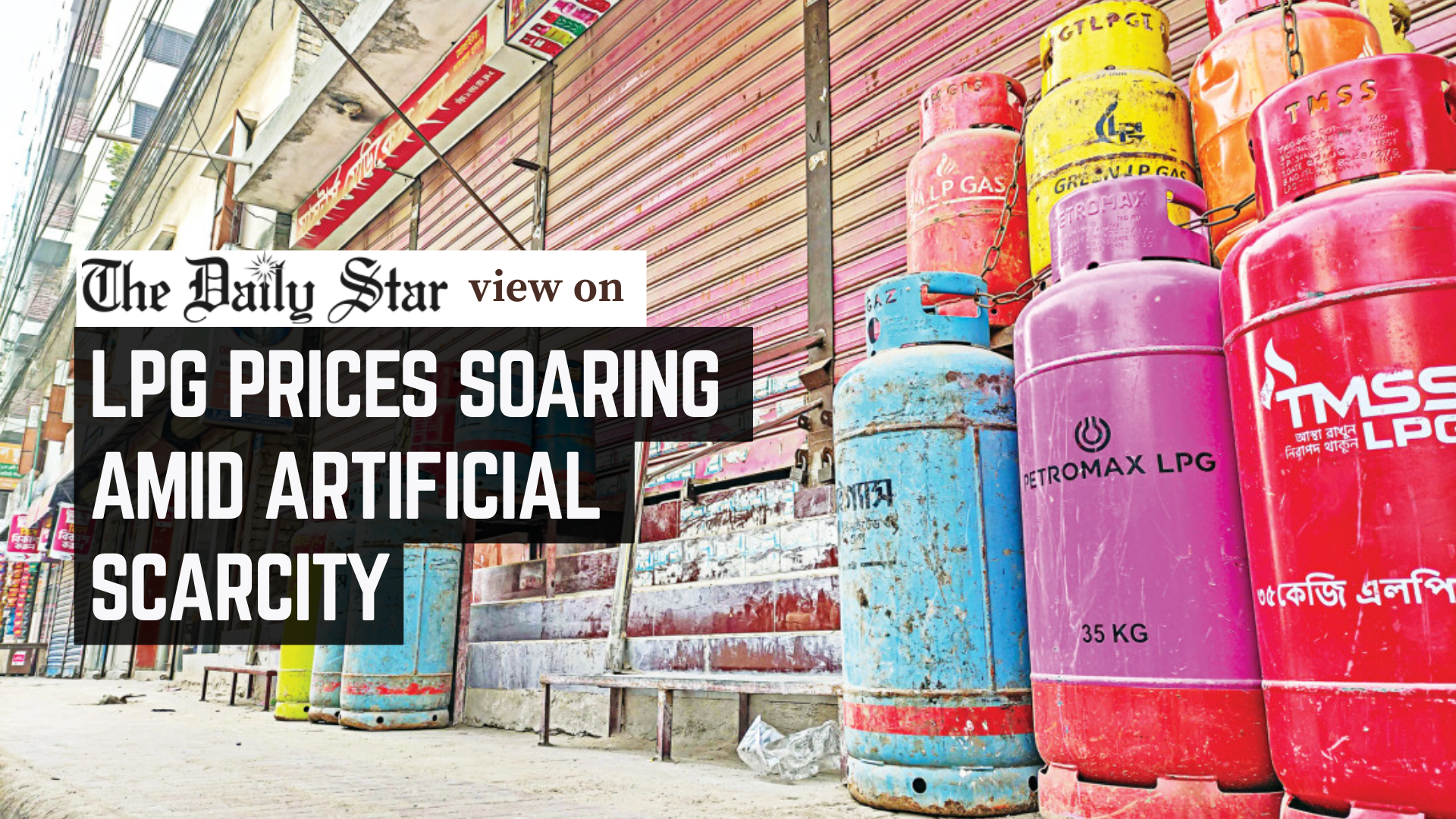
The liquefied petroleum gas price will continue to stay above the government-set rate at the retail level, given the instability in the supply chain.
The traders yesterday withdrew their indefinite countrywide strike on marketing and supply of the fuel.
 For all latest news, follow The Daily Star's Google News channel.
 “We are trying our level best to make the supply situation normal as soon as possible, but the problem in the booking of ships in the Middle East is not in our hands,” said Mohammed Amirul Haque, president of LPG Operators Association of Bangladesh, the body representing LPG importers.
There is a shortage of vessels due to US sanctions, he said.
He couldn’t specify any timeframe for when the supply chain would be back to normal.
Against the backdrop, the LPG traders told the regulator yesterday that it would not be possible for them to sell the standard 12kg LPG cylinder for less than Tk 1,500 after they agreed to call off their indefinite strike.
The Bangladesh Energy Regulatory Commission (BERC) fixed Tk 1,306 as the retail price for January, up from Tk 1,253 the previous month.
However, since mid-December, the product has been selling at much higher prices than the government-set rate, hitting Tk 2,200 in parts of Dhaka last week.
BERC Chairman Jalal Ahmed is hopeful that the supply will increase in the middle of January.
“LOAB leaders told us that they have opened LCs but are facing problems regarding shipments -- many consignments booked in December are yet to reach the country,” he told journalists after a meeting with representatives of LP Gas Traders Cooperative Society, the association that called for an indefinite countrywide strike in the marketing and supply of LPG on Wednesday night.
Importers are arranging alternative measures to bring the fuel amid the vessel shortage, he added.
Meanwhile, to ease the ongoing supply shortage, the government recommended reducing the value-added tax (VAT) at the import stage for LPG from 15 percent and exempting the 7.5 percent VAT on local bottling, other VATs at the trader level and the advance income tax.
The ministry of power, energy and mineral resources wrote to the National Board of Revenue to take necessary steps in this regard.
Moreover, the ministry wrote to the Bangladesh Bank to ease the procedure of opening letters of credits for LPG and provide loans from the bank’s green funds considering the product as “green fuel”.
Business leaders welcomed the government steps.
“Now it’s up to us how fast we can bring them [LPG] in,” said Haque, also the managing director of DeltaLPG.
During the meeting with BERC, the traders, mostly dealers and distributors, placed three demands: an end to ongoing administrative drives across the country, increasing distribution and retailers’ charges and assurance of uninterrupted supply of LPG.
Though the importing companies have not been following the fixed rate, the distributors and retailers are being treated as “villains” to consumers and they are being penalised by the administrative drives.
Ahmed assured them that the commission would discuss the administrative drives with the authorities and take legal steps to revise the charges.
He termed the demands “logical” but said it was unnecessary to call a strike to press home the demands.
Following the meeting, Md Selim Khan, president of the society, withdrew the strike.
But he said the traders cannot sell a 12-kg cylinder for less than Tk 1,500 as they purchase it from operators for more than Tk 1,300. “None of us can get LPG at the fixed rate, then how can we sell them at a fixed rate?”
In response, Ahmed said there is no logic for selling LPG above the commission’s fixed January rate of Tk 1,306 per 12-kg cylinder and the traders may sell it at more than that rate once the charges are formally hiked.
As many as 33 companies have taken their licence, but now only nine of them are importing LPG, according to Ahmed.
“We will talk to the companies that are not in operation about whether they will continue their businesses.”
Comments