


The LPG market must be disciplined
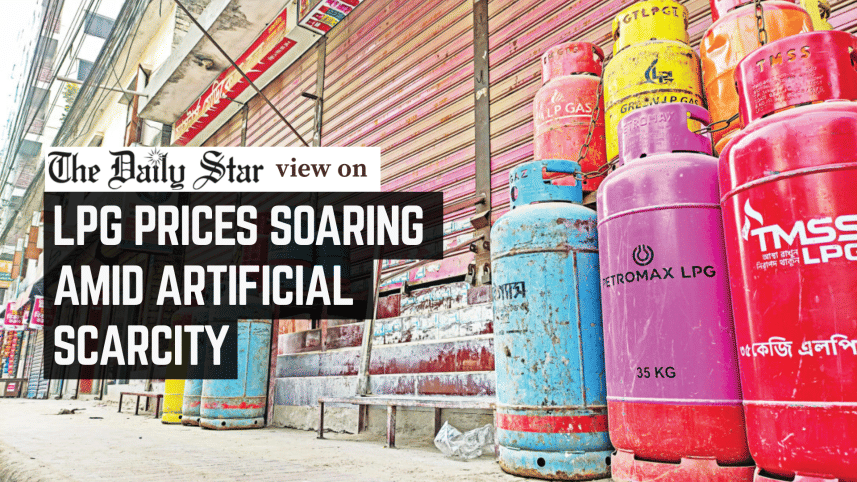
As temperatures continue to plummet, households relying on liquefied petroleum gas (LPG) are feeling a different kind of bite: a financial one. As per the price set by Bangladesh Energy Regulatory Commission (BERC), a standard 12kg LPG cylinder should cost Tk 1,306, but in the alleyways of Dhaka and Chattogram, cylinders are reportedly changing hands for as much as Tk 2,200—a markup of 68 percent. The gap between the official rate and the street price illustrates regulatory impotence in the face of a de facto market cartel.
On the surface, the economics suggest prices should be falling. According to data from the National Board of Revenue, Bangladesh imported 14.64 lakh tonnes of LPG in 2025, a slight increase from the previous year, while the total cost to importers fell 2.7 percent year-on-year to about Tk 11,780 crore. Global energy prices have softened, and supply is robust. In a functioning market, this should depress prices. In Bangladesh, however, it has done the opposite.
 For all latest news, follow The Daily Star's Google News channel.
The market is dominated by a clutch of powerful private conglomerates that control the import terminals and bottling plants. Dealers allege that these companies have formed a nexus, wholesaling cylinders at rates that exceed even the government's maximum retail price. This newspaper's report also points to price gouging. Tax documents from early January reveal that top importers were selling cylinders to distributors for as much as Tk 1,329. When the wholesale price is higher than the mandated retail price, compliance down the line becomes a mathematical impossibility.
Mohammed Amirul Haque, president of the LPG Operators Association of Bangladesh (LOAB), has admitted: "I cannot say all of us are honest." That's a rare admission in an industry notorious for its opacity. That said, the association insists the real culprits are structural: a lack of government permission to expand distribution units and tax policies that front-load costs. They have proposed shifting the VAT burden from the production stage to the import stage, arguing this would streamline costs. The government's response to the crisis, however, has been mostly performative so far. It has resorted to sporadic "drives" or raids on small retailers who, however, argue that they are being punished for the sins of the importers. To make matters worse, the LP Gas Traders Cooperative Society launched an indefinite strike on Thursday. Squeezed by the price mismatch, the traders demanded a restructuring of margins, seeking to raise distribution charges from Tk 50 to Tk 80 and retailer fees from Tk 45 to Tk 75. Their argument was blunt: if BERC cannot enforce the wholesale cap, it must raise the retail ceiling.

The standoff proved short-lived, however, as following a meeting with the regulator, the traders called off the strike, averting a crisis that had threatened to leave thousands of families without fuel. But all this illustrates a broader failure of governance. BERC operates on the assumption that it can dictate prices by administrative fiat in a market controlled by politically connected oligopolies. Until the regulator can enforce discipline at the import terminal—rather than just raiding the corner shop—the "official price" will remain a piece of fiction.
Comments