


Mro language and heritage take centre stage at AFD
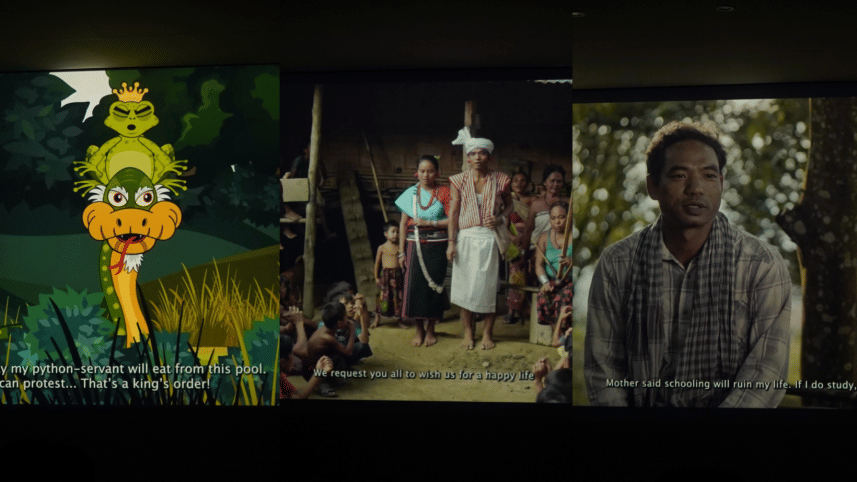
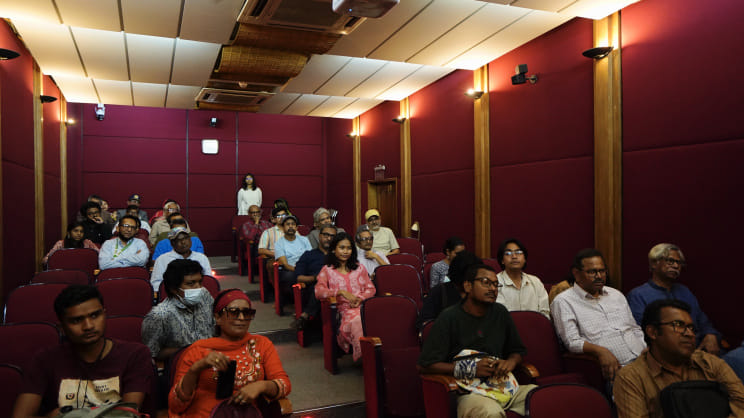
On the afternoon of February 28 at 4 pm, Alliance Française de Dhaka hosted a special screening at the Nouvelle Vague Auditorium, showcasing the linguistic richness of the Mro community through two impactful films: “Mro Rupkotha” (Mro Fairytale) and “Porinam” (The Consequence). The event drew a diverse audience united in their admiration for the Mro people’s resilience in preserving their language and cultural heritage.
“Mro Rupkotha”, a documentary, chronicled the arduous journey of publishing the first literary book in the Mro language, written by Younguang Mro. It highlighted the challenges faced by the Mro community in documenting their oral traditions and shedding light on the often-overlooked struggles of a marginalised culture. Set against the backdrop of the remote hills of Bandarban, the film powerfully depicted the effort to preserve a language on the brink of vanishing.
The film’s poignant narrative is encapsulated in a haunting question posed by the writer: “What am I? Where did I come from? Who am I really?” This existential enquiry, coupled with the anguish of “No one understands my language here,” captures the isolation and identity crisis of a community fighting to preserve its heritage in a world that has failed to recognise its significance.
 For all latest news, follow The Daily Star's Google News channel.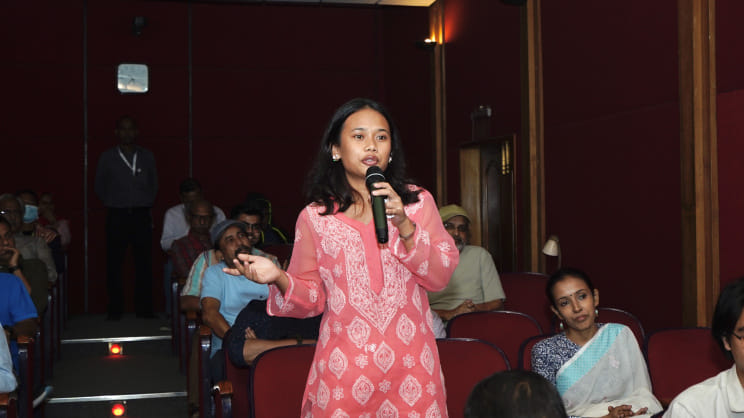
Following “Mro Rupkotha”, the audience experienced “Porinam”, an animated short that brought a Mro folktale to life. As the first animated film in the Mro language, “Porinam” bridged tradition and modernity, beautifully capturing the essence of Mro values and beliefs. Through animation, it offered a vibrant visual representation of a cultural narrative passed down through generations, underscoring the importance of preserving these stories for future generations.

After the screenings, a lively Q&A session with filmmaker ABM Nazmul Huda engaged the audience in a thoughtful discussion on the themes of language preservation, cultural resilience, and the challenges of making indigenous stories accessible through film. As the founder and creative lead of Shopnomoy, Huda has vast experience in audiovisual content creation and documentary filmmaking. His work amplifies the voices of marginalised communities, using professional cinematic techniques to highlight indigenous narratives and promote linguistic preservation.
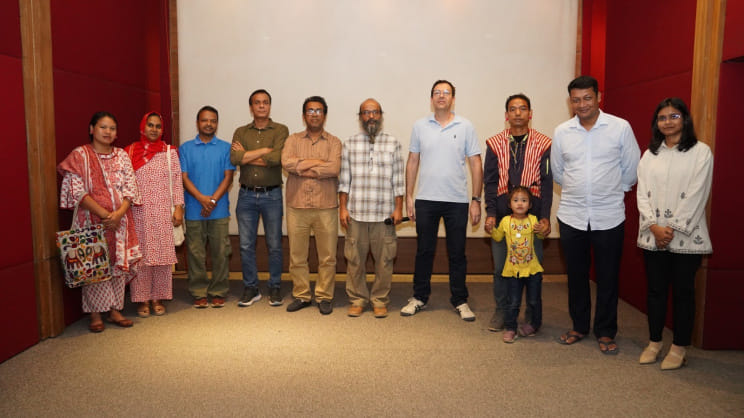
The event brought to light a broader cultural imperative. Bangladesh’s own history of linguistic struggle, rooted in the 1952 Language Movement, provides a vital context for understanding the challenges faced by indigenous language communities today. Recognising the deep connection between language, identity, and dignity, it is crucial to provide sustained institutional support for minority languages. This includes resources for education, media representation, and community-driven documentation efforts. By supporting these initiatives, we honour the historical struggles for linguistic rights and help alleviate the ongoing marginalisation of voices like those of the Mro people. Concerted efforts to integrate indigenous languages into formal cultural discourse will ensure a more inclusive linguistic landscape for future generations.
Comments