


Looking back at 2025: Films that earned appreciation


As 2025 prepares to bid farewell, it leaves behind a year of steady cinematic output. Films were released in theatres at regular intervals, and with the continuity of veteran filmmakers alongside the arrival of newer voices, it can be said that the year marked a relatively healthy period for Bangla cinema. Early stagnation, political unrest towards the year's end, and the persistent challenge of piracy, however, prevented it from becoming an even stronger year.
This discussion focuses on some of the most notable theatrical releases of 2025.
 For all latest news, follow The Daily Star's Google News channel.
 'Utshob'
Among the films released this year, "Utshob" stands unmistakably at the top of the list.
The reunion of veteran stars Zahid Hasan and Afsana Mimi, combined with performances by Jaya Ahsan, Chanchal Chowdhury, Aupee Karim, and Sadia Ayman, gave the film a distinctive presence. Directed by Tanim Noor and inspired by Charles Dickens' novella "A Christmas Carol", the film centres on Jahangir, an eccentric and deeply isolated man.
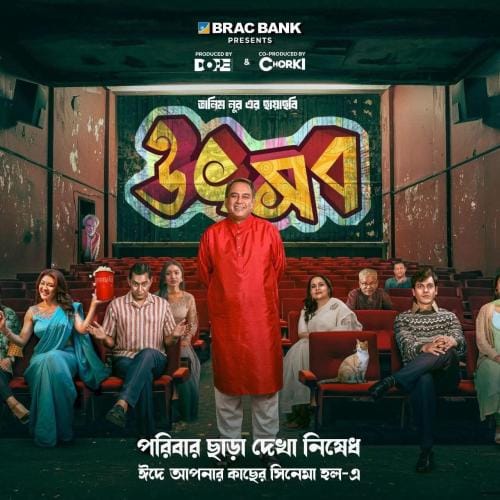
Irritating to his neighbours because of his harsh temperament, miserliness, and emotional detachment, Jahangir is visited by spirits on Chand Raat, the night before Eid – who guide him through his past, present, and future. The journey forces him to reassess his understanding of life, culminating in a transformed Jahangir emerging on Eid morning.
With songs such as "Romjaner Oi Rojar Sheshe", popular band tracks, satirical dialogues, political punchlines, and intertextual tributes to films and television dramas, "Utshob" appealed to audiences across age groups and performed strongly at the box office.
'Taandob'
One of the year's most discussed releases was "Taandob", directed by Raihan Rafi. Anticipation surrounded the film from the production stage, and its star-studded cast; Shakib Khan, Siam Ahmed, Afran Nisho, Jaya Ahsan, and Sabila Nur; helped elevate its commercial appeal.
The story revolves around Mikhail, also known as Swadhin, portrayed by Shakib Khan. Beginning with a sudden attack and hostage situation at a television channel, the film gradually unfolds through non-linear storytelling. It reveals Swadhin's frustration with unemployment, his move to Dhaka driven by love, and his eventual arrest, which alters the course of his life.
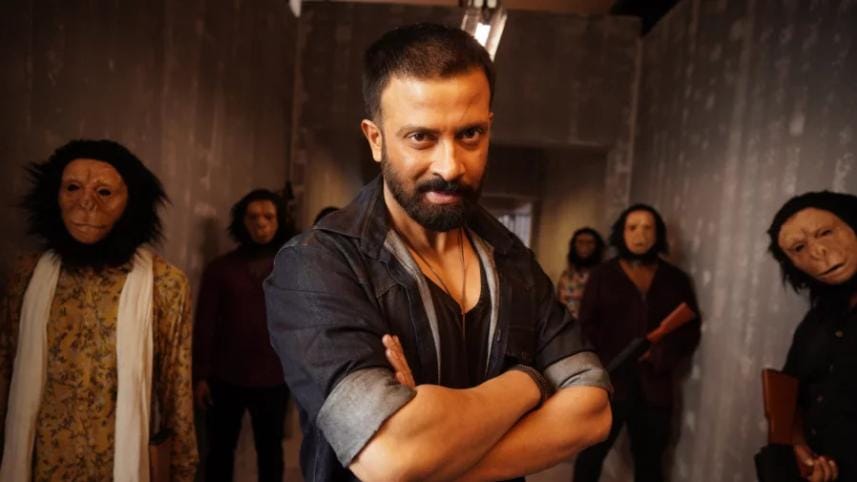
As the narrative progresses, issues such as enforced disappearances, corruption, unemployment, human rights violations, and torture cells emerge. Despite initially positioning himself as a man of principles, Swadhin ultimately becomes part of the very system he opposes. The film's latter half focuses on the confrontation between those in power and Swadhin's Monkey Force.
Though the narrative draws from familiar tropes and references several Bollywood films, its cinematography, colour palette, background score, and suspense lend it a distinctive stylistic identity. Although there was strong initial interest in the fusion of the song "Lichur Bagane", its placement in the film felt slightly uneven.
'Delupi'
Director Touqir Islam's "Delupi", named after Deluti Union in Khulna, was made entirely with non-professional actors, whose performances lend the film a sustained sense of authenticity.
While the film does not directly engage with national politics following the July uprising, it documents grassroots political realities in post-uprising Bangladesh. Through the character of Zakir Chairman, once a fugitive under authoritarian rule who later becomes the village's tyrant; the film illustrates how power repeatedly corrupts.

Lines such as "Can't understand whether this time it will be a jatra or a qawwali" resonate strongly with contemporary cultural realities. Importantly, Touqir also introduces hope through the youth character Mihir.
'Daagi'
"Daagi" explores guilt, drawing comparisons not to Kim Ki-duk's "The Pieta" but rather to "American History X". The film follows Nishan, played by Afran Nisho, who is released on bail after serving a 14-year sentence for murder linked to smuggling.
Director Shihab Shaheen structures the narrative through a present–past–present framework, examining Nishan's relationship with Jerin (Toma Mirza), the tragedy that separates them, and his struggle to rebuild a guilt-free life in an unforgiving social and political environment.
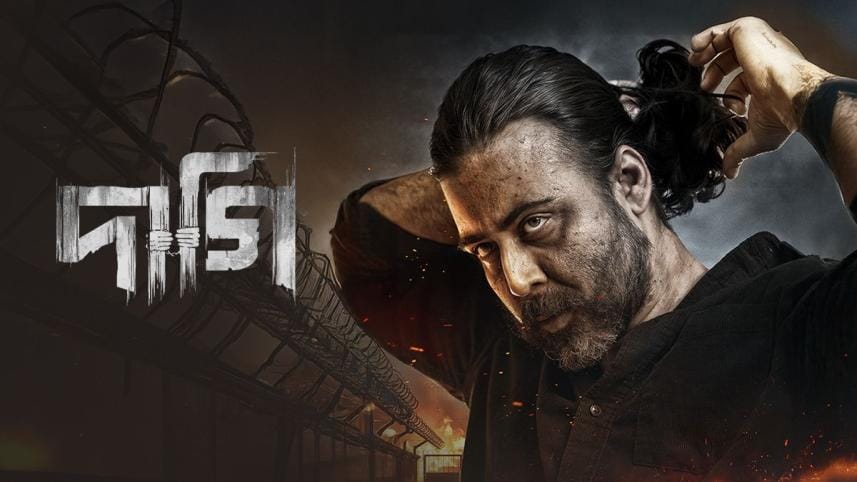
Technically, the film stands out with its subdued lighting, strong musical score, gritty colour tones, and polished cinematography. While the character of Likhon (Sunehra Binte Kamal) could have been further developed, the film maintains a consistently poignant atmosphere.
'Saba'
"Saba" evokes the melancholy of Anupam Roy's lyric, "Amar dukkhogulo kachimer moto…"
Saba Karim, played by Mehazabien Chowdhury, is a 24-year-old woman caring for her paralysed mother after a road accident. With her father absent, Saba bears the full burden of caregiving, household management, and financial survival.

The mother, portrayed by Rokeya Prachy, grows increasingly irritable, adding to Saba's emotional strain. Yet Saba prioritises her mother's survival above her own emotional needs. Through her journey, director Maksud Hossain weaves themes of hollow development, corruption, inequality, youth migration, and post-pandemic unemployment.
The film's handheld camera work by Barkat Hossain Palash adds a visceral intimacy to the narrative.
'Anyadin'
After being held by the then censor board for nearly two years, Kamar Ahmad Simon's "Anyadin" finally saw release this year.
Set entirely on a steamer, the hybrid film blurs the line between fiction and non-fiction. Through passenger conversations and interactions, it constructs a portrait of riverine Bangladesh alongside a suffocating political climate.
By the time of its release, however, many of the realities it addresses had already reached their conclusions, diminishing its dramatic impact.
'Boli'
Directed by Iqbal Hossain Chowdhury, the Busan International Film Festival award-winning "Boli" explores the tradition of wrestling in Chattogram.

Focusing on Moju (Nasir Uddin Khan), an ageing fisherman and wrestling trainer, the film examines masculinity, frustration, and decline. Though the fight choreography required refinement, the film gains significance by situating its story within cyclone-affected coastal communities.
'Barir Naam Shahana'
Leesa Gazi's "Barir Naam Shahana" centres on Deepa's divorce in the 1990s, portraying familial cruelty, imposed decisions, and social hypocrisy.

While the film progresses slowly and lacks a strong climax, its strength lies in scripting and its refusal to romanticise the decade through nostalgia. The film captures social issues often overlooked, creating a distinct identity rooted in lived observation.
Many films are awaiting release as the new year approaches. There is hope that cinema halls will regain their vitality and that the coming year will further enrich Bangla cinema.
Comments