


Edge Gallery pays tribute to 1952 language movement through art and history
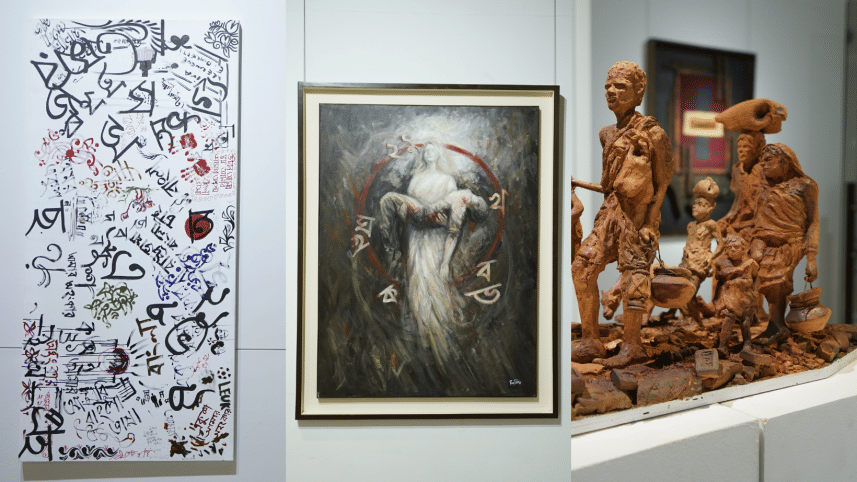
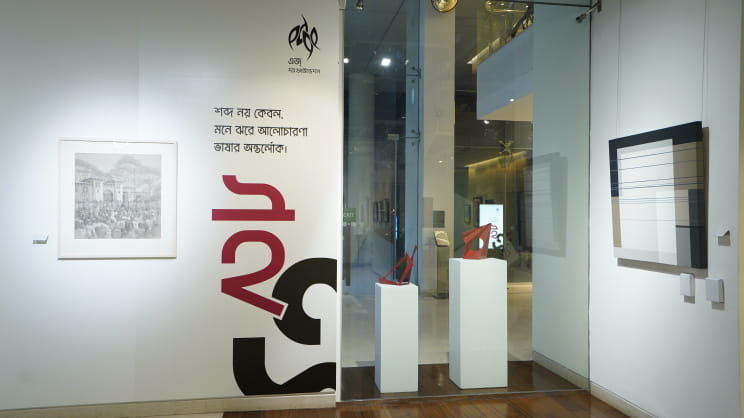
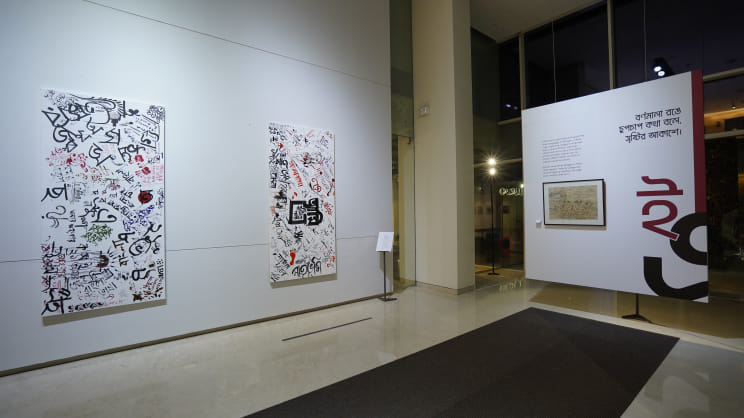
An impactful exhibition has recently taken place at Edge Gallery, located at Bay’s Edgewater in Gulshan 2, running from February 21 and concluding today, from 10 am to 8 pm. This event celebrated the 1952 Language Movement of Bangladesh, a pivotal moment in the nation's history. The exhibition showcased a powerful blend of original artwork, contemporary pieces, and preserved historical artifacts, illustrating the sacrifices made during the language movement and the long struggle for the recognition of Bengali as a state language.
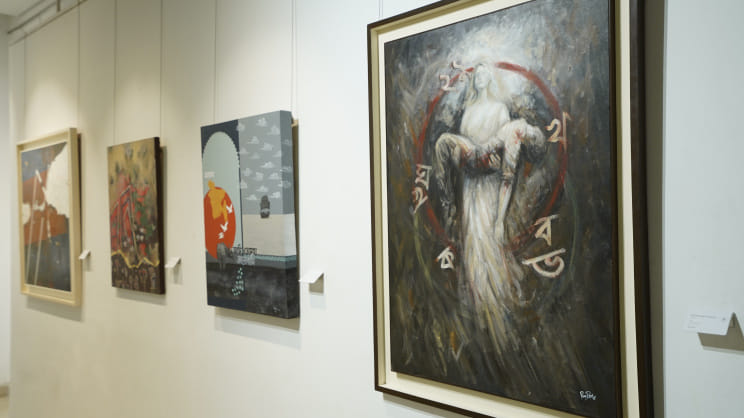
The artworks displayed came from both established and emerging artists, using a variety of mediums such as installations, mixed media, acrylic paints, and unique print presses. Each piece was a testament to the resilience of the Bengali people in the face of oppression. One of the standout features was the inclusion of original paintings from 1952, preserved by the Durjoy Bangladesh Foundation, which provided a raw and emotional connection to the historical moment.
 For all latest news, follow The Daily Star's Google News channel.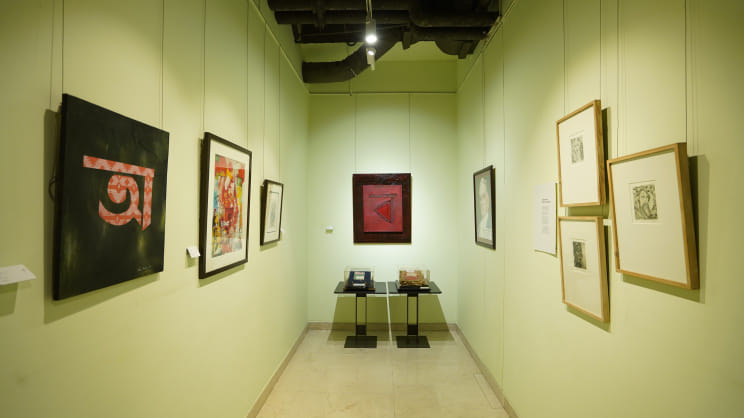
Among the displayed works were pieces by prominent artists such as Murtaja Baseer and Quamrul Hasan. Baseer’s famous "Bloody 21st" print was particularly poignant, where he bore witness and captured the violence of the February 21st protests.
The exhibition also featured a historic document: the final verdict declaring the recognition of Bengali as one of the state languages of Pakistan. This contract, originally displayed in the Language Movement Museum, was an essential part of the exhibition. It provided a tangible link to the efforts made by activists and the ultimate success of the movement, further reinforcing the importance of the February 21st day as a symbol of resistance and resilience.
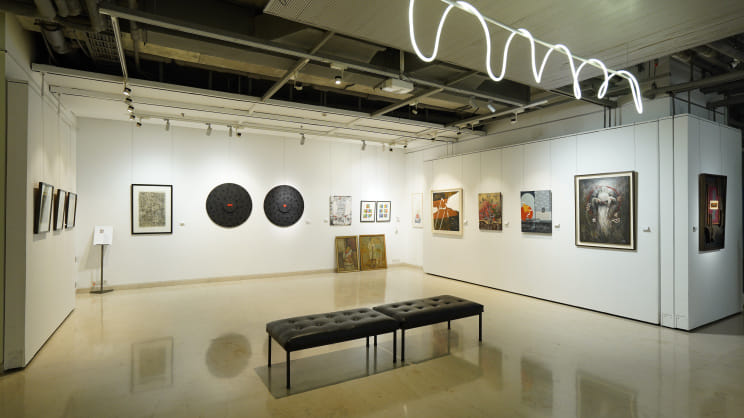
The exhibition was a rich blend of past and present, combining the cultural significance of the 1952 Language Movement with the powerful expressions of contemporary artists. One notable installation by Ivy Zaman, titled "Composition 1", featured a sculpture of three interlocking circles. These linked circles symbolised the continuity of language through generations, representing the resilience of Bengali speech, which has transcended through time and fought against resistance. There was “Composition 2” depicting a flag caught in motion, with a void in the middle, as a metaphor for speech breaking through resistance. This modern interpretation reflected the ongoing significance of the language movement and how it continues to inspire new generations of Bangladeshis.
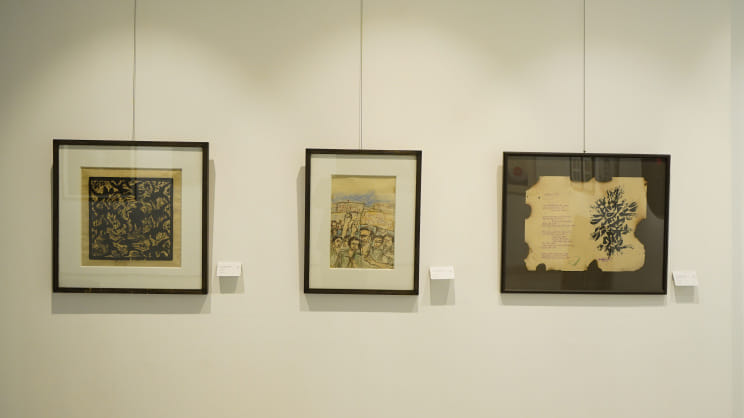
The exhibits also highlighted how language and culture are interwoven with the identity and collective memory of the people. Works such as “Abaad”(Tillage) by Bishwajit Goswami drew attention to the agricultural roots of Bengali society, using deconstructed words made of steel to convey the power of language in shaping identity and memory. SM Sultan’s original artwork was displayed from a private collection. Sultan's work, in this instance, emphasises the profound bond between nature, toil, and culture, where gestures of the villagers become an embodiment of both strength and poetry. His paintings demonstrate how Bengal’s spirit transcends language, capturing the essence of life and labor through art. The juxtaposition of the figures in motion adds a rhythmic dimension to his portrayal, making his work timeless in its representation of Bengali identity.
Beyond the static artworks, performance art also played a crucial role in the exhibition. A video recalling Sanjoy Chakraborty’s piece, "Amader Bhasha, Amader Sahid" (Our Language, Our Martyrs), was a living tribute to those who sacrificed their lives for the Bengali language. Since 2011 till 2023, Chakraborty has been staging this performance annually, where masked performers walk barefoot in a solemn procession, honoring the martyrs.
Comments