


Goodbye to the middleman of truth

Words can bear witness as language can be an instrument of moral inquiry -- dissecting the anatomy of ambition, despair, compromise and dignity.
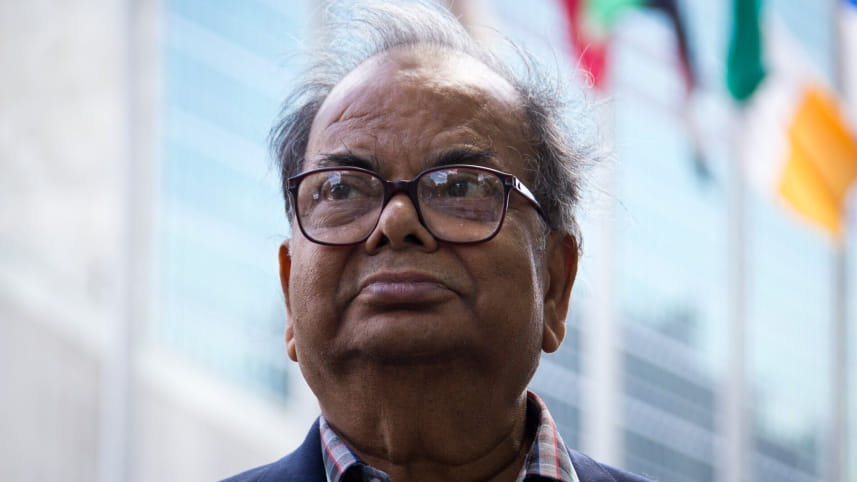
Writer Mani Shankar Mukherjee, known to readers simply as Shankar, is an example of that tactility.
 For all latest news, follow The Daily Star's Google News channel.
 The nonagenarian passed away his afternoon at a hospital in Kolkata, India.
Mapping the moral fractures of modernity, his prose asks inconvenient questions, and then, with disarming calm, refuses to answer them.
My introduction to him was a bit by incident and also inheritance -- stumbling onto a copy of one of his novels from the 1970s while going through the personal library of my late grandmother.
And although the book -- "Jana Aranya" -- proved opaque to the understanding of a nine-year-old, the voracious read in secret has been transformative.
It instilled in me that writing could transcend storytelling and become sociological excavation. That literature could interrogate systems rather than merely describe individuals.
Man who mapped the moral fractures of modern Bengal
Born on December 7, 1933 in Bengal, Shankar’s early life bore the unmistakable imprint of precarity.
His father’s death during adolescence forced him prematurely into adulthood. He worked as a clerk to a British barrister, cleaned typewriters, tutored students, even hawked goods to survive. And all that was not merely hardship -- it was apprenticeship in reality.
That proximity to power and powerlessness, privilege and vulnerability, furnished Shankar with an unrivalled vantage point.
He witnessed firsthand the invisible scaffolding of class, the fragile vanity of prestige, and the quiet heroism of survival.
These experiences culminated in his first novel, "Koto Ajanare", a tribute to his employer and a meditation on loyalty and loss.
Over the decades, his writing spanned novels, essays, biographies and travelogues, cementing his reputation as one of Bengal’s most widely read literary figures.
Kolkata as a character
In Shankar’s literary universe, Kolkata, or Calcutta as it was then known, is not a setting. It is a protagonist.
The city promises opportunity but delivers invisibility. Individuals dissolve into bureaucratic indifference. Shankar understood that cities create crowds, but rarely community.
His novels such as "Chowringhee", "Jana Aranya", and "Thackeray Mansion" transform the city into a breathing, suffering organism. His narratives capture the colonial hangover, economic inequality, modern alienation, and emotional exhaustion of urban life.
Calcutta in Sankar’s work is not romanticised. It is exposed. Its hotels become theatres of ambition, its offices arenas of moral compromise, its streets corridors of quiet despair.
He understood that cities do not merely house people. They reshape them.
Words, in Sankar’s hands, became instruments of revelation. And that is perhaps most vehement in his novel "Jana Aranya".
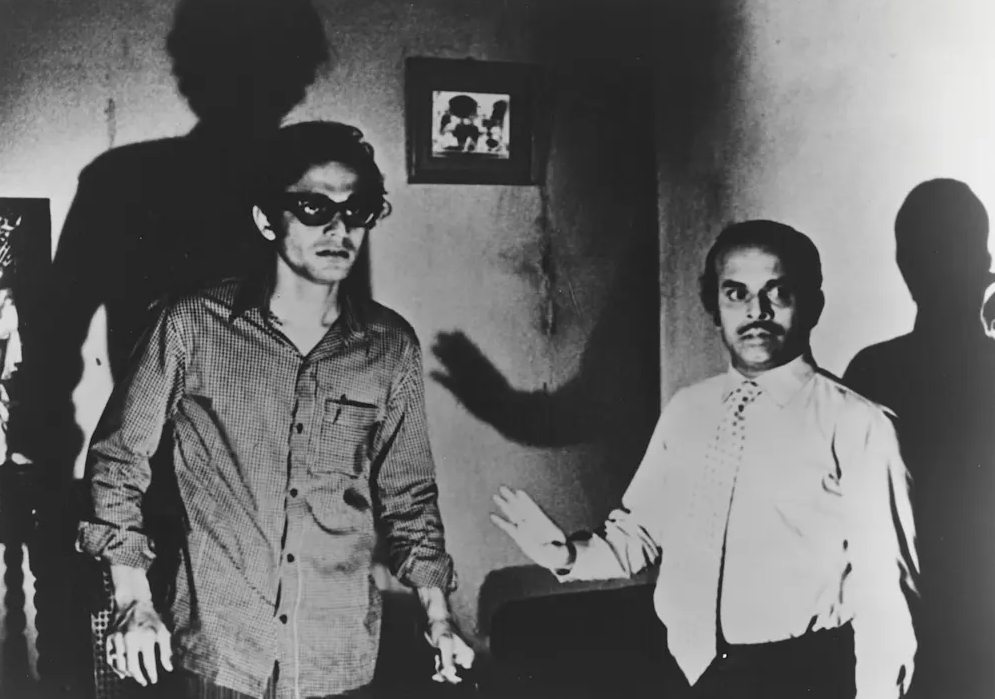
Later adapted into the 1976 Bengali film by Satyajit Ray, and dubbed as “The Middle Man”, it chronicles the descent of Somnath Banerjee, an ordinary young graduate crushed beneath the indifferent machinery of unemployment and expectation.
Unable to secure dignified employment in a city teeming with jobseekers, Somnath becomes a middleman, a broker of transactions, gradually surrendering his ideals to survive.
This transformation is not abrupt. It is incremental, insidious, almost banal. That is Shankar’s genius. He understands that moral collapse rarely announces itself. It arrives disguised as necessity.
The novel captures the economic despair of educated youth and the psychological corrosion caused by systemic failure. The ultimate indignity -- when Somnath must procure a woman to secure a business deal -- is not presented as sensational tragedy, but as existential inevitability.
His protagonists often begin with moral clarity and idealistic conviction, only to be gradually eroded by structural realities.
Shankar suggests that society itself is architected to punish innocence.
His characters rarely seek wealth. They seek dignity. Yet survival demands compromise. His characters are neither villains nor heroes. They are participants in systems larger than themselves.
Survival, Shankar shows, is often indistinguishable from surrender. Behind polite facades lie exploitation, hypocrisy, and moral ambiguity.
Good and evil coexist within the same individual, separated only by circumstance. His literature insists on uncomfortable truths -- that moral purity is a luxury few can afford.
A resonance as enduring as reality
Sankar’s literary works remains unnervingly relevant.
The anxieties of educated unemployment, moral compromise, social aspiration, and urban alienation persist across generations.
Shankar understood something fundamental about modern existence -- that the greatest tragedies are not spectacular. They are incremental.
He constructed moral cartographies, mapped the fault lines of ambition, survival, and dignity. His literature stands not as monument, but mirror.
Comments