


Avatar: Fire and Ash revives the grand spectacle of Pandora to life once more
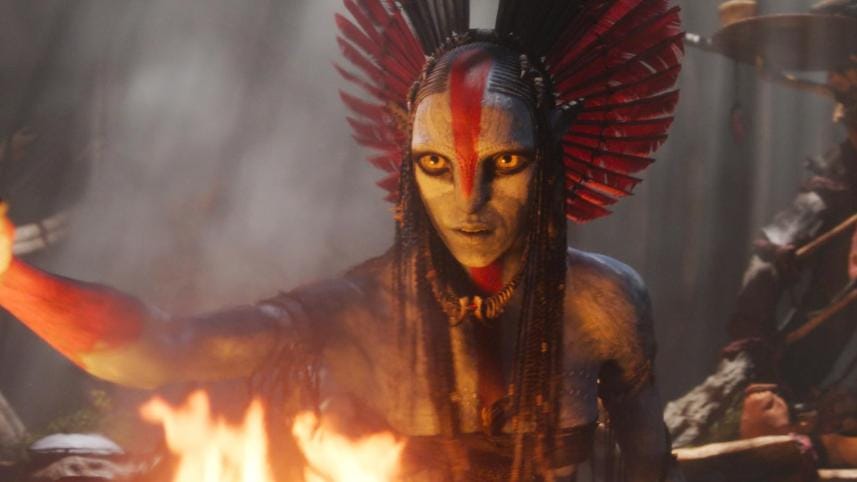
Avatar: Fire and Ash, directed by James Cameron, and released on December 19, faces two threads of criticism from critics and viewers: 'it is too long' and that it is 'more of the same.' Catching the third instalment of the Avatar series in theatres on the third day from release, my experience, however, was far from dampened.
The story picks up from where Avatar: The Way of Water concluded. The last movie ended with Jake Sully (played by Sam Worthington), his wife Neytiri (played by Zoe Saldaña), and their family grieving for Neteyam, Jake and Neytiri's firstborn son, killed in the final battle. The plot in Fire and Ash remains rooted in their grief, with its branches and tendrils wrapping themselves around the characters, pushing them forward yet holding them back, and setting the course for how they confront their loss.
 For all latest news, follow The Daily Star's Google News channel.
 With regard to visuals, the torch has passed without dimming in the least; both the first Avatar and The Way of Water became acclaimed for the innovation they brought in the realm of 3D filmmaking, and the third instalment is a continuation of the same breathtaking tradition.
Pandora, in its picturesque otherworldly landscapes, is an easy world to get lost in. But credit isn't just due to the visuals alone. There is depth and believability to its fantasy, making it exhilarating for the imagination despite being meticulously grounded in an enigmatic logic of its own. The harmony of existence in Pandora, the mystique and spirituality interwoven into the fabric of its nature, is only enhanced by the rich portrayal of the culture of its inhabitants.
The film encompasses the hatred and hedonism of the Mangkwan clan, who give Fire and Ash its name. Their history and way of life expand the world-building in the Avatar franchise, and their cult-like ritualistic ferocity, coupled with the desolation of their habitat, adds an intriguing layer that sometimes creates an ambience reminiscent of the Harkonnens in Dune.
On the grandiose stage thus set, Fire and Ash presents a family drama that's intense and intimate, an anticlimactic dance with a second chance, and a grappling match with grief and its manifestations, each culminating in a final acceptance. The protagonists of the movie, Jake, Neytiri, and their family, make you feel for them, but personally, it was the franchise'srecurring antagonist, Colonel Miles Quaritch (played by Stephan Lang), who really stole the show.
Quaritch's charisma dominates whichever scene he finds himself in, and he remains unpredictable throughout, the constant flux in his loyalties lending further tension to the story. He is a man given another shot at life, who remains stuck in the quicksand of his past and pride, even though the tempting prospect of a fresh start dangles at arm's length. His confidence may border on the brink of arrogance, yet there are moments of hesitation that offer a glance into the insides of a man caught between two worlds. His relationship of mutual desire and benefit with Varang (played by Oona Chaplin), the leader of the Mangkwan clan, and his adoption and acceptance of their culture, serve as a twisted parallel to Jake's story in the very first movie. This enjoyable blend of nostalgia and irony, and the immersive coupling of mystique with emotion, is, of course, spaced with thrilling action.
Avatar: Fire and Ash is far from perfect, but it is a good movie if you let it sweep you off your feet and into the uncharted unknowns of the world of Pandora. It may feel familiar, but that has its own comfort, and it may feel long, but that just gives you more time to enjoy James Cameron's grand spectacle.
Nayeem is a law student and a contributing writer for The Daily Star. Tell him to spend less on movies at nayeemhaider90@gmail.com.
Comments