


Big LPG importers sidelined as emerging players gain ground


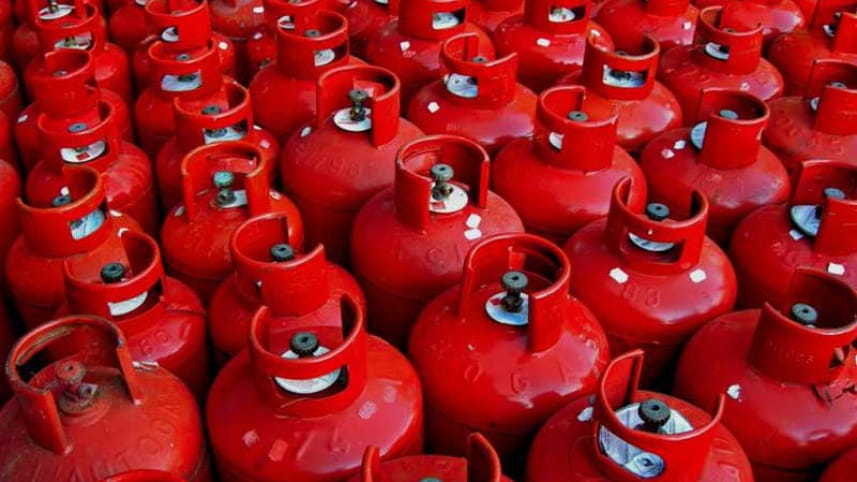
The domestic liquefied petroleum gas (LPG) market is undergoing a shake-up as stricter banking rules during the interim government have altered who can import fuel. As a result, some of the largest players have been sidelined, while emerging companies are rapidly expanding their footprint.
Two former key market players, Bashundhara LP Gas Ltd and Beximco LPG, have effectively been excluded from direct imports since the 2024 political changeover and the subsequent formation of the interim government.
 For all latest news, follow The Daily Star's Google News channel.
 Meanwhile, Meghna Fresh LPG Ltd, Jamuna Spacetech Joint Venture and United Aygaz LPG Ltd have gradually increased their market share up to fiscal year (FY) 2025.
According to National Board of Revenue (NBR) data, LPG imports rose from 12.23 lakh tonnes in 2023 to 14.42 lakh tonnes in 2024, and 14.47 lakh tonnes in 2025. In the first two months of 2026, up to February 24, some 13 companies imported 2.13 lakh tonnes, signalling a strong start to the year.
Bashundhara LP Gas, once among the top three importers with a 15.5 percent share in FY2023, saw its share fall to 5.19 percent in FY2024 and 3.68 percent in FY2025. No imports have been recorded under its name so far in 2026.
Md Redhwanur Rahman, head of sales and marketing at Bashundhara LP Gas, said the company did not stop imports voluntarily.
“Following the political changeover, the Bangladesh Bank directives prevented us from opening new letters of credit due to banking issues involving another concern within our group,” he said.
Rahman added that the company’s last cargo arrived in March 2025, although it had been booked months earlier. Since then, fresh letters of credit (LCs) have been impossible to open.
According to central bank rules, if one concern within a group fails to meet compliance requirements, restrictions may extend to affiliated entities, effectively freezing import operations.
Like Bashundhara, Beximco LPG has faced a similar situation and has recorded no direct imports since 2025.
The absence of these two major players has reshaped the market.
Meghna Fresh LPG increased its share of total imports from 11.44 percent in FY2023 to 16.04 percent in FY2024 and 20.43 percent in FY2025, becoming the largest importer.
Jamuna Spacetech Joint Venture expanded from 11.05 percent in FY2023 to 14.24 percent in FY2025, while United Aygaz LPG grew from 4.73 percent to 12.55 percent over the same period.
Omera Petroleum Limited, which led imports until 2024, fell to second place in FY2025. Its share rose from 18.6 percent in FY2023 to 20.5 percent in FY2024 before declining to 15 percent in FY2025.
Md Rukunuzzaman, head of sales at Omera Petroleum, said strict banking rules had reshaped the market. “Many companies could not open letters of credit. As a result, some firms sourced LPG from major importers instead of importing directly. This inflated import volumes for certain companies but did not necessarily reflect retail market share,” he said.
Apart from banking, official documents say “reluctance” by major players in shipping contributed to the market shift.
While the changes reshaped the market, retail prices of a 12-kg LPG cylinder rose to Tk 1,800, far above the government-fixed rate of Tk 1,341. In some cases, prices nearly doubled rates set by the Bangladesh Energy Regulatory Commission (BERC).
Traders said supply is improving as alternative shipments arranged amid geopolitical tensions in the Middle East start to arrive.
According to the LPG Operators Association of Bangladesh (LOAB), 52 companies hold LPG business licences, but only 28 are active. Of these, 23 can import directly, yet just 9-10 account for most imports.
Smaller operators usually buy in bulk from major importers and sell under their own brands, a pattern that has strengthened amid banking issues, said LOAB.
Several new players who had earlier received approval but had not imported entered the market in early 2026.
SKS LPG accounted for 4.69 percent of imports in the first two months of this year, followed by TMSS LPG at 3.09 percent and Dubaibangla LPG at 1.17 percent. Industry sources said these companies had been approved years ago but were previously minor players.
According to Energy Division data, the country’s annual LPG demand is around 18 lakh tonnes, growing at 12 percent per year. It is projected to reach 30 lakh tonnes by 2030, with the market currently worth Tk 16,000-Tk 17,000 crore annually.
Analysts said the reshuffle reflects a combination of financial constraints on established firms, regulatory tightening and changing supply chains. Recently, the United States has strengthened its position as Bangladesh’s leading LPG source.
US shipments accounted for 43.9 percent of imports in 2023, fell to 40 percent in 2024 and 21 percent in 2025 before rebounding to 61.97 percent in early 2026.
In 2026, imports from the United Arab Emirates fell sharply to 2 percent, while those from Malaysia, Saudi Arabia and Iraq have also declined.
Aminul Haque, president of LOAB, said financing challenges weakened many established companies.
“Many companies faced complexities and could not secure financing from banks, which allowed newer firms to expand their presence,” he said. “This transition contributed to market instability, but conditions are improving.”
He added that geopolitical tensions in the Middle East disrupted traditional supply chains and ongoing conflicts could further complicate the market.
Haque said the US is likely to remain the dominant supplier.
“The United States remains the single largest source of LPG imports, and trade agreements may increase imports further. Importers will continue sourcing from whichever countries offer the most reliable and cost-effective supply,” he said.
Comments