


The rice gene bank that feeds Bangladesh
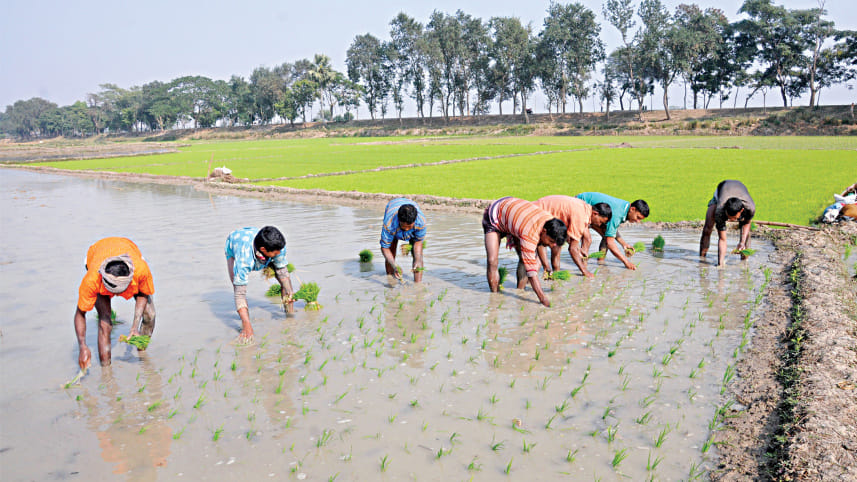
Milon Sarker grows paddies on two bighas of land in Kalikapur, a village in Jashore’s Bagherpara upazila. He inherited the profession from his father, who cultivated varieties with lyrical names like Machranga, Ratna, Bilkhali. Milon farms BRRI dhan51 and Rod Miniket -- varieties his father never heard of, names that sound borrowed from a science textbook.
The exchange has been worth it. Where his father’s varieties produced enough for the family, Milon’s produce enough for a profit. “I tried several popular varieties, and found that these new varieties produce more rice than the ones my father used to cultivate.”
 For all latest news, follow The Daily Star's Google News channel.
 This generational shift, replayed across millions of farms, captures one of the great transformations of modern agricultural history. In 1970, traditional rice varieties covered over 97 percent of Bangladesh’s paddy fields and produced 92 percent of the harvest. By 2025, they accounted for barely 7 percent of the land and just 3 percent of output.
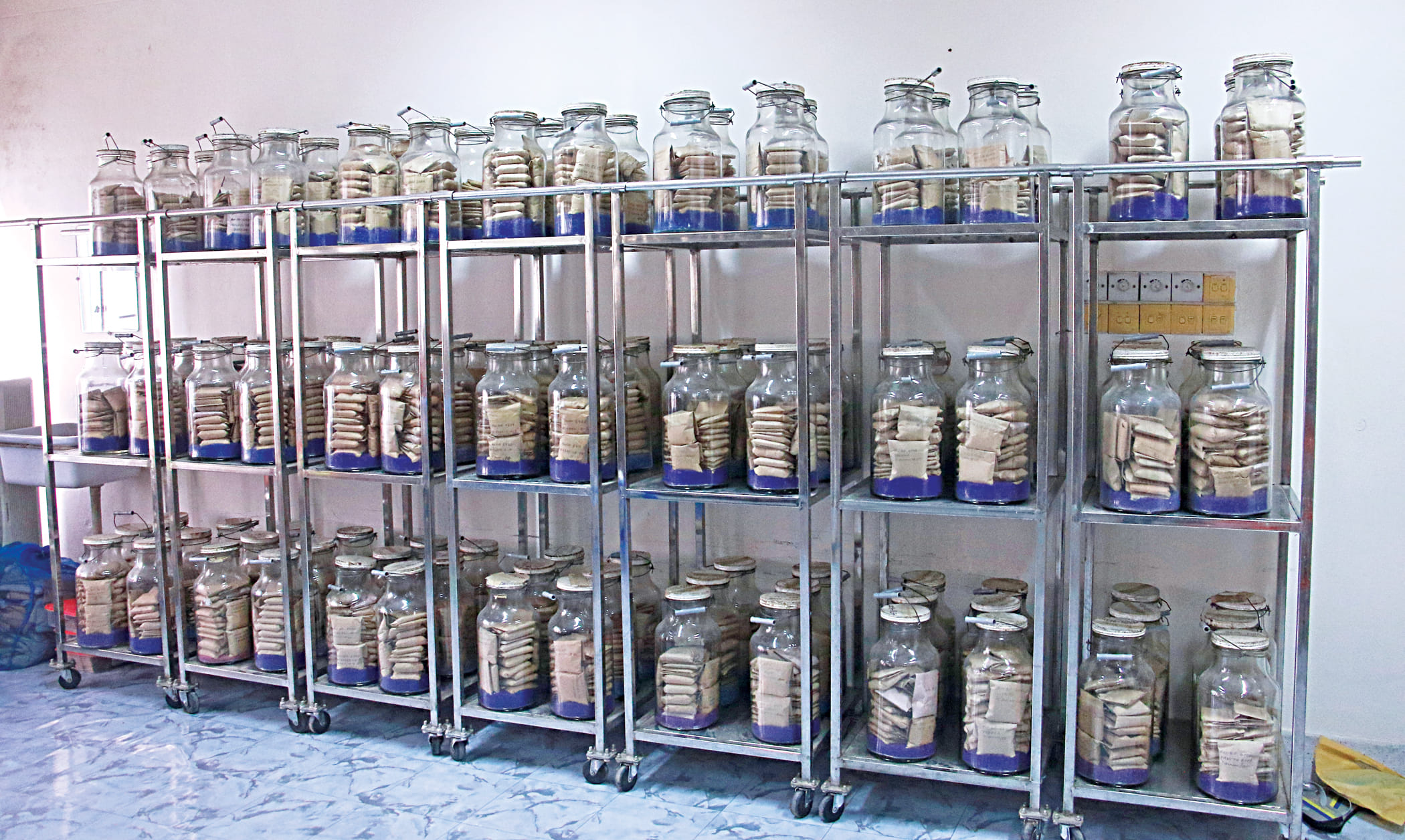
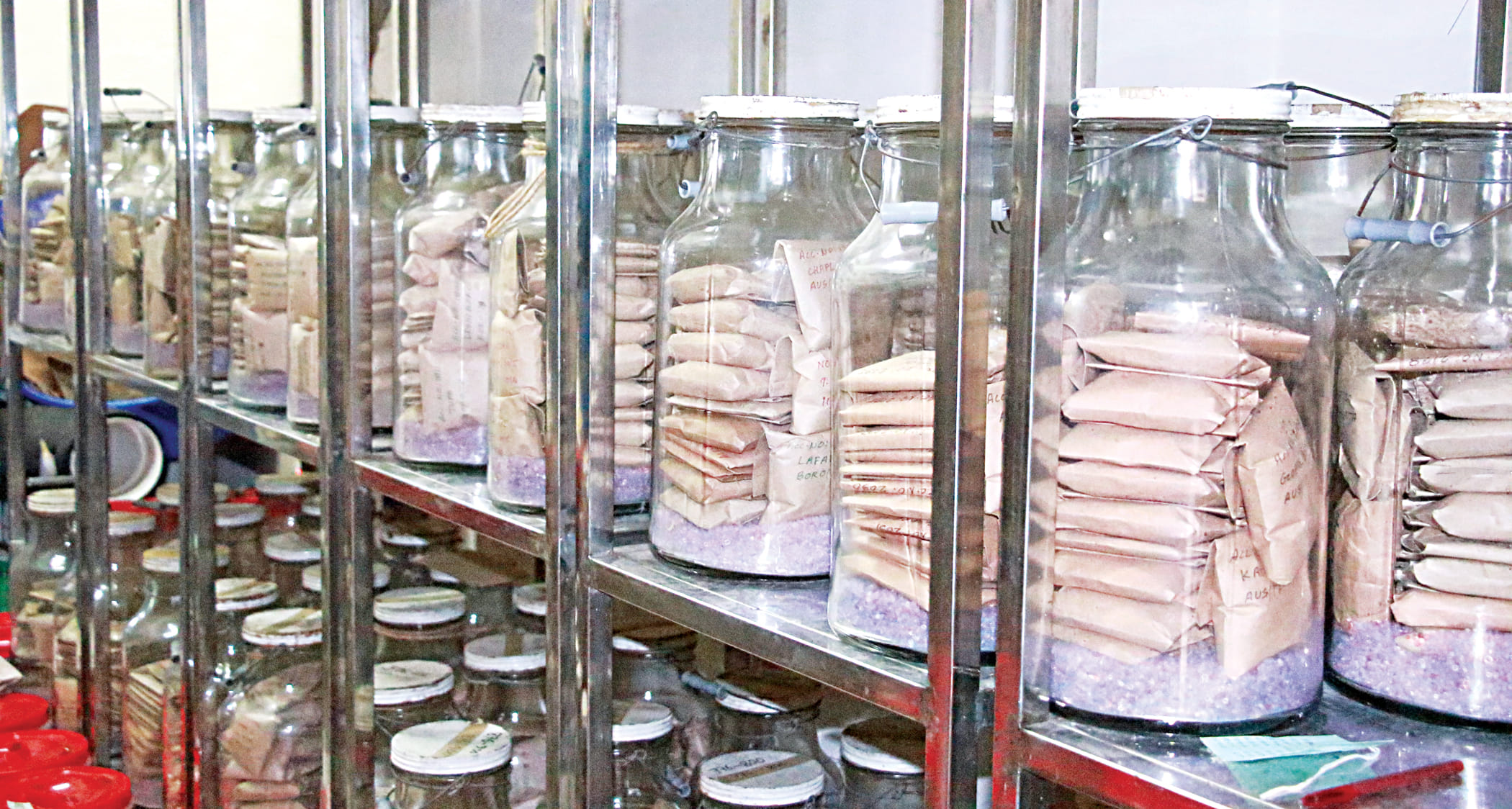
Three separate facilities hold rice seeds in short-, medium-and long-term storage in the BRRI gene bank. This photo of the short-term storage was taken recently. Photo: Masum Rana/BRRI
Dozens of hybrid and high-yielding varieties (HYVs) -- the product of decades of scientific breeding -- now dominate almost completely. Many farmers, like Milon, barely remember the old varieties -- once more than 12,000 in an estimate -- their fathers and grandfathers grew.
HYVs have been imperative in feeding the exploding population of the country, which has grown some 2.5 times since independence, from roughly 70 million to 176 million. The old varieties that fed an agricultural society could never have sustained a modern nation of this size, especially where food security is nearly synonymous with rice security. That they haven’t needed to is a quiet triumph of plant science, and it hinges on a facility few Bangladeshis know exists: the gene bank at the Bangladesh Rice Research Institute (BRRI).
HUNGER AND REVOLUTION
The story of HYV rice varieties began at the International Rice Research Institute (IRRI) in the Philippines during the Green Revolution in the last century, when technology transfer initiatives resulted in a significant increase in crop yields. The wave of change reached Asia in the mid-60’s, making HYVs rapidly popular in Bangladesh.
As the world’s population surged and experts warned of impending famine, a team of IRRI researchers utilised traditional rice varieties to develop IR8. When an Indian farmer named Subba Rao planted it in 1967, he harvested nearly ten times more than conventional varieties had yielded, and the results caught the attention of scientists across the continent.
The scale of what followed is almost impossible to overstate.
In a 2000 lecture at the Norwegian Nobel Committee, Nobel Laureate Dr Norman Borlaug noted, “Had 1950 cereal yields still prevailed in 1999, the world would have needed nearly 1.8 billion hectares of additional land of the same quality -- instead of the 600 million that was used -- to equal the current global harvest.”
From 1950 to 2000, Asia’s population had increased from 1.2 billion to 3.8 billion, as per Borlaug, and without the yield increase brought about by the Green Revolution, food security would have been long lost.
Bangladesh got its own version of this miracle. After independence, researchers at the BRRI, established in 1971, developed varieties suited to local conditions, and food grain production climbed steeply.
“Back in the 60’s, all the rice varieties cultivated around the world could only produce up to 1 tonne per hectare yield,” said Dr Jiban Krishna Biswas, a prominent scientist.
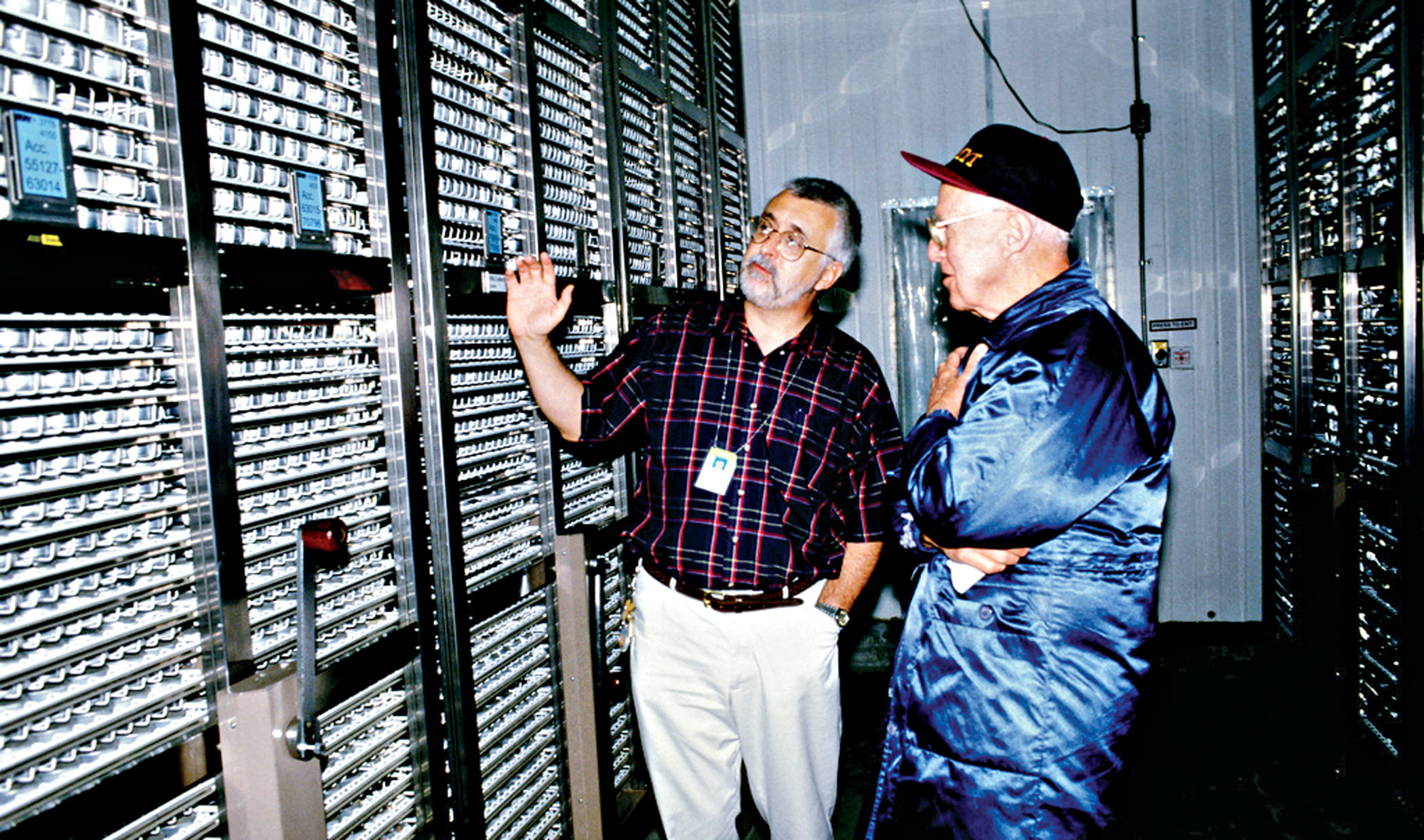
The IRRI gene bank’s first head, Dr Mike Jackson, gives Nobel Laureate Norman Borlaug a tour of the gene bank’s large cold storage facility in 1999. Photo: IRRI
This scenario changed with the arrival of the IR8 rice variety, which became popularly known in Bangladesh as IRRI rice. Food grain production went from 8 million tonnes to 13 million tonnes between 1950 and 1970.
In a detail that tends to get lost: among the traditional Bangladeshi varieties now largely forgotten was one that had contributed to IR8 itself.
“It is not common knowledge, but a Bangladeshi landrace named Lati Shail was involved in developing IR8,” said Dr Md Khalequzzaman, former director general of BRRI.
Yet even as HYVs spread, their success created new vulnerabilities. Intensive monoculture attracted pests and diseases that traditional varieties had naturally resisted. BRRI researchers were forced to shift strategy, mining the genetic material of the old varieties to breed resistance into the modern ones.
To improve HYVs, it turned out, you needed the genes of the very crops they had displaced. This paradox – that modernity depended on preserving what it had replaced – is why gene banks matter so profoundly.
BRRI’s efforts paid off. In the four decades that followed independence, rice production tripled, keeping pace with a population that showed no signs of slowing. By 2024-25, Bangladesh ranked third among the world’s top rice-producing countries, with output crossing 36 million tonnes.
THE GENE BANK
A gene bank contains no money or jewels -- only seeds.
“In case a crop or a variety vanishes from the fields, it can be restored from the samples saved at a gene bank,” explained M Abdul Momin, senior communications officer at BRRI.
BRRI established its gene bank in 1974, initially to preserve Bangladesh’s vanishing rice diversity.
A book -- Deshi Dhaner Jat -- published in 1982 catalogued 12,479 traditional rice varieties in the country. While the majority no longer have any meaningful presence in the fields, a large number of samples survive in storage at BRRI.
Today, BRRI’s bank holds 9,128 accessions -- each one a sample that might carry traits the world will one day need: disease resistance, climate adaptation, nutritional value, and higher yield.
“The HYV varieties and the resulting food security that we have at present would have been impossible without the gene bank’s collections,” said Dr Mir Sharf Uddin Ahmed, chief scientific officer and head of the Genetic Resources and Seed Division at BRRI.
Landraces are goldmines of genes, Dr Biswas stressed. “The pest- or disease-resistant features we see in improved varieties were undoubtedly derived from the gene of a landrace.”
The BRRI gene bank facility, upgraded in 2007, operates on three tiers.
Dr Biswas explained that short-term storage, with seeds in glass jars at 20–22°C, keeps the samples viable for 3-5 years and functions as the working collection, from which distributions are made when needed.
Medium-term storage, with lower temperature and moisture content, extends viability to 15-20 years.
Long-term storage, maintained at sub-zero temperatures with minimal humidity, can preserve seeds for 50-100 years. It serves as the last line of insurance against an uncertain future.
For storage, BRRI collects rice seeds not only from all over Bangladesh, but also from other countries.
When researchers seek to breed a disease-resistant variety, they search the gene bank’s inventory, sequence the relevant genes, and then proceed through rounds of pre-breeding and crossing, according to Dr Ahmed.
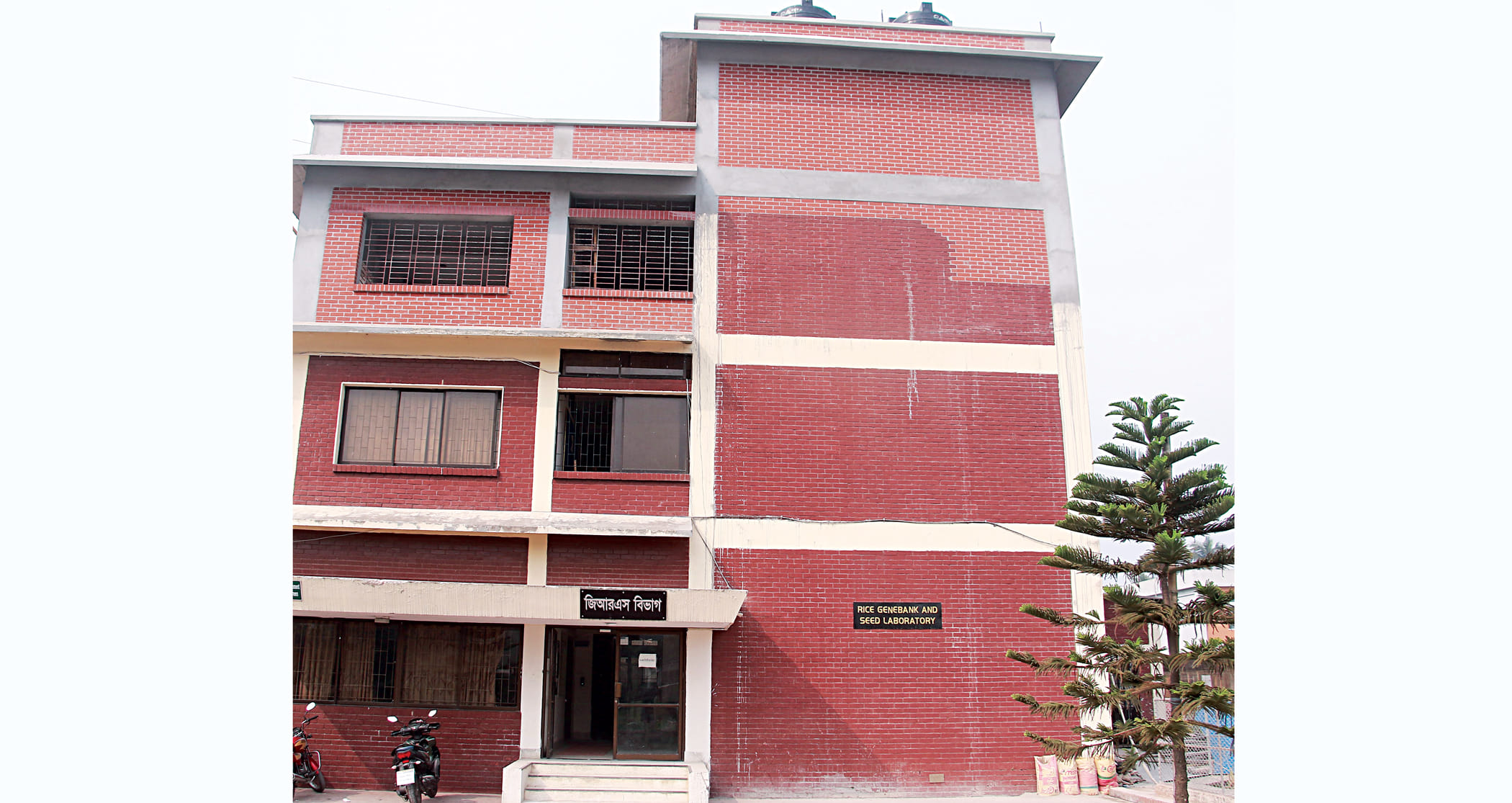
The BRRI rice gene bank and seed laboratory is housed at the institute’s Genetic Resources and Seed Division building. Photo: Masum Rana/BRRI
The larger the inventory, the more possibilities open up. Most of BRRI’s 121 released varieties owe their existence to germplasm drawn from the bank, including the popular Boro variety Atash, the coarse variety BRRI dhan51, and the late Aman varieties BR22 and BR23.
Six varieties approved recently include salinity-resistant, disease-resistant, and vitamin-enriched types. Of them, three “mega” varieties are capable of yielding 9-10 tonnes per hectare.
The BRRI gene bank continues to collect, preserve, multiply, and document rice seeds, aiming to assist research and development of new and improved rice varieties down the line.
“While a gene bank does not directly benefit a farmer at the root level, it is a source of hope for their future,” Dr Ahmed said.
Despite the significant success, HYV rice is not the endgame. According to data from the Bangladesh Bureau of Statistics (BBS), the production of Aus and Aman crops shrank to some extent, yet Boro production rose in the fiscal year (FY) 2024-25.
This rise was attributed to higher acreage of Boro driven by the adoption of hybrid varieties that produce even higher yields than HYV rice. BRRI has so far developed and released 121 HYVs, including 113 inbred and 8 hybrid types.
Dr Biswas described the progress. “At first, the inbred HYV rice developed by our researchers hit a yield ceiling of 5 tonnes, which was frustrating. However, now they’re breaking that ceiling, and it is expected that hybrid rice will continue to excel. “
THE DOOMSDAY BACKUP
Bangladesh is not alone in this work. India, Pakistan, Myanmar, Nepal, and Bhutan all maintain their own gene banks, some dedicated entirely to rice. The International Rice Gene Bank at IRRI houses 132,000 accessions, the world’s largest rice genetic repository. In Africa, the Africa Rice Center preserves 22,000 varieties. The US Department of Agriculture manages a network storing over 600,000 crop varieties.
And then there are the so-called doomsday vaults -- facilities designed to survive civilisational catastrophe.
The Millennium Seed Bank, buried beneath botanical gardens in Sussex, UK, aims to preserve the world’s wildest plant diversity.
The Svalbard Global Seed Vault, cut into the permafrost of a remote Norwegian archipelago, safeguards more than 930,000 food crop varieties in a structure built to withstand war, flood, and the slow violence of time. These are humanity’s genetic insurance policies.
But the more ordinary miracle happens in places like BRRI’s gene bank. When asked whether Milon Sarker’s father’s Machranga rice might still exist somewhere in BRRI’s collection, Dr Ahmed replied: “There’s a possibility.” At least four samples named Machranga are currently stored there.
The seeds live on, waiting. Should Bangladesh’s farmers ever need them again, they will be there.
Comments