


The promises and perils of a ‘Notun Tej’ in Bangladeshi architecture

Nearly a hundred years ago, in 1927, something “revolutionary” happened in Stuttgart, Germany. The German design collaborative known as the Deutscher Werkbund organised an exhibition featuring a full-scale experimental housing estate that has since become known as the Weissenhofsiedlung. Conceived to showcase “a home for modern city dwellers,” the exhibition attracted more than half a million visitors, intrigued by the idea of modernity in everyday domestic life, a novelty in the 1920s. Many visitors must have gawked at the estate’s futuristic, unornamented, white, boxy, flat-roofed, industrial-looking buildings with a mix of anxiety and wonder. The Weissenhofsiedlung’s deliberate break from traditional house forms, while promising to create a modern society with a new type of architecture as its ideological vehicle, crystallised what had already been known as esprit nouveau within European art and architectural circles. The exhibition is widely regarded as a harbinger of modern architecture in Europe and beyond.
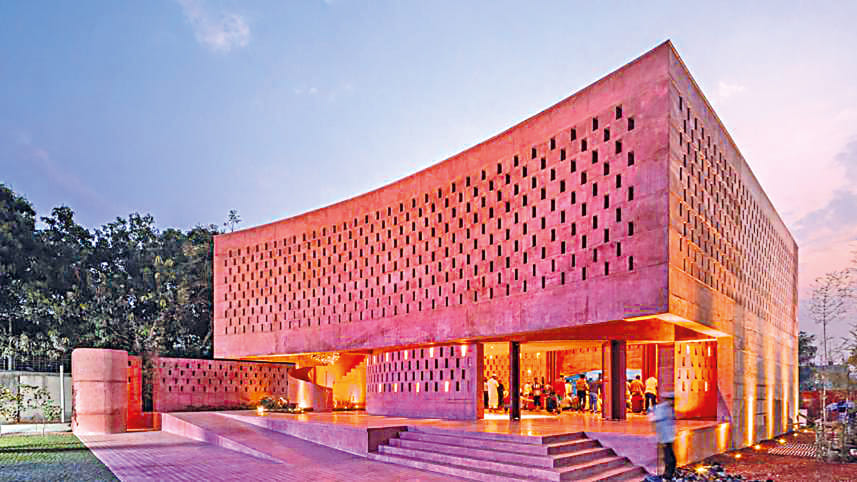
A Bangladeshi esprit nouveau has been flourishing with palpable, organic energy—let us call it notun tej—for the past three decades or so. Architects have been experimenting with aesthetic expression, formal articulation, material choices, environmental adaptation, and, most importantly, architecture’s relationship to history, culture, and land. Although the results have sometimes been mixed, these varied experiments have brought to the fore a collective sense that something significant has been unfolding in this densely populated South Asian country.
 For all latest news, follow The Daily Star's Google News channel.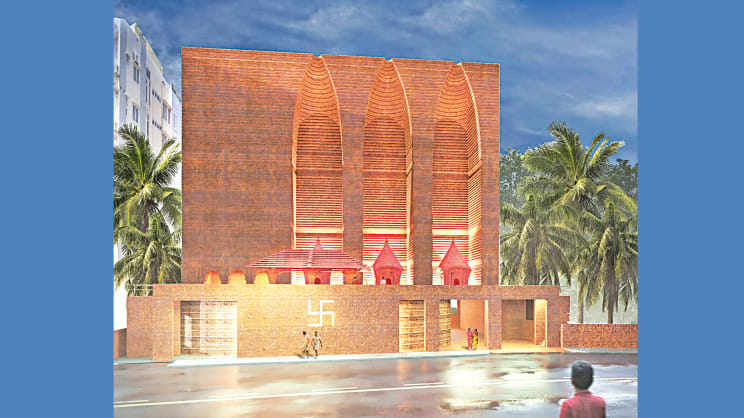
What drives this restless energy is uncertain, though one can identify a host of possible catalysts. Is it the combined social and cultural effects of a society in transition? The aspirations of a rising middle class? The progressive vision of entrepreneurial practitioners? Globalisation and its neoliberal order? The cultural cross-pollination of the local and the global? The gradual discovery of an architectural genius loci—that archetypal spirit of place shaped by vernacular commitments? Or the political economy of the built environment intersecting with the politics of development? Perhaps it is all of these at once.
Whatever the underlying cause, an engaged observer may perceive this spirit as an open-minded search for an aesthetic calculus of “local” modernity, one that unfolds without the burden of performing overt Bengali identity politics. From places of worship to factories, from residential buildings to markets, and from park restorations to riverfront developments, a macro-tendency has emerged that transcends the neoliberal narrative of modernity as a purely globalising project. Many projects are simultaneously modern in the clarity of their aesthetic grammar and “unmodern” in their defiance of international modernism’s visual orthodoxy. High-profile national architectural competitions have fostered a new kind of design entrepreneurship, producing edifices that invite a wide arc of interpretive possibilities. Architects have also expanded the boundaries of professional practice by working with low-income communities, reimagining design in an age of climate change and rising seas, and participating in policy dialogues on urban welfare.
One thing is certain: architectural practice has shattered Dhaka-centrism. Buildings that embody the country’s notun tej are now found not only in Dhaka but also in Gaibandha, Sreepur, Bogra, Pabna, Dinajpur, Kulaura, Moulvibazar, Matlab, Jhenaidah, Cox’s Bazar, Teknaf, Netrokona, Tangail, and Gazipur, among other places far removed from the nation’s financial and political centers.
Even as the roads of major cities remain paralysed by traffic congestion and marked by a pervasive sense of civic chaos, and even amid the infernal pace of urbanisation across the country, the architectural culture of notun tej has taken root. It brings both promise and peril, introducing contentious debates about its character, its future, its ability to serve society, and, most importantly, the nature of its political engagement.
While there is, of course, an intellectual indebtedness to the country’s independence, the spirit of notun tej is deeply intertwined with the 1980s, a decade of intense change in social norms, public discourse, and political aspirations, catalysed by both local and global forces. On December 16, 1982, eleven years after Bangladesh achieved independence, architect Syed Mainul Hossain’s National Martyrs’ Monument was inaugurated in Savar. A year later, with the completion of Louis Kahn’s Parliament complex in Sher-e-Bangla Nagar, the nation gained an architectural emblem of its political odyssey towards statehood. Yet the decade’s complex political tapestry—shaped by autocratic military rule, infrastructure modernisation, rural development, industrialisation, urbanisation, and a rising middle class—led to the breakdown of traditional cultural thresholds, the emergence of new forms of civil discourse about the past, present, and future, and, most significantly, a national tenor of soul-searching.

Architecture—bearing cultural meanings that reach far beyond the physicality of the built environment—became an important component of this introspection. What did Bengali nationhood mean, and how did it dovetail with, or complicate, the tangible expressions of the places around us? Competing ideas began to permeate architectural thinking across the country.
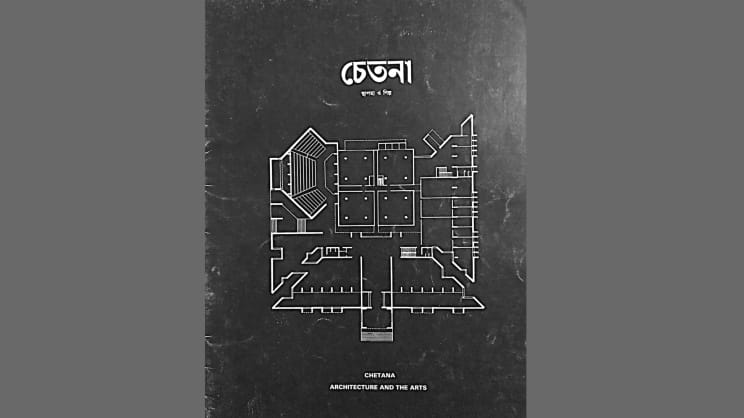
Three stories, although hardly a tell-all saga, deserve mention. First, an “avant-garde” architectural study group named Chetona (meaning awareness), created at the behest of architect Muzharul Islam, sought to introduce critical thinking as an essential component of architectural practice. Many architects, both senior and junior, disillusioned with the prevailing view of architecture as primarily a professional service devoid of broader social vision or engagement with history and culture, gravitated towards Chetona. The group’s iconoclasm centred on reading critical architectural texts and questioning existing methods of architectural pedagogy, as well as the treatment of architecture as merely a technical discipline. Its reading list included, among many others, Rabindranath Tagore, Kazi Nazrul Islam, works on Bengal’s history, literature, and art, the writings of the Franco-Swiss architect Le Corbusier, the environmentalist Rachel Carson, and the Norwegian architectural theorist Christian Norberg-Schulz.
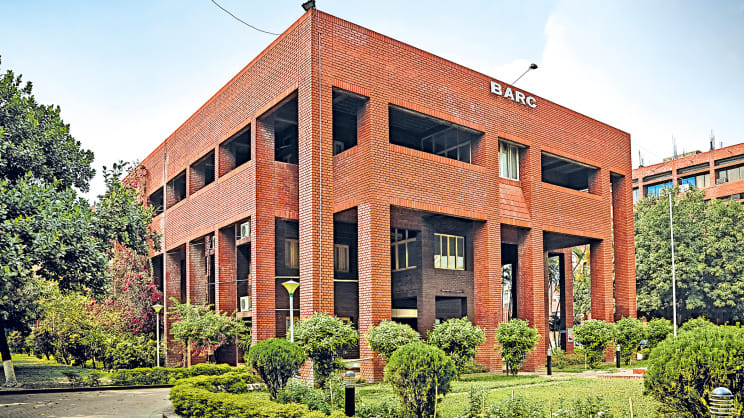
Not all architects, however, agreed with this effort to intellectualise the design profession, and many kept their distance from what they perceived as elitism. Paradoxically, this rift created an opportunity for introspection, as a contentious yet productive architectural conversation began to unfold.
Second, the influence of the Aga Khan Award for Architecture (AKAA), an architectural prize established by Aga Khan IV in 1977, was strongly felt during the 1980s. The award sought to champion regional, place-based, and culturally sensitive architectural approaches in Islamic societies, although what “Islamic” meant remained open to debate. Awarded projects spanned contemporary design, social housing, community development, restoration, adaptive reuse, and landscape design. In many ways, the AKAA presented “Islamic regionalism” as an antidote to the abstract orthodoxy of Western modernism (and its perceived domination), which had allegedly homogenised architectural practice around the world.
Meanwhile, on the world stage in the 1980s, the proposition of “universalism” was increasingly seen as a problematic idea, as it implied humanity could be understood as a single, seamless narrative. “Contextualism,” by contrast, gained wider currency, emphasising that events occur within specific cultural and historical contexts rather than being predetermined by universal patterns and values. The French philosopher Jean-François Lyotard’s critique of the “metanarrative” opened new ways of making sense of the plurality of local, small-scale narratives: the contextual stories. Alexander Tzonis, Liane Lefaivre, and Kenneth Frampton promoted the idea of “critical regionalism” as a grounded path toward contextual architecture, one intended to produce a rich interplay between the global and the local. Christian Norberg-Schulz advanced “phenomenology”—the discourse of embodied experience—as a rallying cry in architectural pedagogy, introducing architects to the philosophical work of Edmund Husserl, Martin Heidegger, Maurice Merleau-Ponty, and Gaston Bachelard. Several Bangladeshi architects took note of these developments and were inspired to reimagine architecture as a place-based practice shaped by the internal dynamics of society and culture.
Third, the publication of several international architectural magazines struck a popular chord among design professionals and students. The Aga Khan Award for Architecture’s flagship magazine, Mimar: Architecture in Development—first published in 1981 and produced for forty-three issues—encouraged many Bangladeshi architects and architecture students to look beyond Western modernism and the aesthetic hegemony it allegedly created. The Indian architectural magazine Architecture + Design (A+D), first published in 1984, positioned itself as a vanguard platform for chronicling creative architectural projects in South Asia and became an essential source of knowledge about the subcontinent’s design culture. Its affordability further magnified its influence on design communities across the country.
On a broader national scale, the architectural aspirations of design professionals coincided with the rapid urbanisation of Bangladesh and the rise of an urban middle class that gradually fostered a flourishing culture of architectural patronage. Historically agrarian, Bangladesh began to urbanise quickly in the late 1980s. The country’s total urban population rose from a modest 7.7 percent in 1970 to 31.1 percent in 2010. Impoverished rural migrants flocked to major cities—particularly the capital, Dhaka—in search of employment and better lives. Dhaka’s population soared from 1.8 million in 1974 to more than 6 million in 1991, reaching nearly 18 million by 2015. This massive population boom placed unsustainable pressure on urban land, driving land values sharply upward. As occurred in nineteenth-century industrial cities such as London, Manchester, Liverpool, Paris, and New York, Bangladesh’s metropolises began to face an acute housing shortage.
During this transitional period, real estate developers emerged as powerful economic actors in Dhaka and beyond, playing a key role in replacing traditional single-family houses with multistory apartment complexes. Meanwhile, the public sector failed to meet rising housing demand, and private real estate companies expanded rapidly to fill the gap. For example, in the early 1980s only five real estate firms operated in the country; by 1988, that number had grown to forty-two. The rapid rise of private developers reflected a robust market for high-density, multifamily housing, even though affordability remained a major challenge. During this time, many architects experimented with materials, forms, spatial organisation, construction techniques, aesthetic expression, and the relationship of individual plots to their surrounding neighbourhoods.
Meanwhile, in 1993, Bangladesh formally introduced a national building code (BNBC), a milestone document prepared by the Housing and Building Research Institute (HBRI) with support from professional bodies. This was the country’s first effort to consolidate structural, architectural, fire, electrical, and safety standards into a single document. The code sought to integrate aesthetic creativity, building safety, environmental exigencies, and public health within a comprehensive framework for professional practice. As a result, new architectural imperatives and obligations entered the debate.
A burgeoning class of urban entrepreneurs—who had made their fortunes in the country’s export-oriented ready-made garment industry, as well as in manufacturing, transportation, construction, and the consumer market—began to emulate “old money” and emerged as a new generation of architectural patrons. They invested substantial sums in building signature single-family houses and a wide range of other projects, including apartment complexes, hospitals, shopping malls, private schools and universities, factories, and places of worship. Happily for the profession, architects began to find abundant work from the mid-1990s onward.
The liberalisation of the market, the emergence of a strong private sector, rapid urbanisation, and increased collaboration with international design communities created demand for a wide range of building typologies, which in turn required specialised architectural consultancy services. Public-sector agencies also began to recognise the social and commercial value of architectural aesthetics and increasingly hired architectural firms to compete in the building market. Together, these developments ushered in a vibrant and dynamic period of architectural experimentation.
Over the last two decades, Bangladesh has witnessed an intense contest of architectural ideas. Earlier debates—such as modernism versus regionalism or formalism versus contextualism—have given way to a more complex landscape marked by nonbinary design theories, diversified construction materials, engagement with the country’s deltaic ethos, and, more broadly, the political economy of the built environment. Approaches that proved aesthetically or philosophically compelling in the 1980s and 1990s became untenable or insufficient as architectural practice responded to environmental degradation, the neoliberal economic order, and the rise of social media. The profession has simultaneously conformed, resisted, and zigzagged, producing a diverse array of outcomes.
Yet there is a darker side to this narrative. While architecture—largely in the form of individual, plot-based or stand-alone projects—thrived, cities, with Dhaka as the most glaring example, descended into unbearable chaos. In extreme cases, opulent “Taj Mahals” produced one city of cloistered interiors, while overflowing dumpsters and pervasive urban poverty produced another. Private oases and luxurious cafés overlooked the ghettoised worlds of informal settlements, many of which periodically fell victim to arson as part of draconian eviction tactics.
As architects searched for a synthesis between Bengali roots and an ecumenical vision of spatial wellbeing, they largely failed to articulate an ethical framework for how cities should function or how a foundational commitment to spatial justice might drive urban life. Globalisation fueled architectural patronage even as cities continued to suffer from extreme economic inequalities that, as French economist Thomas Piketty has argued, define contemporary predatory capitalism. Architects seem either unable or unwilling to grapple with how the built environment could—or should—play a mitigating role in addressing social inequities and spatial injustice. Slums burned, and architects responded with naïve, cosmetic solutions, rarely attempting to understand the exploitative economic and political systems that marginalise the urban poor in the first place. The profession appears to have struck a Faustian bargain, surrendering to the irony that “architecture is great, but the city rots” as a form of convenient fatalism. Thus, consciously or unconsciously, architects become complicit in perpetuating a culture of injustice, alas—through the very designs in which they take pride.
It is a problem of scale, both in physical and metaphysical terms. The delicate balance between the micro scale of the building and the macro scale of the city must be handled with care. To understand an anthropology of care, the design community must undertake a forensic analysis of the “class” dimension that complicates these two scales, along with the multivalent social complexities that exist between them. Most people in the city have very little access to purpose-built environments; yet they persist, clinging to the city as their shelter, their daily battlefield, and their assertion of the right to exist. Thus, care—both as a tactical imperative and as a moral buffer—offers the possibility of resisting the injustice of deciding who matters and who does not so that society may march on, the nefarious basis of what African philosopher Achille Mbembe calls “necropolitan” governance. The spirit of notun tej in Bangladeshi architecture must resist this dehumanising division by mediating between the scales of the building and the city.
Adnan Zillur Morshed is an architect, architectural historian, urban theorist, and public thinker. He can be reached at morshed@cua.edu
Comments