


Why Rokeya’s two-hour workday utopia remains urgently relevant

In the early twentieth century, within Bengal's conservative social setting, a Muslim woman dared to dream of a revolution. Her vision went beyond a simple reversal of authority. It proposed a society reorganised from the ground up, where power, knowledge, and technology followed an entirely different logic.
Rokeya Sakhawat Hossain's Sultana's Dream (1905), often described as an early work of science fiction, invites close reading for the clarity of its central idea: that a just society may emerge through a deliberate rethinking of who holds power and how technology is used. The story's utopia is not accidental or ornamental; it is carefully structured around social and scientific choices.
By treating fiction as a space for critical experimentation, Rokeya outlined responses to problems—energy, labour, governance, and freedom—that remain pressing today. Her work challenges the notion of utopia as escapist fantasy and instead presents it as a reasoned outcome of confronting injustice with imagination and ethical purpose.
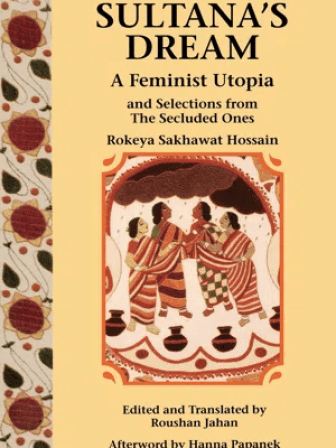
Rokeya's genius is evident in the two core pillars of Ladyland: its ethical infrastructure and its liberated economy. Writing during the era of industrial smog and colonial expansion, her foresight is stunning. Her female scientists mandated "solar technology," making this one of the story's most telling prophecies. This choice is an ethical critique of power, asserting that technology must reflect the moral values of its makers. By linking destructive energy sources (fossil fuels) to destructive social forces (warring men), she argued that technology must be principled. By complementing ethical leadership with clean energy, she demonstrates that ecological harmony is the natural outcome of principled governance. The result is the ultimate 'greenification' of cities, where flower paved streets replace asphalt and pollution, providing a serene, sustainable ecosystem.
Rokeya utilises the sci-fi genre's capacity for structural reversal to isolate the variables of conflict and fear. By removing the traditional perpetrators of violence and aggression from the sphere of power, she reveals that peace, safety and intellectual growth are the default states of humanity when the power structure is fundamentally neutralised.
This technological superiority leads directly to an equally radical social structure: the two-hour workday. This sci-fi concept is a profound counter narrative to modern capitalism, where "the hustle" is glorified and technological efficiency often deepens exploitation. Rokeya's utopia asserts that the highest priority of science is not maximising output, but maximising human freedom and leisure. She argues that an intellect freed from the daily grind is the most potent source of continued innovation, fundamentally challenging the economic belief that labour should consume life.
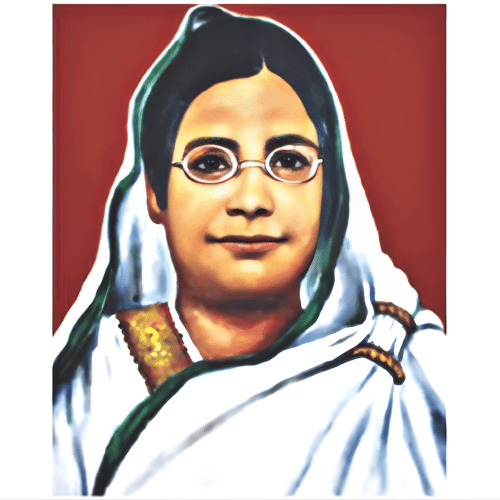
The inversion of social boundaries, with men experiencing restricted mobility, forms the story's central analytical device. Rokeya utilises the sci-fi genre's capacity for structural reversal to isolate the variables of conflict and fear. By removing the traditional perpetrators of violence and aggression from the sphere of power, she reveals that peace, safety and intellectual growth are the default states of humanity when the power structure is fundamentally neutralised. This was her solution to the detoxification of masculinity and the pathway to the triumph of love and truth over fear and hatred. The sci-fi setting allows her to show, by fictional fiat, that the source of fear lies in a historically dominant power structure, and that dismantling this structure is key to collective flourishing. The crisis, she demonstrates, is not inherent to humanity, but inherent to a specific, unrestrained social system.
Her female scientists mandated "solar technology," making this one of the story's most telling prophecies. This choice is an ethical critique of power, asserting that technology must reflect the moral values of its makers. By linking destructive energy sources (fossil fuels) to destructive social forces (warring men), she argued that technology must be principled. By complementing ethical leadership with clean energy, she demonstrates that ecological harmony is the natural outcome of principled governance.
Her vision extended beyond dreams into actionable models. Her later novella, Padmarag, describes Tharini's House, a self-supporting women's centre that functions as a proto 'arcology'—an early model of a self-sustaining community. It is a tangible social sphere designed to transcend divisions of ethnicity, religion, and caste, serving as a unified, inclusive resistance against both colonial and patriarchal dictates. This shows that Rokeya understood that utopia requires not only physical infrastructure but also an inclusive social framework. Rokeya's life, devoted to founding schools and championing women's rights, was a practical extension of her fictional ideals. She envisioned a world complete with a clean energy grid, a leisure economy, and a moral compass that prioritised human freedom.
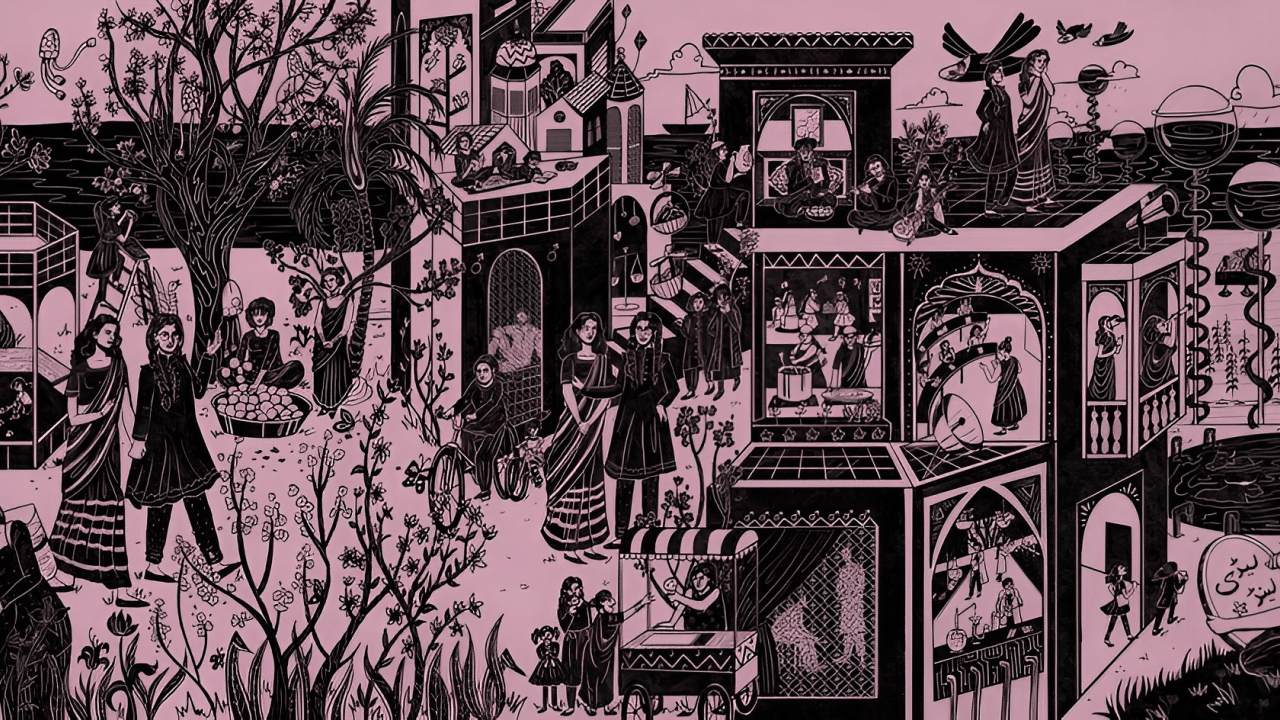
Today, as we face escalating climate disaster, endemic overwork and geopolitical conflict, her stories remain urgent. She showed us the technology, the social structure and the moral calculus required to escape our current predicament. The essential question, then, is why, even after 120 years, we have failed to shed our destructive habits and step into a green society she imagined.
The failure lies not in her vision but in our collective inability to act on it. The final challenge she posed more than a century ago still stands: are we brave enough to dismantle our self-destructive systems and walk the green, sunlit streets she envisioned? It is time to treat her sci-fi not as a relic but as a radical manifesto for change.
Musrat Hossain Mithila is an undergraduate student of Women and Gender Studies at the University of Dhaka.
Send your articles for Slow Reads to slowreads@thedailystar.net. Check out our submission guidelines for details.
Tagore’s Dan Pratidan and the colonial remaking of Bengal’s moral world
Memories of Indigo Rebellion and the question of national identity
Part 1 / The forgotten art of Bengali advertising
Re-reading Nizamuddin Auliya in history and memory

Remembering Mrinal Sen: Through rain, memory, and cinema

Rethinking the origins of Bongabdo through Bengal’s ecological civilisation
The forgotten front: Rumour, resistance, and the uprising of 1857 in Eastern Bengal
The Burma we imagined in Bengali literature

The Dhaka Masterpiece Paintings
