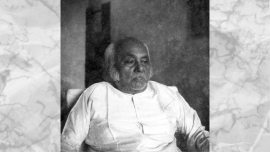
Kazi Fazlur Rahman, a civil servant and an intellectual giant
Kazi Fazlur Rahman, a legendary student who stood first in the Central Superior Service (CSS) examination of Pakistan in 1956, died at his Dhanmondi residence on Saturday, December 13. He was 95. A distinguished civil servant, Mr Rahman served as a Sub-divisional Officer (SDO) of Patuakhali, Deputy Commissioner (DC) of Sylhet, and in other top civil service positions during the Pakistani era. He also served as Education Secretary, Petroleum Secretary, Secretary of the External Resources Division, and as a Member of the Planning Commission of Bangladesh. Kazi Fazlur Rahman was also a Member of Bangladesh's first Interim Government in 1991. He was an outstanding scholar and an inspiration to many.
Born in Feni, Kazi Fazlur Rahman's high school education was interrupted by the Second World War. The British made Feni and its newly constructed military airport their first line of air defence against the Japanese. They also closed all schools in Feni in 1943. Fazlur Rahman had no choice but to enrol as a student of Class VII at Ataturk High School, which had been established four years earlier, in 1939, in Daganbhuiyan, eight miles west of Feni. The writer's father, Jalal-ud-Din Ahmad, was the founding headmaster of Ataturk High School. He convinced Kazi Fazlur Rahman's father, Mr Kazi Siddiqur Rahman, to allow Kazi to reside in the headmaster's household for the next three and a half years so that he could supervise Kazi more closely.

Almost immediately, Headmaster Jalal noticed that Kazi Fazlur Rahman was a very special kind of brilliant student. He was exceptionally well read and excelled in English and general knowledge. As he was far ahead of other students in the school, Headmaster Jalal would bring English textbooks such as Bright Story Reader whenever he travelled to Kolkata on school business, exclusively for Kazi Fazlur Rahman—books that lay well beyond the prescribed curriculum. The writer's mother would often narrate an anecdote about how Fazlur Rahman responded when she asked him to explain how a gramophone works. He explained thus: "Bujaan (elder sister), when you talk and hold a paper in front of your mouth, you will feel the paper vibrating. The phonograph discs record the vibrations of the voice of the singer and the musical instruments. The stylus reproduces the recorded sounds as it goes over the grooves, and the speaker amplifies them." Few adults could have explained it as well.
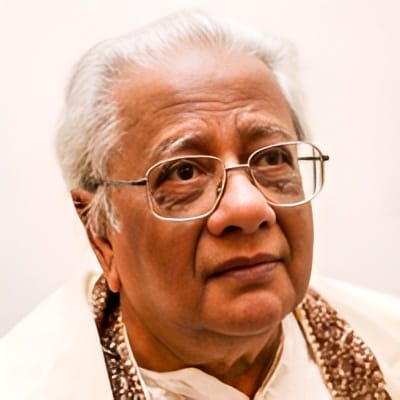
On a visit to the school in 1946, Feni's SDO, Mr W. B. Kadri, asked Kazi the difference between rice and paddy. After listening to Fazlur Rahman's correct answer, the SDO made a prophetic remark: "He is a promising boy with a bright future."

It was therefore no surprise when Kazi Fazlur Rahman stood third in the Matriculation Examination of 1947 under the auspices of the University of Calcutta in undivided Bengal, securing 600 out of 700 marks (86%). That achievement in the Matriculation Examination remains unmatched—not only in the Feni–Noakhali area, but in all of Bangladesh. Kazi Fazlur Rahman went on to excel equally in his Intermediate Science (ISc) examination from Murari Chand (MC) College, Sylhet, in 1949, followed by a BSc (Honours) in 1952 and an MSc in Statistics in 1953 from the University of Dhaka. He joined the Department of Statistics at Dhaka University as a Lecturer and was appointed Assistant House Tutor of Salimullah Muslim (SM) Hall. Kazi Fazlur Rahman was a Doctor of Philosophy (DPhil) student at the University of Oxford, UK, when he stood first in the Central Superior Service (CSS) examination of Pakistan in 1956 and returned home.
Kazi Fazlur Rahman missed academia. He told me that he wished he had completed his doctorate at Oxford and remained in the teaching profession. He also told me that, although he had stood first in the CSS examination, at the Civil Services Academy in Lahore West Pakistani CSPs would taunt him and other East Pakistani CSPs: "Tum jhooth CSP ho!" (You are false CSPs!). As his stellar academic credentials demonstrate, he was intellectually far superior to the average civil servant. He would notice traps that other civil servants missed. He lamented that Western governments and companies take advantage of our lack of proficiency in the English language. At the beginning of negotiations, they would present a draft in English to frame the debate. Since we lacked the ability to offer a counter-draft, we would agree to their draft by changing a comma or a full stop here and there as our consolation. Kazi Fazlur Rahman also told me that the construction of the Kaptai Dam was a huge mistake and an ecological disaster.
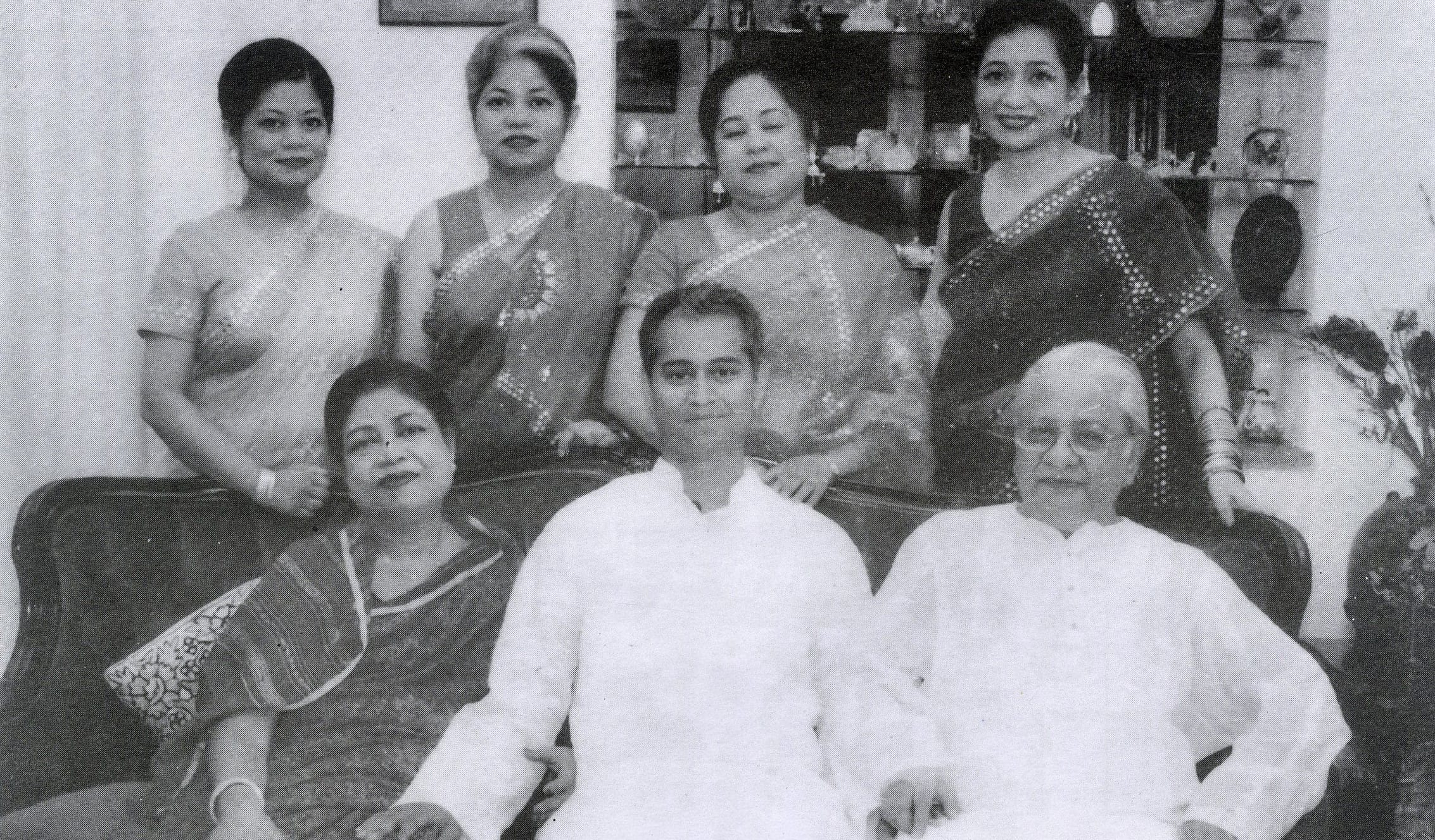
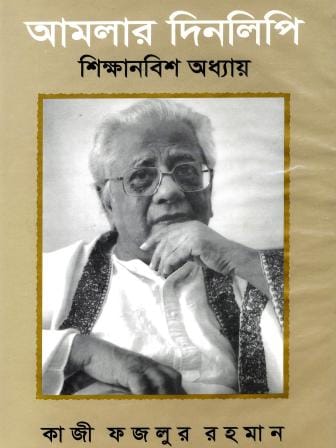
After he retired, Kazi Fazlur Rahman devoted himself wholeheartedly to intellectual pursuits. He wrote several novellas, novels, and chronicles ranging from the romantic through the historical and bureaucratic to the Liberation War. I have read many of his books (Kalsroot, Amlar Dinlipi, and The Image in the Mirror and Other Stories, among others) and can testify that those gems have not received the recognition they deserve. Once, he took me along as he visited many clinics and charitable institutions that he was financing. Kazi Fazlur Rahman has been the writer's only academic role model. The writer has interacted with Nobel Prize winners, but has never felt as intellectually intimidated as in the presence of Kazi Fazlur Rahman. Goodbye, Titu Mama! May Allah (SWT) grant you a place in Paradise.
Dr Fakhruddin Ahmed is the first Rhodes Scholar from Bangladesh. Kazi Fazlur Rahman was his uncle.
Send your articles for Slow Reads to slowreads@thedailystar.net. Check out our submission guidelines for details.
Why Zia still matters in today's Bangladesh

More than a saree: The living legacy of Tangail
Tagore’s “Balaka” and the decolonial poetics of becoming

Kolkata's Eid, my Eid

The quiet lessons of Shital Pati

Mercy, love, and pluralism: A sufi vision of Islam

Beyond the loom: How Jamdani preserves the values of peace
Hair oil, bumblebees, and the lost world of Bengali advertising art