Why mob violence is rising across South Asia
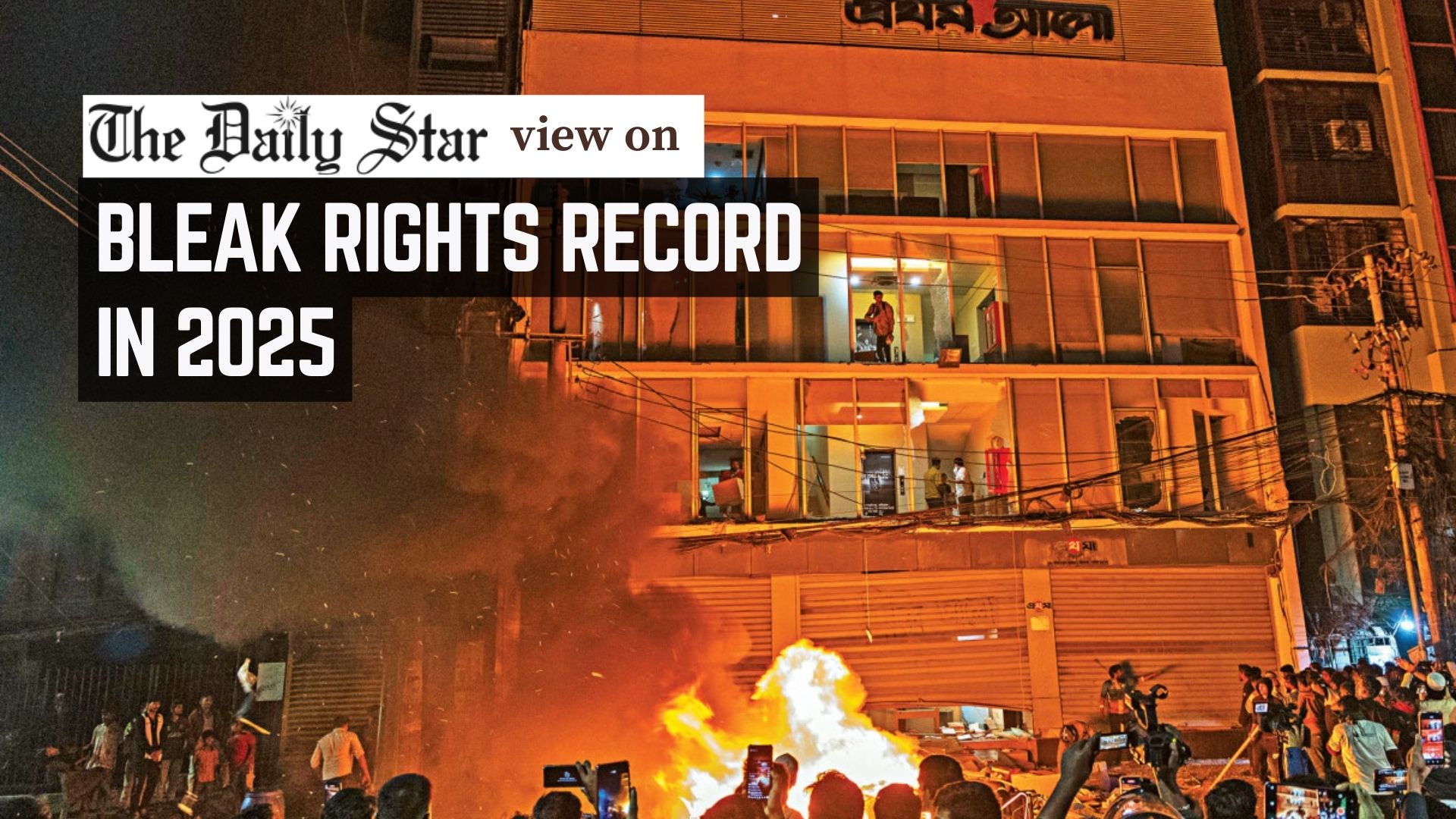
On December 18, 2025, a 25-year-old Hindu garment worker was lynched by a mob of approximately 150 people in Bangladesh's Mymensingh district. Following accusations of blasphemy, the victim was beaten to death.
Mob lynchings in Bangladesh, known locally as gono-pituni, have a long history. But this crisis is not unique to Bangladesh. According to the Human Rights Watch's World Report 2025, South Asia has emerged as a global epicentre for collective vigilantism, with similar violence frequently reported in India and Pakistan as well.
The recent surge in mob violence across India, Bangladesh and Pakistan is propelled by similar drivers: a decaying public confidence in the judiciary and the rapid spread of digital disinformation. This combination allows 'street justice' to effectively supersede state authority. As American political scientist Paul Staniland observed in a 2020 analysis for the Carnegie Endowment for International Peace, these patterns in South Asia are not recent developments. They are historical continuities.
Since the individual perceives their actions as being shared by the collective, the weight of personal accountability is diminished. Deindividuation often overrides a person's moral compass, pushing individuals to engage in behaviours they are likely to find unthinkable if they were acting alone.
Rooted in colonial-era structures and galvanised by the 1947 partition of India, this culture of vigilantism has simply been recalibrated for the digital age.
The 2017 lynching of university student Mashal Khan in Mardan, Pakistan, serves as a grim illustration of how false allegations (circulated on social media) are weaponised to orchestrate violence. Targeted by a campus mob under the guise of blasphemy, Mashal was brutally murdered, and his death was filmed by mobile phones and then uploaded on social media sites. The plan of the attack was hatched by university staff and Mashal's political rivals who wanted to silence his criticism of administrative corruption in the university.
This tragedy highlights a broader historical pattern in South Asia, where the mob has evolved into a calculated tool for political mobilisation and social policing.
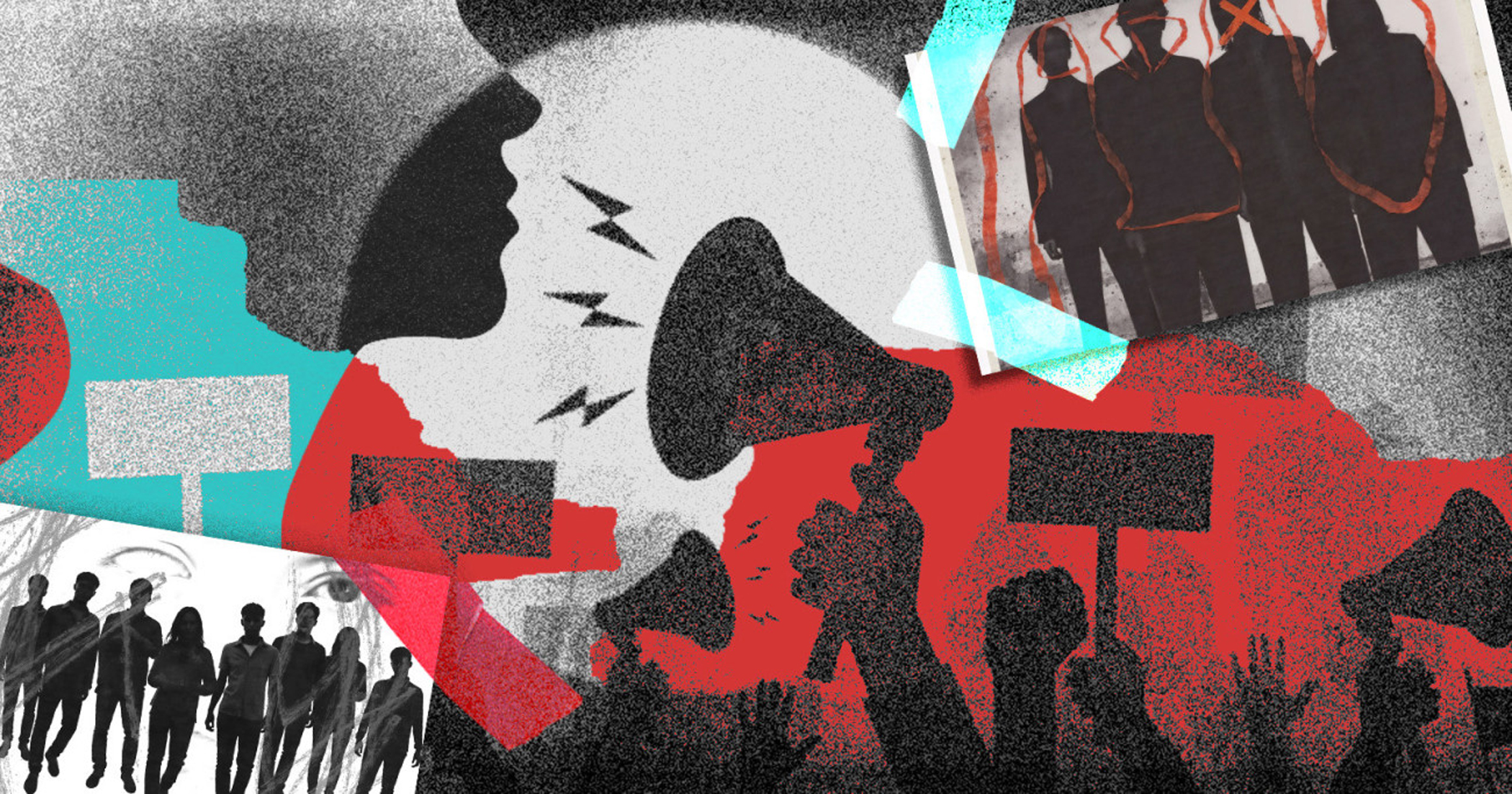
Over the last century, the psychological mechanisms of 'mob mentality' have become deeply integrated into the region's sociopolitical terrain. Mob mentality is driven by a psychological phenomenon known as 'deindividuation', where individuals lose their 'sense of self' and personal identity within a large group. When a person becomes part of an energised crowd, they often experience a feeling of anonymity. They believe they are indistinguishable from those around them and feel shielded from personal recognition or judgement.
Since the individual perceives their actions as being shared by the collective, the weight of personal accountability is diminished. Deindividuation often overrides a person's moral compass, pushing individuals to engage in behaviours they are likely to find unthinkable if they were acting alone.
Research suggests that individuals in 'collectivist societies', where group harmony is prioritised over individual identity, may be more susceptible to participate in or cheer mob violence. According to a 2023 study by Chinese researchers Jingjing Jio and Jun Zhao, people in collectivist cultures are conditioned from birth to subordinate their personal identity to the community.
In South Asia, religious anxieties, such as allegations of blasphemy (Pakistan, Bangladesh) or disputes over cow slaughter (India), serve as 'sacred' justifications that allow a crowd to emotionally and morally bypass legal frameworks. In contrast, China's secular and strictly regulated environment lacks these sacred pretexts, making it far more difficult to ignite the emotional frenzy required for a lynching.
Consequently, the transition from being an individual actor to becoming part of a collective mass is fluid, allowing personal moral standards to be easily overwhelmed by a crowd's passions.
But what about China? It is a collectivist society, like most South Asian cultures. But mob violence in China is rare. While China saw significant mob activity in the 1960s and 1970s, the Chinese state (especially after 1989) has maintained a strict monopoly on force through its policy of 'weiwen [stability maintenance].' Unauthorised gatherings, even if they are pro-government, are swiftly dismantled. All forms of mob action are perceived as a threat to the state's authority.
The divergence between South Asia and China regarding mob violence lies in the nature of the 'moral trigger.' In South Asia, religious anxieties, such as allegations of blasphemy (Pakistan, Bangladesh) or disputes over cow slaughter (India), serve as 'sacred' justifications that allow a crowd to emotionally and morally bypass legal frameworks. In contrast, China's secular and strictly regulated environment lacks these sacred pretexts, making it far more difficult to ignite the emotional frenzy required for a lynching.
But capitalism in South Asia has not catalysed a similar shift toward individualism. Instead, economic power remains deeply intertwined with collectivist traditions. For example, business communities and traders often provide significant financial support to both mainstream and radical religious groups that are often at the forefront of fomenting mob violence.
Digital dynamics further separate these two regions. South Asia grapples with viral, unregulated disinformation that facilitates rapid mobilisation, whereas China's heavily monitored digital space prevents the formation of frenzied mobs.
Within China's one-party system, capitalist growth has birthed a lifestyle individualism which, while not political, acts as a buffer against the more destructive elements of rigid groupthink.
But capitalism in South Asia has not catalysed a similar shift toward individualism. Instead, economic power remains deeply intertwined with collectivist traditions. For example, business communities and traders often provide significant financial support to both mainstream and radical religious groups that are often at the forefront of fomenting mob violence.
This creates a feedback loop, where economic success reinforces traditional group identities rather than diluting them, maintaining the collective as the primary unit of social and political life. The Indian historian Meera Nanda has brilliantly investigated this in her book The God Market.
Individualism functions as a psychological safeguard, anchoring the person to their internal moral convictions. By prioritising personal integrity over collective impulse, the individual becomes resilient to deindividuation.
The solution requires a two-pronged approach: the cultivation of a more robust individualism and a decisive shift in state policy. The government must treat all mob activity as a direct challenge to state sovereignty and respond with appropriate force. Furthermore, the state must actively deconstruct and reframe the moral rationales that serve as triggers for collective violence.
While capitalism and individualism are historically symbiotic, this synergy faces resistance in South Asia, despite the expansion of capitalism in the region. Here, individualism is often stigmatised as a threat to communal harmony. Consequently, while Western discourse frames individuality/ self-reliance as a hallmark of 'maturity', South Asian cultural paradigms frequently interpret personal autonomy as a form of egoism or a betrayal of domestic duty.
Nevertheless, as capitalism expands across South Asia, the burgeoning middle class is cultivating what the Indian psychologist Jai B. P. Sinha terms "localised individualism". This model does not abandon communal ties but strategically renegotiates them, to serve personal and economic advancement.

However, this shift is unlikely to curb the region's propensity for mob violence nor neutralise the moral triggers behind lynchings. Rather than dismantling the moral narratives that incite such behaviour, South Asian middle classes have co-opted these narratives through populist movements, to protect their own socio-economic and political standing.
The solution requires a two-pronged approach: the cultivation of a more robust individualism and a decisive shift in state policy. The government must treat all mob activity as a direct challenge to state sovereignty and respond with appropriate force. Furthermore, the state must actively deconstruct and reframe the moral rationales that serve as triggers for collective violence.
Currently, these remedies are more feasible in Pakistan's pragmatic-centrist hybrid regime than in its neighbouring states. In India, a populist Hindu-nationalist government often relies on these very triggers for political mobilisation, while Bangladesh remains in a state of flux, struggling to navigate the volatile transition from autocracy to democracy.
Nadeem F. Paracha is a researcher and senior columnist for Dawn Newspaper and Dawn.com. He is also the author of ten books on the social and political history of Pakistan. He tweets @NadeemfParacha
The article was first published in Dawn on January 4, 2026. The original title of the article was The Mob and the State.
Send your articles for Slow Reads to slowreads@thedailystar.net. Check out our submission guidelines for details.

Beyond kaanta-taar: Rethinking life at the Bangladesh–India border
Can Bangladesh save its haor food bowl?

The great Bangladeshi cattle reality show

Will Ramisa get justice in Bangladesh’s broken rape trial system?

Interview / Why the Padma Barrage will be a disaster for Bangladesh
How secular is the orna?
Haor crisis turning into a national crisis: Is the government aware?

Photo Story / The Mro children who could not reach the vaccine
The slow death of the haors and their swamp forests