One city, different nights
Dhaka is a city that barely sleeps. When daylight fades, a different side of the city comes to the forefront, exposing deep social differences more clearly than daylight ever could. This photo documentary is inspired by Dhaka’s night-time and shows how people from different social and economic classes experience the same city in very different ways.
The night-time city becomes a powerful space where class differences are intensified and exposed. On the same streets, some people sleep on footpaths with no shelter, while others guard buildings throughout the night, resting on plastic chairs.
Through visual storytelling, this project aims to show how people from different social classes spend their nights differently within the same urban environment. It seeks to capture ordinary moments: sleeping bodies on footpaths, night guards resting on chairs, and groups of young people enjoying food and conversation. Together, these images build a narrative of contrast and coexistence. The goal is not to judge, but to invite viewers to notice what is often ignored.
By placing these photographs side by side, the documentary encourages viewers to consider how inequality becomes normalised in society, and how certain lives remain invisible despite being constantly present. Inequality is not hidden; it is right in front of us, every night.
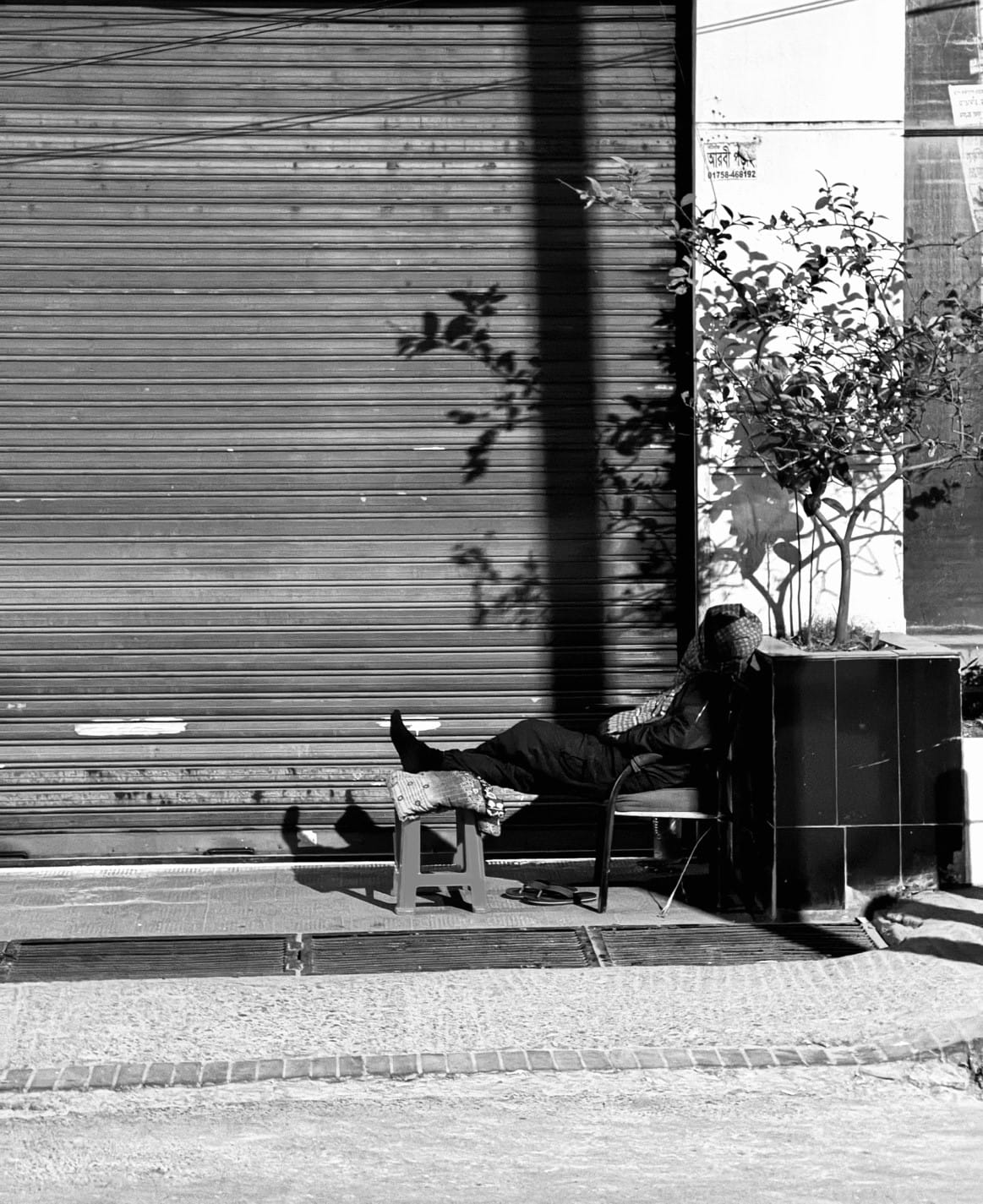
(1:31 AM, Dhanmondi 6/A, Dhaka) — A security guard rests on a chair outside a mall, covering his head with a scarf during a quiet late-night shift. The moment shows how guards spend long nights in public spaces while protecting buildings by sacrificing their comfort.
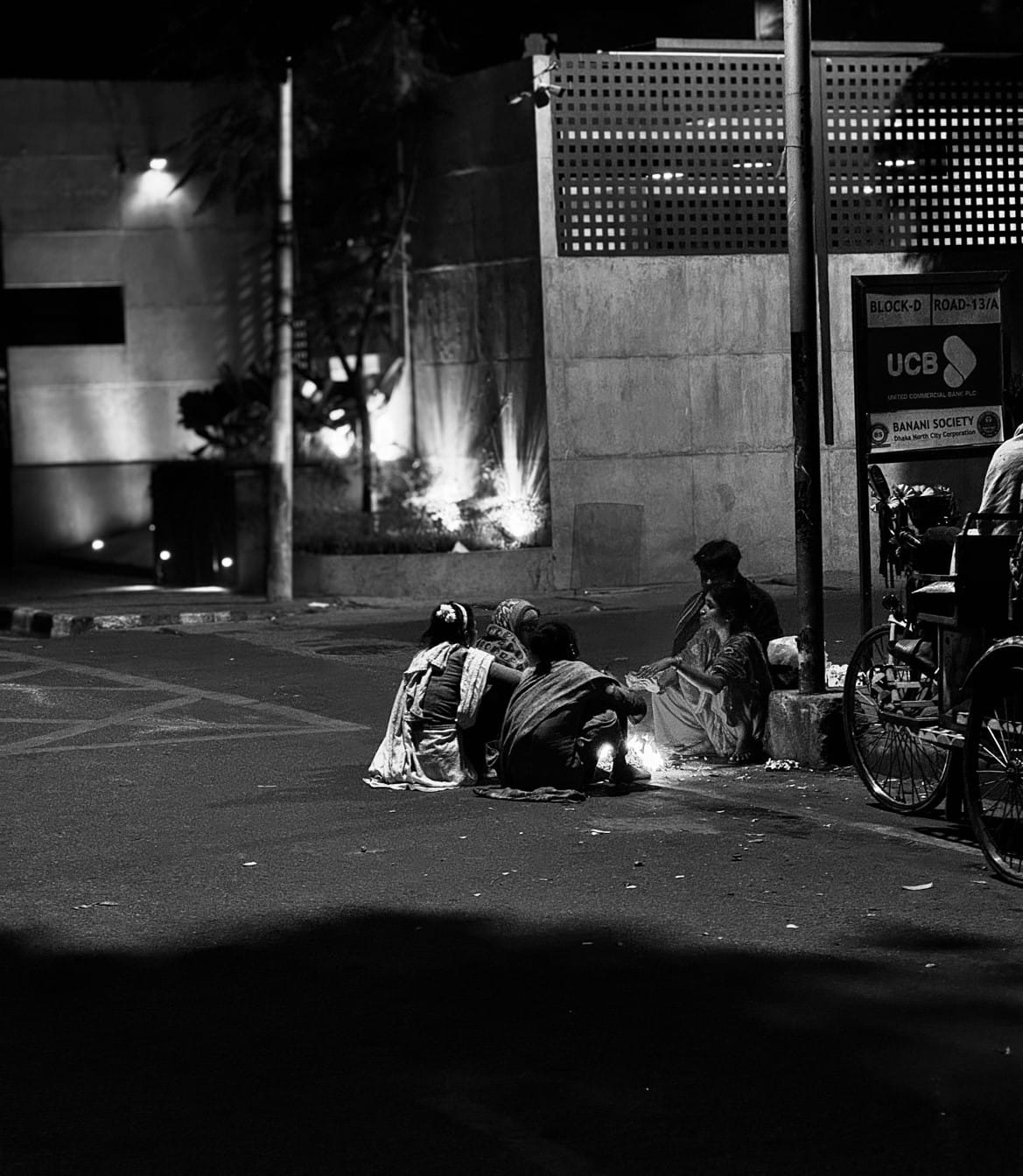
(3:31 AM, Banani, Dhaka) — People gather around a small fire to keep warm on a street in Banani, as the lights of a nearby high-rise building glow in the background late at night. The scene shows the contrast between shared warmth on the street and the comfort of illuminated skyscraper rising above the city.
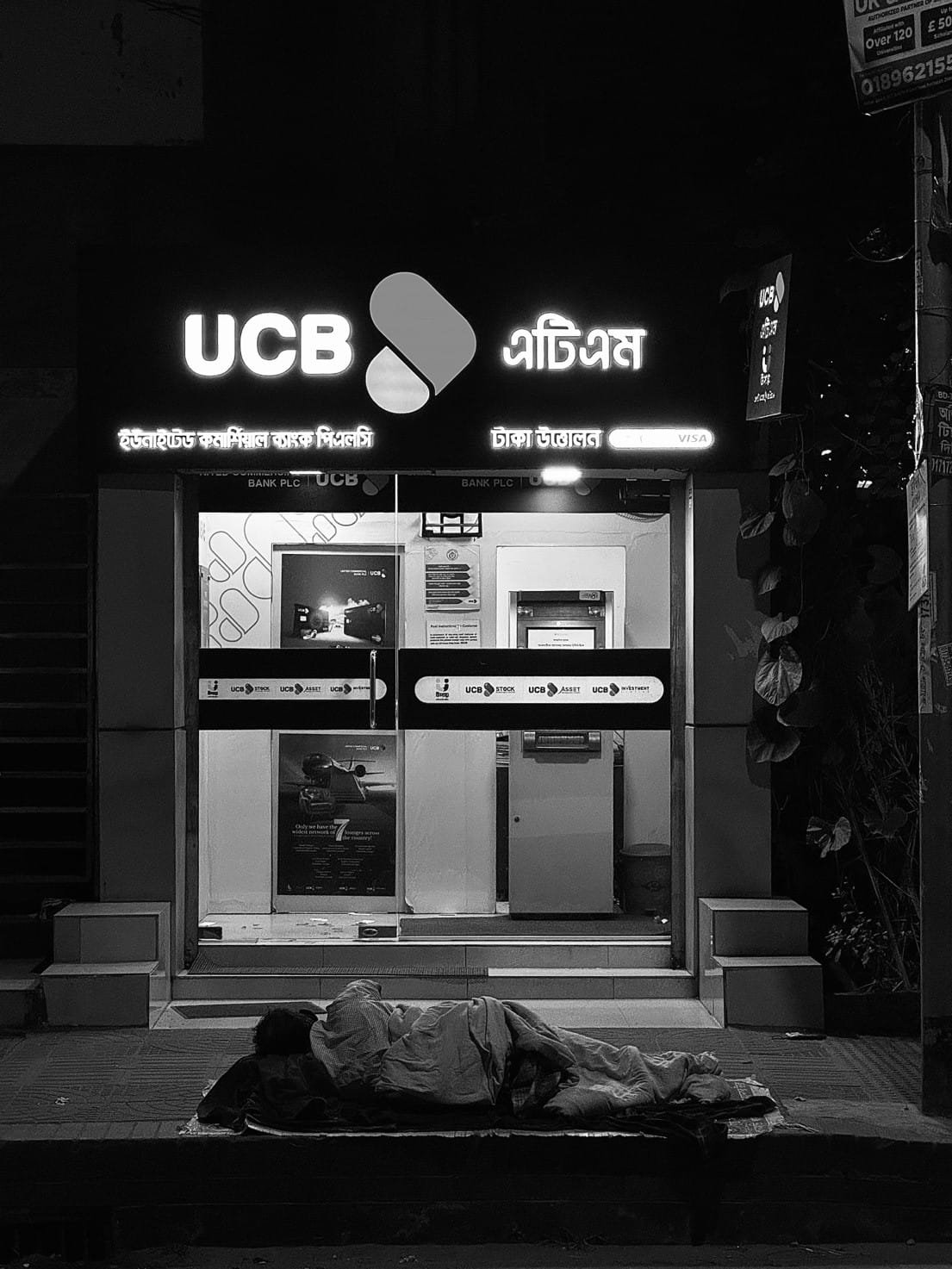
(1:43 AM, Dhanmondi, Dhaka) — A homeless man sleeps on the footpath beside a UCB Bank ATM booth, covering himself in a blanket on a cold winter night. The contrast between a space built for financial access and a man without economic security reveals the stark inequalities that define urban life.
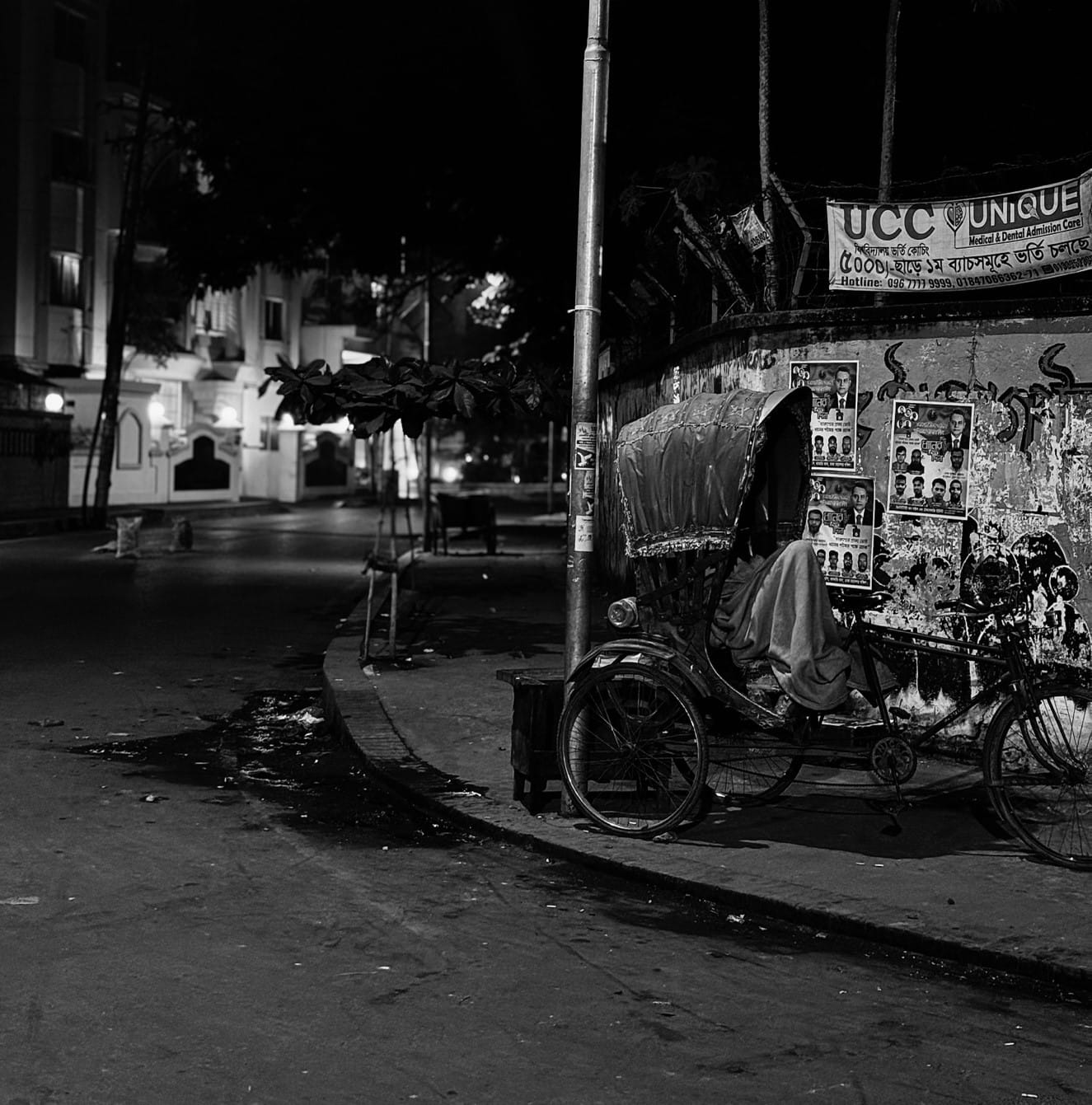
(1:46 AM, Dhanmondi 8/A, Dhaka) — A rickshaw puller sleeps inside his rickshaw, wrapped in a thin blanket on a winter night in Dhanmondi, a neighbourhood known for its affluent residents. The image reflects how workers often rest in the very spaces where they labour, revealing the unequal comfort that coexist within the same urban landscape.
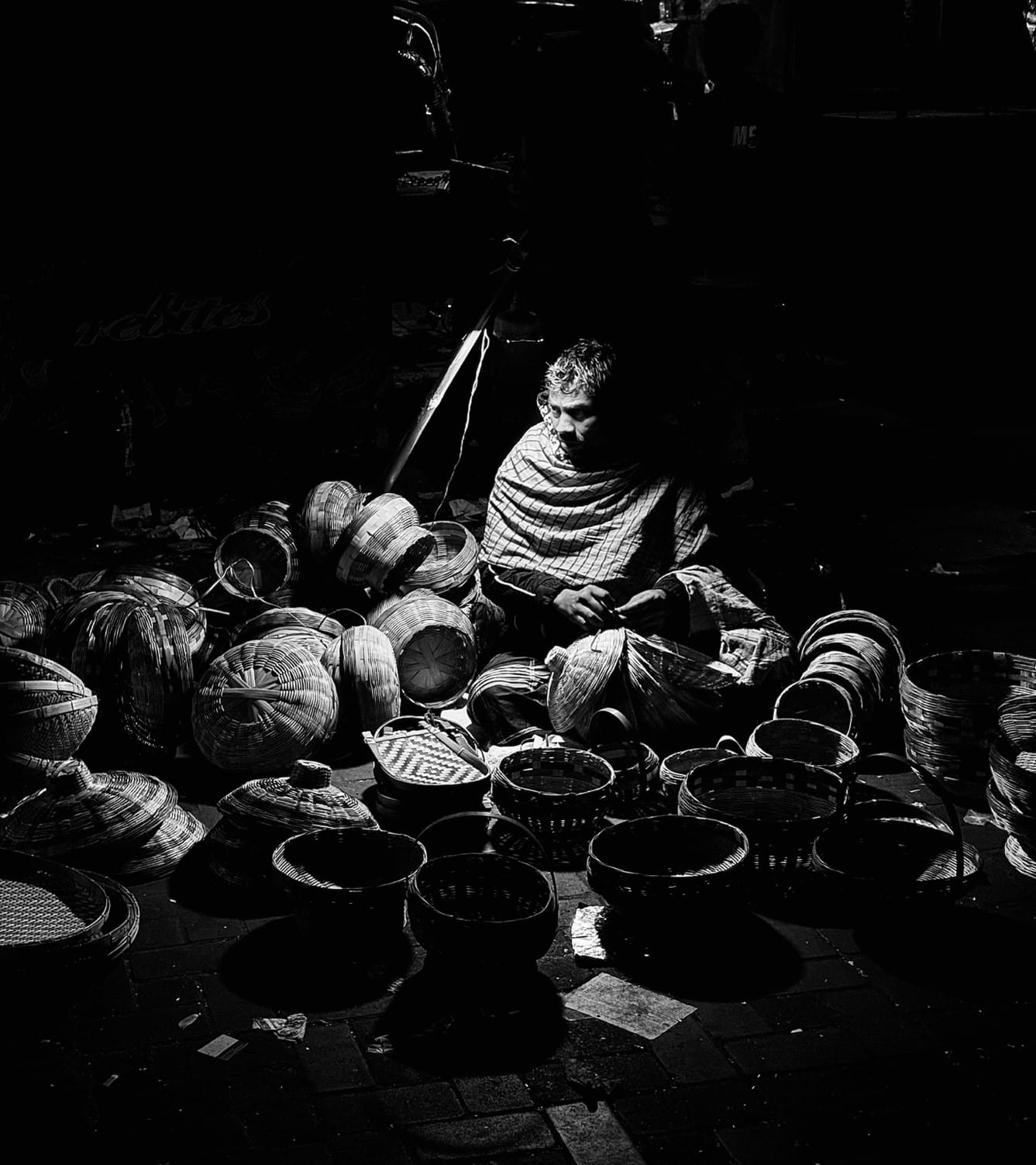
(2:05 AM, Manik Mia Ave, Bangladesh) — A street vendor sells handmade goods to late-night visitors along Manik Mia Avenue. The scene captures how informal workers rely on the city’s nocturnal leisure economy for their livelihood.
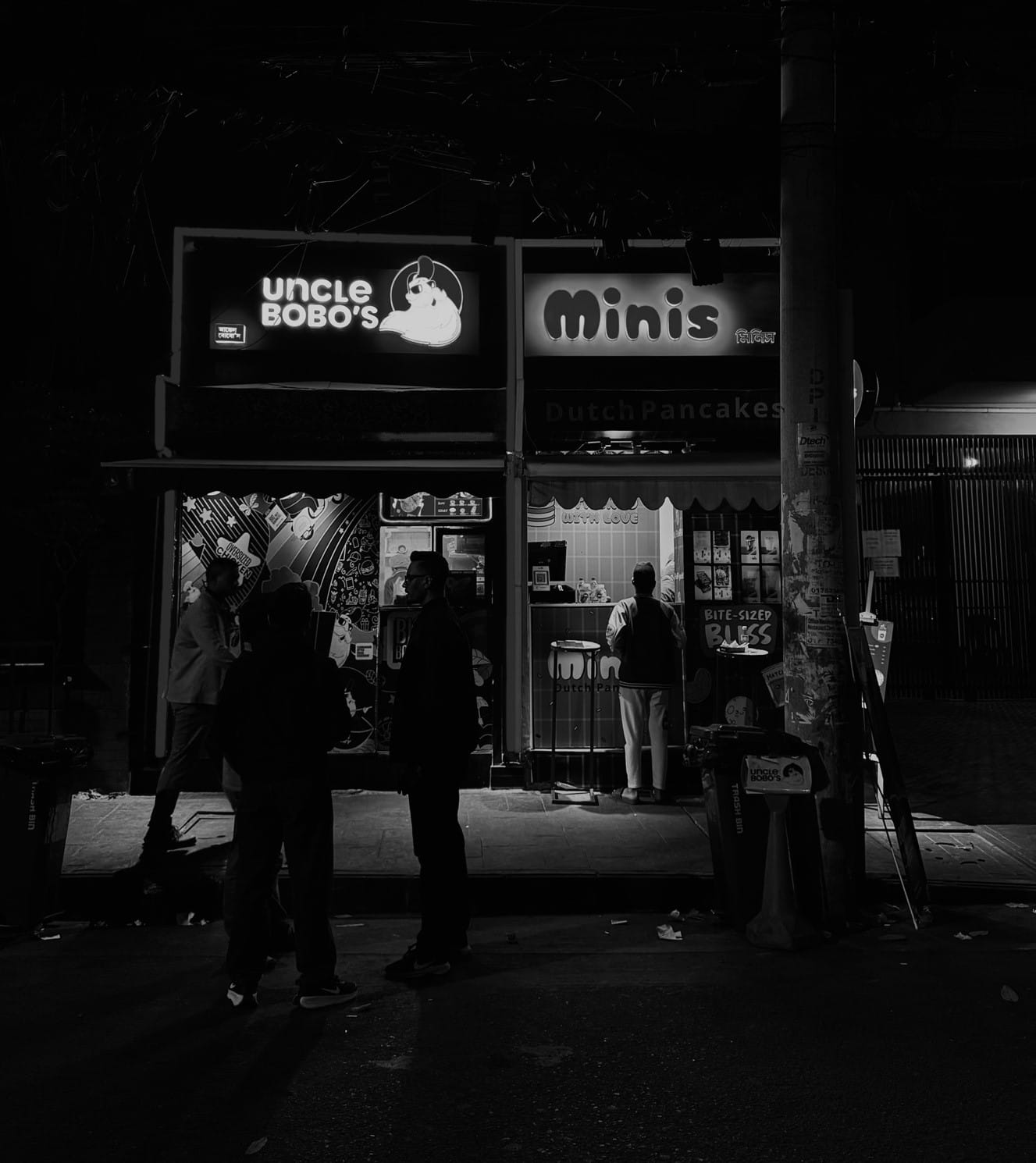
(3:04 AM, Banani 13/A, Dhaka) — Young people gather at a street food corner in Banani after midnight, chatting and unwinding in the quiet neighbourhood. Nearby, vendors and workers remain on duty — a quiet reminder that the same night that offers leisure to some demands labour from others.
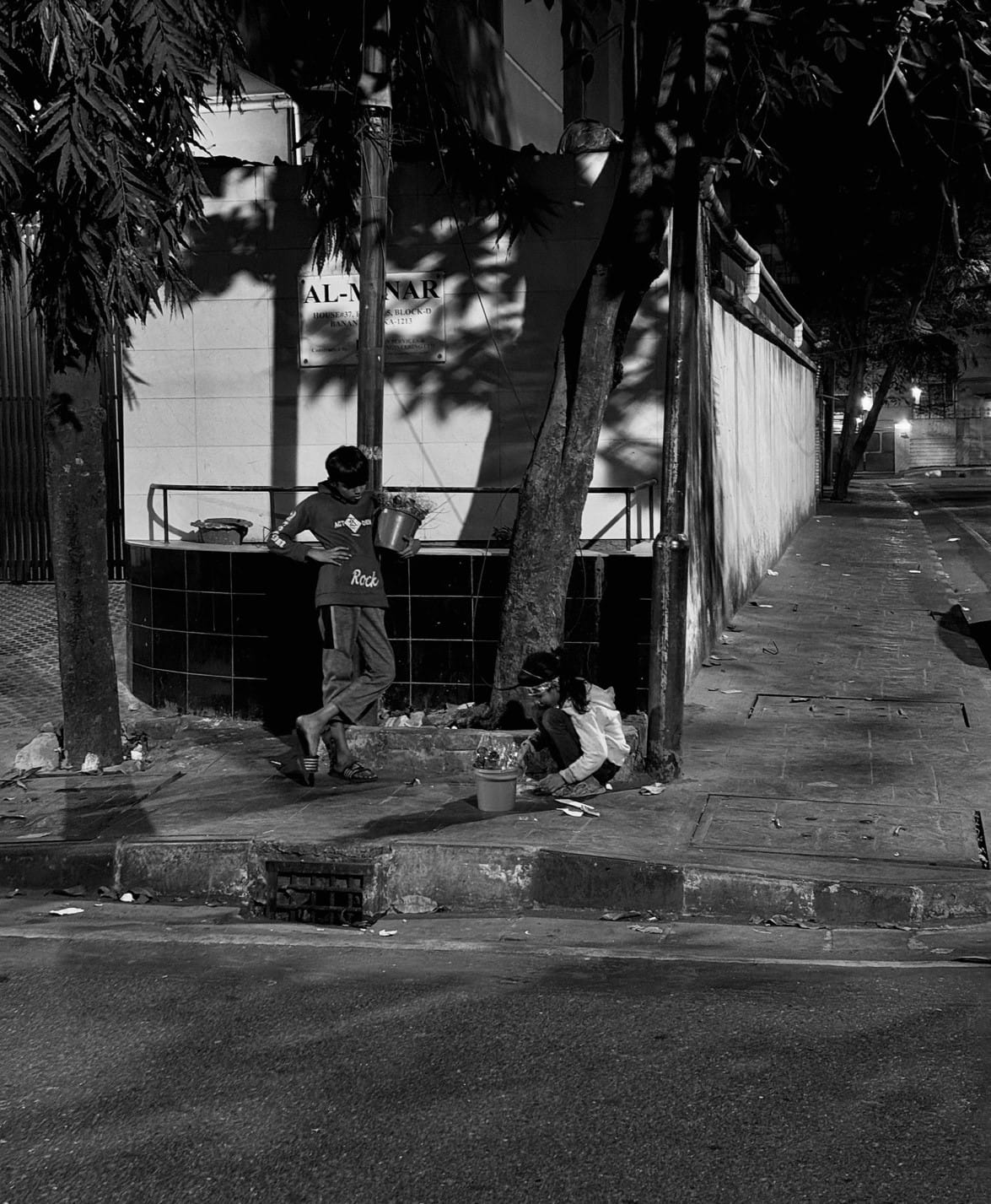
(3:19 AM, Banani, Dhaka) — Two underage flower sellers wait quietly for customers on a near-empty street, as laughter and late-night gatherings unfold nearby. While the city rests, these children remain awake beneath the streetlights, holding on to the hope of a few sales before dawn.
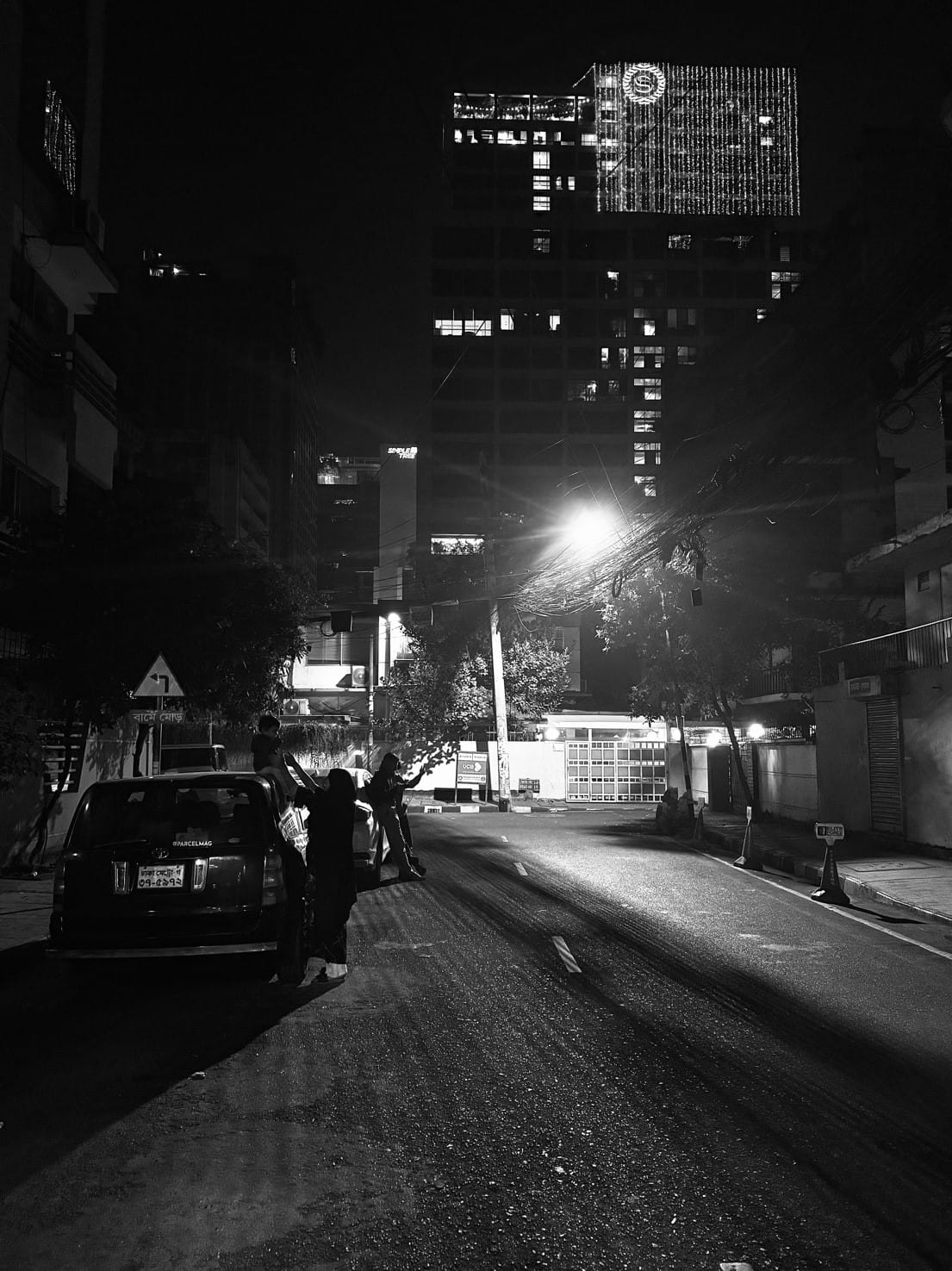
(3:01 AM, Banani, Dhaka) — A mother plays with her child on a quiet Banani street, just steps away from where the young flower sellers wait for customers. The scene offers a tender contrast: while some children enjoy the warmth and care of family, others face the night alone, working to earn a living.
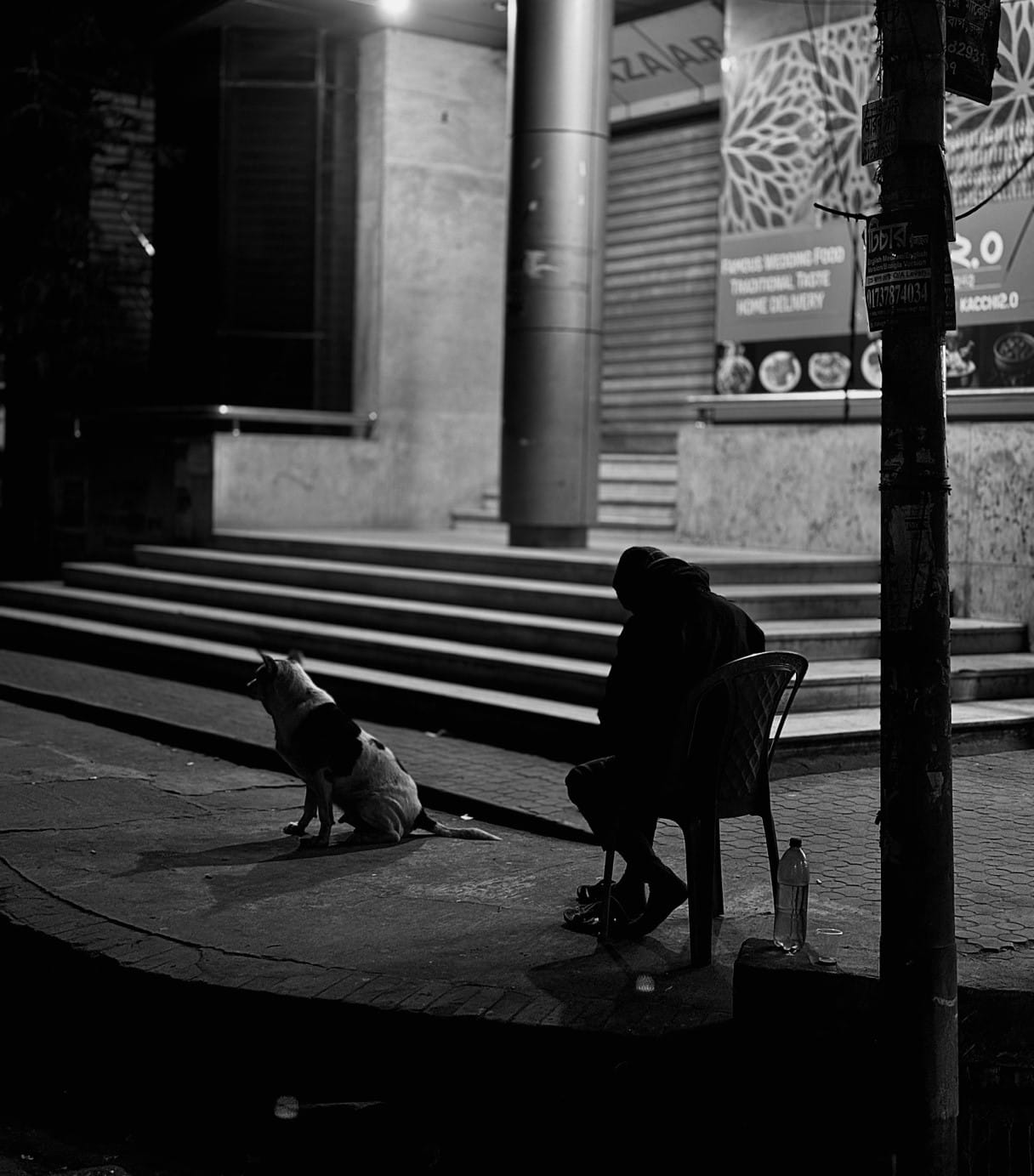
(4:07 AM, Dhanmondi 28, Dhaka) — Late at night, a security guard rests with his head bowed on a chair outside a mall, while a stray dog keeps watch nearby. The scene quietly captures the coexistence of fatigue and vigilance on the city’s streets.
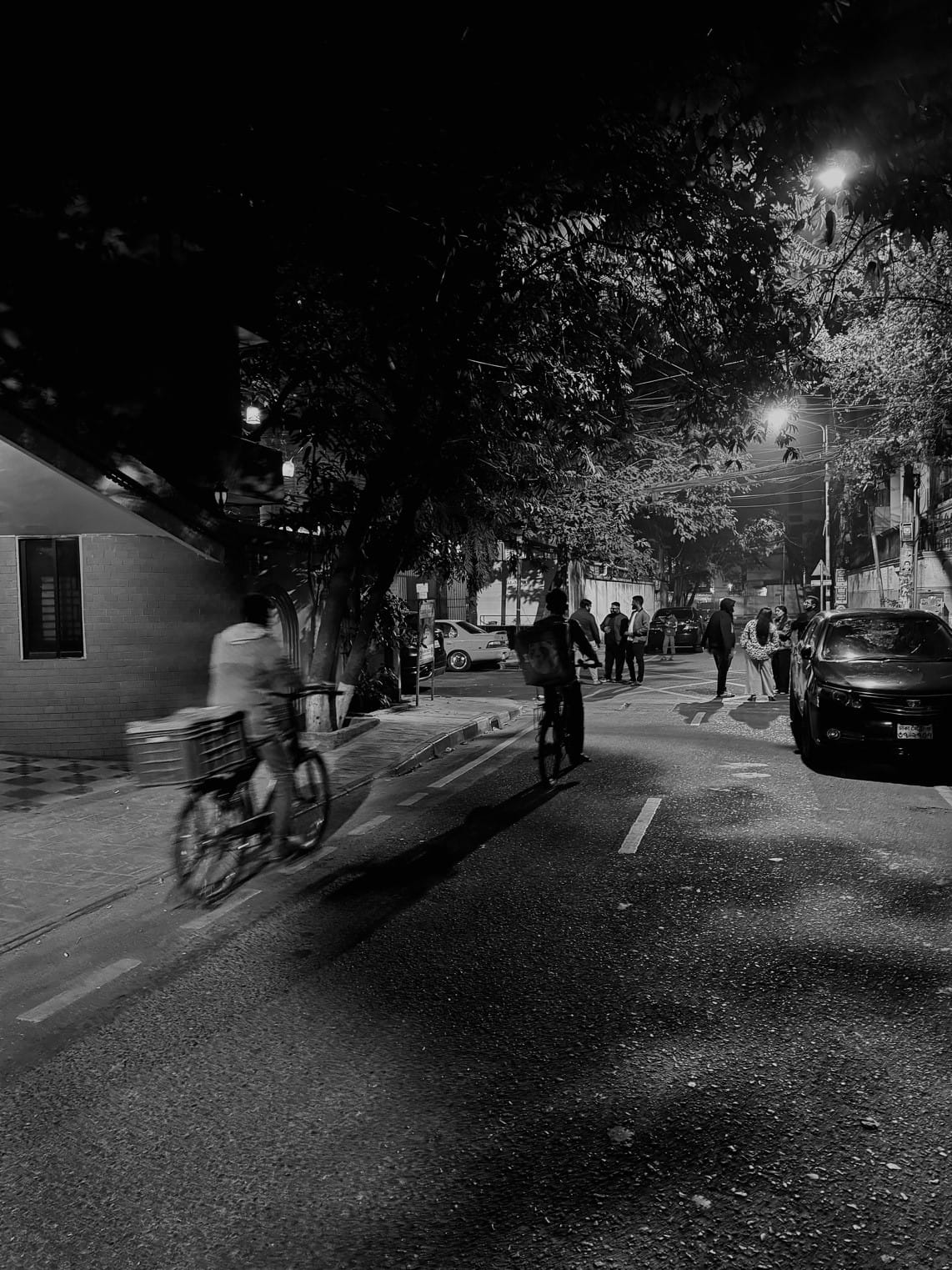
(3:28 AM, Banani, Dhaka) — Two Foodpanda deliverymen pedal through Banani late at night, while nearby, a group of young people gather to enjoy a night out, capturing the contrast of the same street.
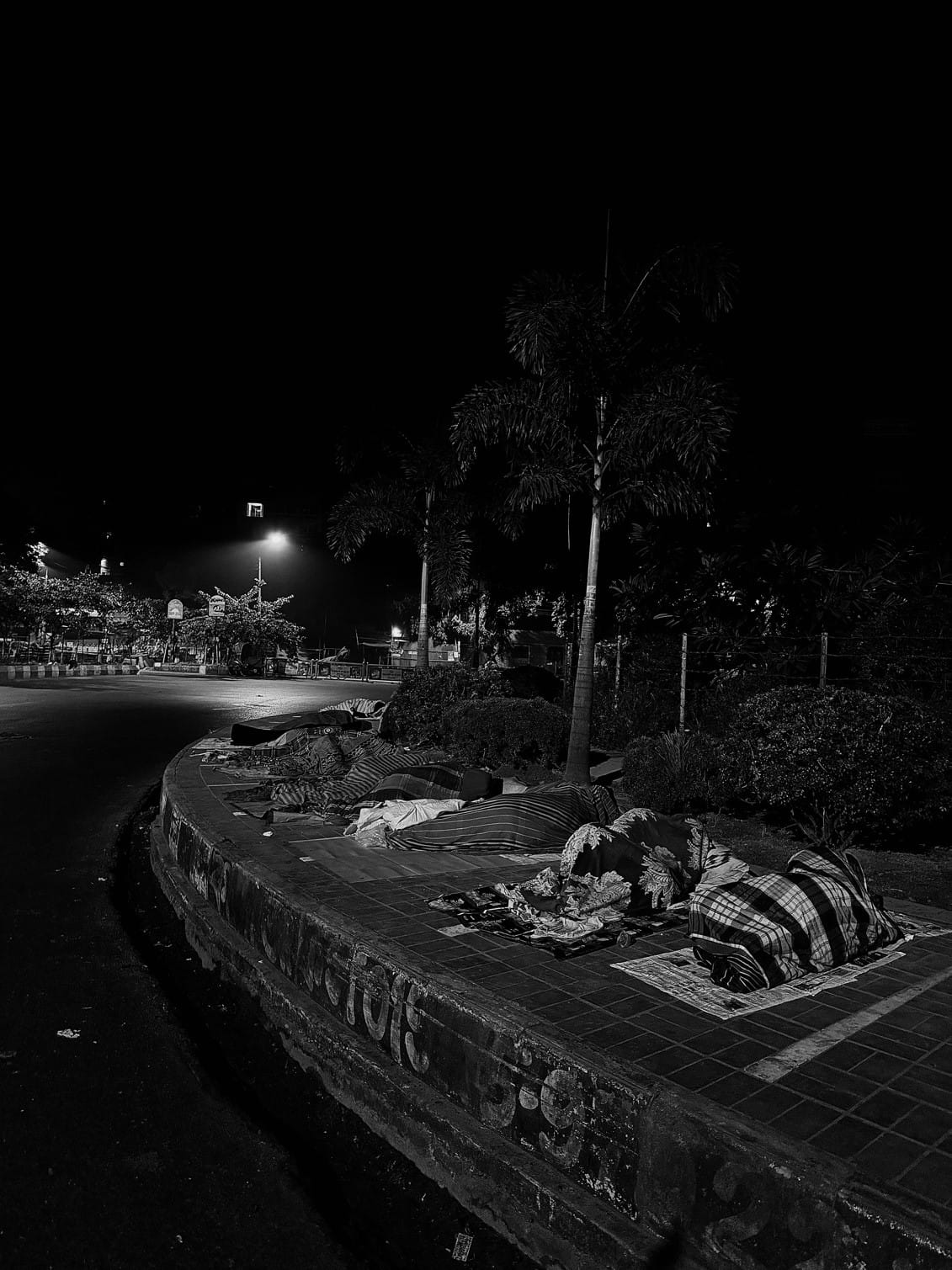
(4:03 AM, Bijoy Sarani, Dhaka) — A group of homeless men sleep in a curved line along a footpath on Bijoy Sarani, one of the city’s busiest roads. Their quiet rest stands in stark contrast to the rushing city around them, revealing how survival and slumber coexist in public spaces amid the relentless pulse of urban life.
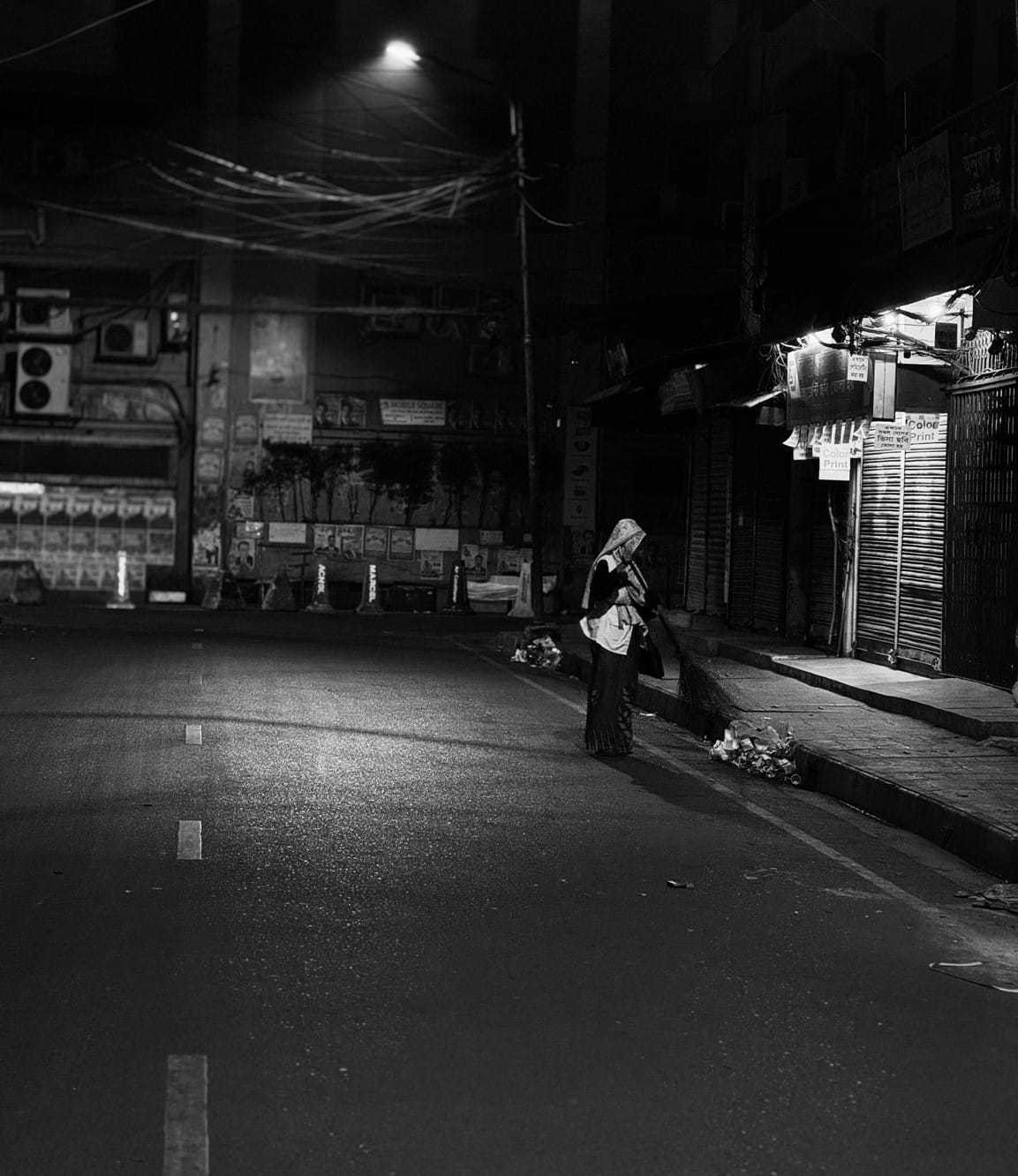
(2:47 AM, Banani, Dhaka) — A city corporation worker sweeps an empty road in Banani late at night, keeping the affluent neighbourhood clean while most residents sleep. The quiet labour reveals how the comfort of the city rests on the unseen efforts that unfold in the darkness, preparing the streets for a new day.
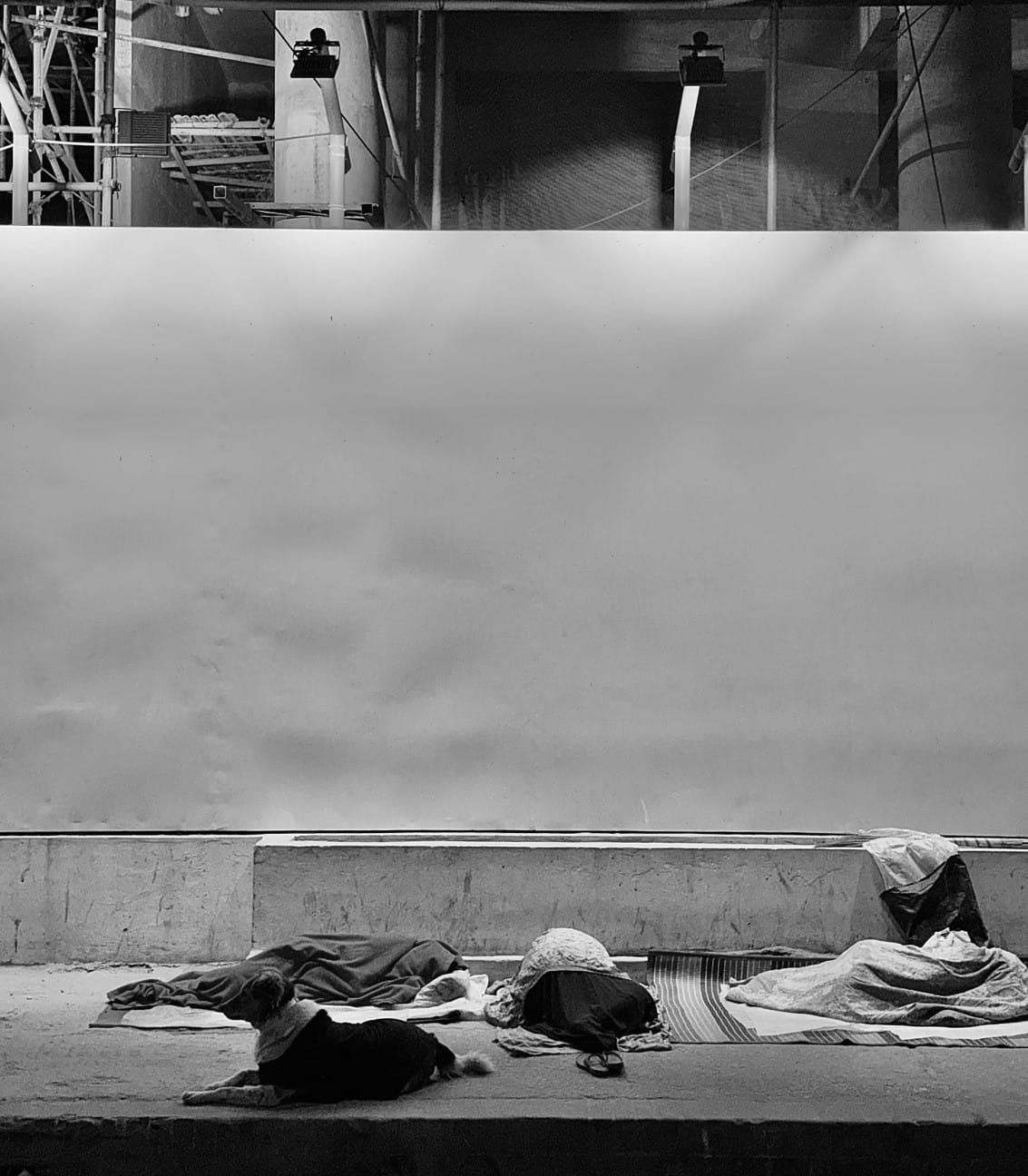
(1:32 AM, Dhanmondi, Dhaka) — A group of people sleep on a footpath beneath a rising skyscraper, while a stray dog sits quietly beside them. As development climbs upward, some lives remain grounded on the streets below, caught between shelter and exposure.
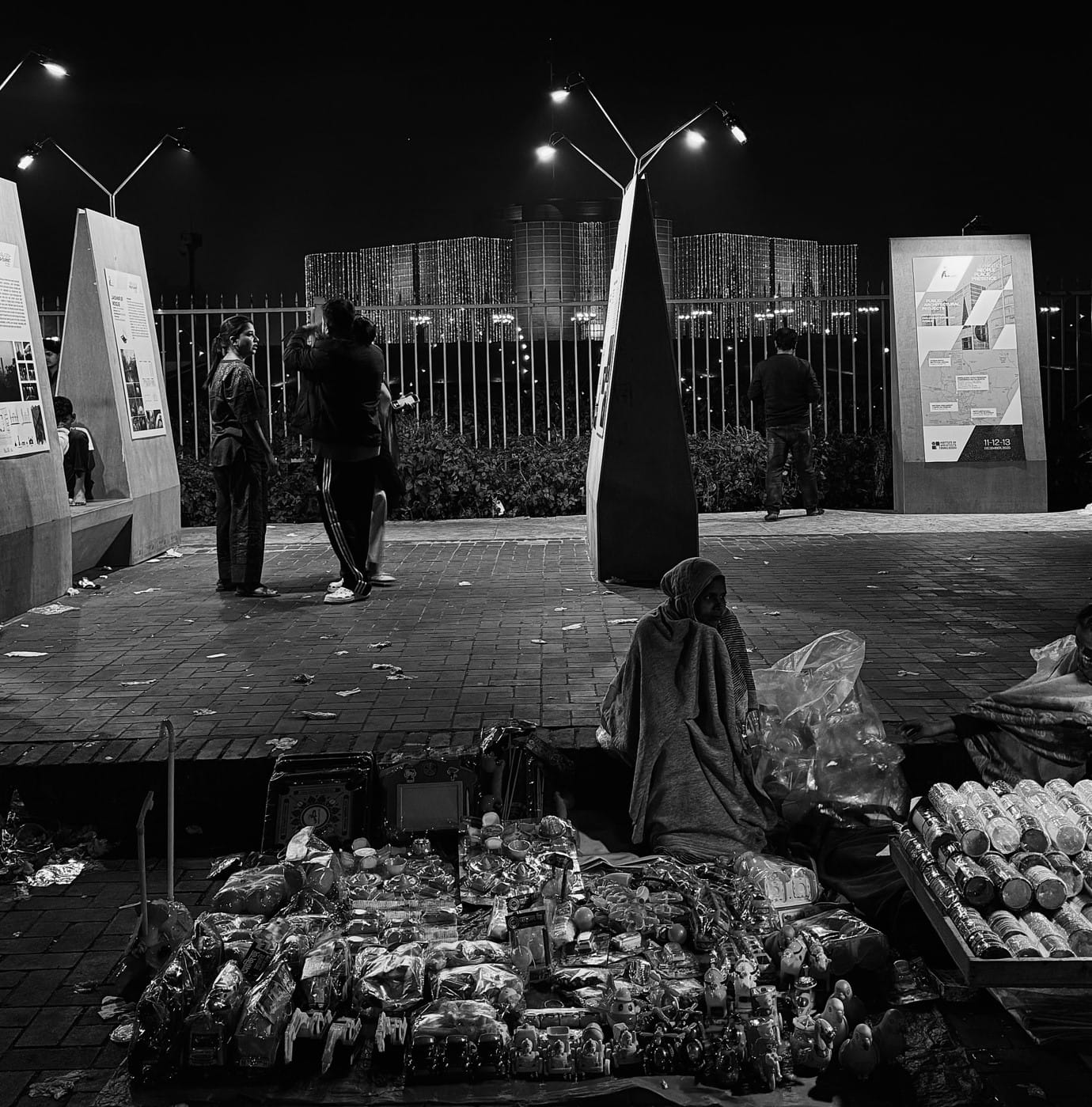
(1:54 AM, Manik Mia Avenue, Dhaka) — An elderly woman sells children’s plastic toys late on a winter night near the parliamentary building, while visitors behind her pose for photos and enjoy their leisure. The scene shows how the same space offers recreation for some and a struggle for survival for others.
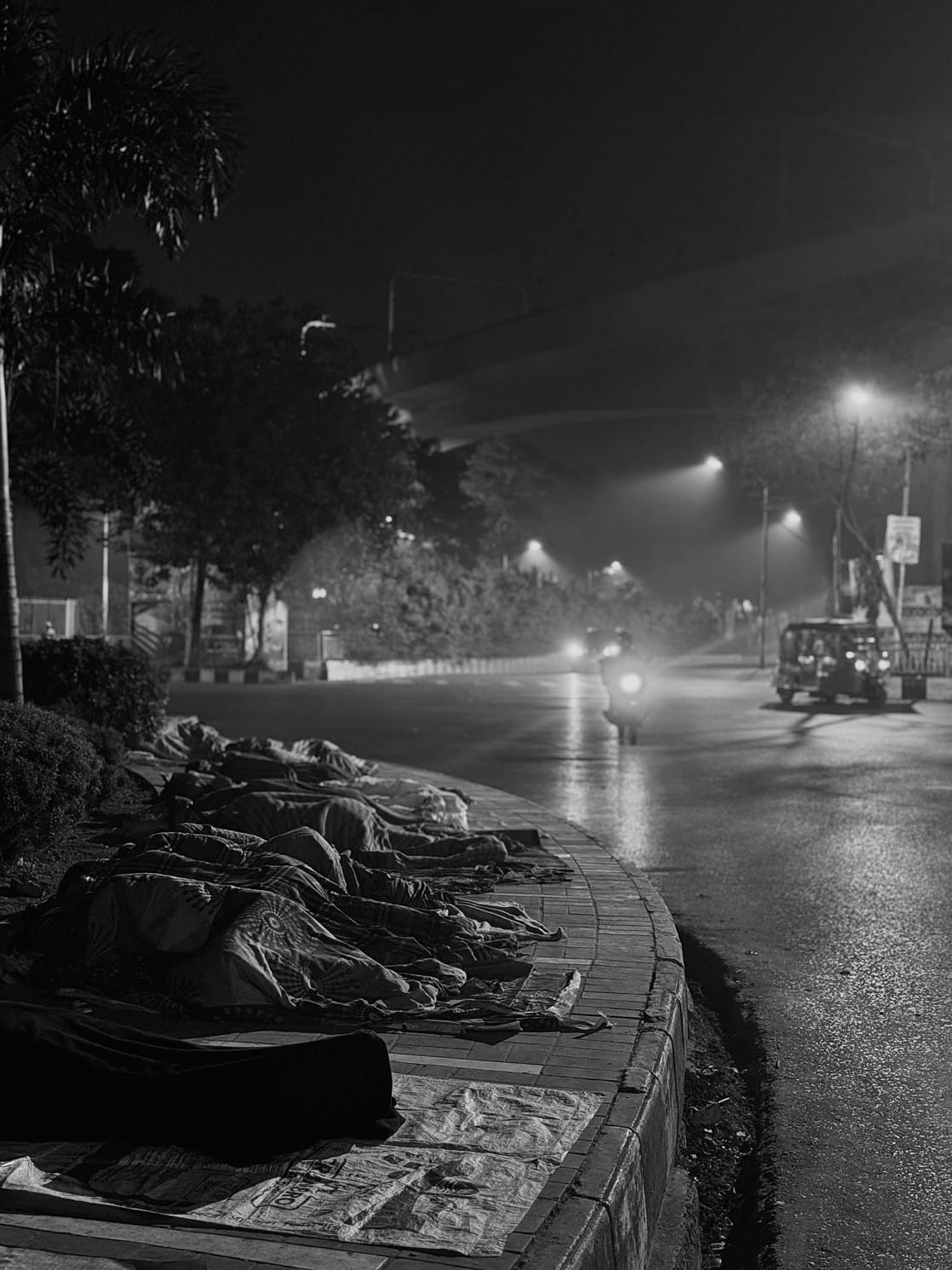
(4:04 AM, Dhaka, Bangladesh) — A group of people sleep on a footpath along one of Dhaka’s busiest roads, while trucks and vehicles carry the city’s daily goods and supplies. This quiet scene amid the city’s constant motion reminds us that a single city holds many nights—and many lives—each unfolding in its own rhythm.
Saif Radoun is an independent writer and academic, whose work explores the intersections of media, politics, culture and philosophy.
Send your articles for Slow Reads to slowreads@thedailystar.net. Check out our submission guidelines for details.

Why do we educate our children at all?

Have you eaten? Finding echoes of China in Bangladesh
The apology for the animal: Donald Trump, the buffalo, and the breakdown of political naming
Why more people are choosing to stay single

Why you must read Marjane Satrapi to understand Iran

Can social media be your therapist?
Why does a thinking woman frighten us so deeply?
After Baba, Eid was never the same
From Dhaka to Down Under: Eid through my lenses