


Breathing death: What Bangladesh must do to tackle air pollution

Air pollution in Bangladesh is not just an environmental issue — it is a public health catastrophe. It is estimated that ambient air pollution causes 90 thousand deaths every year in Bangladesh. Imagine if an industrial accident had caused as many deaths — and that too every year. Countless more people suffer from chronic illness, lost productivity, and reduced well-being. This makes air pollution an enormous burden on the economy as well.
But this crisis is not hopeless. Drawing on recent research, including my own, and the insights I gained from working with policy-makers in Bangladesh, this article unpacks the air pollution challenge, clarifies common misconceptions, and proposes concrete steps that can address the problem. While many of these steps are at the level of policy and government action, I will also provide some practical measures that you, as an individual, could take to protect yourself and your family.
 For all latest news, follow The Daily Star's Google News channel.
 THE PROBLEM OF AIR POLLUTION IN BANGLADESH
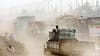
Air pollution in Bangladesh is among the most severe in the world. The largest health harm is caused by very small particles — those with a diameter of 2.5 micrometres or less (scientifically known as PM2.5). These particles are so small that they cannot be seen, and they can bypass our bodies' natural filters and enter our bloodstream when we inhale them.
The World Health Organization's (WHO) guideline is that there should not be more than 5 micrograms of PM2.5 per cubic metre of air (5 µg/m³), but in Bangladesh, the national average in 2023 was 62 µg/m³ — 12 times higher than the WHO guideline. According to the Air Quality Life Index (AQLI), Bangladeshis lose, on average, 5.5 years of life expectancy compared to a scenario in which the WHO guideline is met. In districts such as Dhaka and Gazipur, more than seven years of life expectancy is lost.
Air pollution affects our health by increasing the risk of many conditions, including heart attacks, strokes, respiratory infections, asthma, and lung cancer. Although it is never possible to know with certainty whether a health condition in a specific individual is caused by air pollution, research has shown that air pollution increases the share of the population that suffers from and dies of these conditions.
In addition to the health costs, there is increasing evidence that air pollution substantially reduces productivity in both physically and cognitively demanding jobs. This means that high levels of air pollution make us less productive and ultimately economically poorer.

WHERE DOES THE POLLUTION COME FROM?
Scientists broadly agree on the main sources:
• Power generation (especially coal- and oil-fired power plants and diesel generators)
• Open waste burning
• Traffic (especially old buses and trucks)
• Brick kilns
• Other industries (e.g. steel mills and fertiliser plants)
• Households burning solid fuel (e.g. firewood) for cooking
• Dust from roads and construction
• Natural causes such as sea salt and soil dust
• Pollution entering Bangladesh from other countries
There is still debate among scientists about how large each of these contributing sources is. What we do know is that there is no single main source that, if reduced, would allow us to solve most of the problem. Therefore, a multi-pronged approach that addresses multiple sources simultaneously will be necessary.
COMMON MISPERCEPTIONS ABOUT AIR POLLUTION
Despite the urgency of the situation, many misconceptions cloud public and policy understanding of air pollution in Bangladesh.
1. Air pollution is primarily an outdoor problem
One widespread belief is that the worst air is outdoors, and that by staying inside, individuals can avoid its harms. But my co-authored research in Mirpur tells a different story. We found that indoor pollution levels are similar to those outside.
2. Air pollution is mostly an urban problem
Another common misconception is that air pollution is mainly an issue for cities like Dhaka, while rural areas are safe. It is true that urban areas generally have higher pollution levels, but rural Bangladesh also experiences very high levels of air pollution. In other words, reducing air pollution is a priority for all of Bangladesh, not just urban areas.

3. Trees are a simple solution
Many people believe that planting trees and keeping plants at home can meaningfully reduce particulate pollution. While green spaces offer many benefits, including some reduction in air pollution, these effects are small relative to the scale of Bangladesh's air pollution problem.
SIX POLICY PROPOSALS TO REDUCE AIR POLLUTION
If we are to make meaningful progress, we must deploy resources where they can deliver the greatest gains in reduced air pollution at a reasonable cost. Below are my top six policy proposals that are both feasible and capable of generating large public health gains.
1. Raise taxes and duties on highly polluting fuels such as coal, diesel, and oil. We should tax the source of the pollution — the fuel itself — and then allow producers and consumers to determine the best alternatives, rather than having the government attempt to micro-manage the transition. In addition, these duties will raise government revenue.
2. Phase out coal-fired brick kilns. Almost all brick kilns in Bangladesh operate in violation of existing regulations, yet 25% of the kilns account for 50% of the health harms. The Department of Environment should prioritise enforcing regulations on the most harmful brick kilns first. These are typically kilns located upwind of large cities or those using outdated technologies. The recent announcement, and subsequent enforcement, of a brick kiln ban in Savar is a step in the right direction; many more such decisions need to be taken. As bricks become scarcer, more construction will shift to alternative materials, such as concrete blocks.
3. Promote a shift among rural households away from burning solid fuel for cooking, and towards stoves that generate less air pollution, such as LPG gas stoves. This would reduce both ambient air pollution and indoor pollution caused by traditional cook stoves. Indoor pollution from cook stoves is a major health crisis, affecting women in rural areas in particular. Subsidising LPG cylinders for rural households is an effective way to promote this transition.
4. Reduce reliance on coal and oil for electricity generation. Bangladesh needs electricity to prosper, but the government should not allow any more coal- or oil-fired power plants to be built and should phase out older plants, such as Barapukuria, which lack modern equipment to clean emissions before they are released into the atmosphere. Instead, Bangladesh should make use of its substantial solar energy potential by continuing to accelerate the installation of solar panels. Furthermore, Bangladesh could import more electricity, especially from Himalayan hydropower, which is a natural complement to solar power. The existing agreement to purchase electricity from Nepal should be expanded to larger volumes, and hydropower from other sources, such as Bhutan, should also be included.
5. Stricter enforcement of the ban on open waste burning. Businesses and individuals who engage in open waste or crop residue burning should face stringent fines. This practice is already banned, so implementation should be prioritised by detecting burning and holding responsible actors accountable, especially in and around densely populated urban areas. Municipal corporations also need to improve waste collection and management systems.
6. Phase out old, polluting vehicles, especially buses and heavy trucks. We can begin by replacing buses used for public transportation — something the government is already in the process of doing for Dhaka, but has not yet fully implemented. This needs to be implemented not only in Dhaka, but across all public transportation systems nationwide. Old trucks should also be phased out or retrofitted with catalytic converters and filters.
As can be seen from the policy proposals above, enforcement and action are the key steps, rather than introducing new laws, targets, and regulations. However, the government has limited capacity to enforce all rules simultaneously and everywhere. Therefore, I emphasise that enforcement efforts should prioritise the most harmful emission sources first — typically those located within, or just upwind of, densely populated urban areas.
WHAT CAN I DO?
The most common action taken to reduce exposure to air pollution is to wear a mask when outside. This can help if you are wearing an N95, KN95, or FFP2 mask; however, cloth masks or simple surgical masks do not provide substantial protection. A much more underutilised technology is air purifiers.
1. Install air purifiers in your bedroom(s)
One of the most effective ways of protecting oneself and one's family is to install an air purifier in your home. Specifically, if you place an air purifier in your bedroom, close all doors and windows, and run it throughout the night while you sleep — at least during the winter months, when air pollution is at its peak. Research carried out by me and my co-authors shows that even a small air purifier reduces air pollution in a room by 80% when run on medium speed, provided doors and windows are closed. There are many good models available; the most important thing is that the purifier has a HEPA filter.
2. Install air purifiers in all schools, hospitals, and indoor workplaces
The government should mandate schools to run air purifiers in classrooms with windows shut during the winter season. This will protect children, at least while they are in the classroom. The same can be done in hospitals and indoor workplaces. In addition to the health benefits, there is suggestive evidence that better air quality improves learning among children and substantial evidence that it makes workers more productive.
HOW DO OUR INSTITUTIONS NEED TO CHANGE?
1. The government should focus on taking domestic action immediately, not making goals for the future or international agreements
While transboundary pollution (i.e. pollution that drifts into Bangladesh from neighbouring countries) is real, Bangladesh should prioritise its own domestic pollution first. Most pollution originates within the country, and this is the only pollution that the government can realistically control. International agreements or pledges to meet future goals are, at best, a distraction from the important tasks at hand and, at worst, a way for policy-makers to gain credit for signing agreements rather than taking real actions that reduce pollution. We can still be inspired by other countries' successes and emulate their solutions; no international treaties or high-level political cooperation are necessary for that to happen. If each country in South Asia focuses on tackling its own emissions, cross-border pollution will also decline.
2. Media and civil society organisations should educate the population and promote long-term solutions
First and foremost, media and civil society organisations need to communicate the extent to which the air pollution crisis is harming us all. For instance, the media tends to focus on air pollution only when it peaks during the winter months. Unfortunately, it is not helpful to demand that the government "take action now" only once Dhaka becomes the most polluted city in the world. The truth is that there is often little the government can do on that particular day itself. The media and civil society should also ask the government what it is doing to prepare for the coming winter and the years ahead.
Expectations should also be realistic; even in China — the country that has reduced air pollution levels most rapidly — it took five years for pollution to decline by 40%. Therefore, credit should be given for steps taken in the right direction, even if the situation remains poor; otherwise, there is little incentive for politicians to address the problem.
BANGLADESH IS READY TO SOLVE THIS PROBLEM
Many countries, such as the UK, the US, and China, have substantially reduced air pollution, but this did not happen by itself. It required multiple parts of society — government, industry, media, and an engaged public — to make this a priority. I firmly believe that Bangladeshi society will rise to the occasion and that we will substantially improve our air quality.
Martin Mattsson is an Assistant Professor in the Department of Economics at the National University of Singapore.
Send your articles for Slow Reads to slowreads@thedailystar.net. Check out our submission guidelines for details.
Comments