


An independent judiciary seems near at hand, but can still slip away

Nothing reveals the story of why we failed to institutionalise democracy in Bangladesh better than our failure to build an independent judiciary. Though it is clearly stated in our constitution, it took us 53 years or so to lay its final foundation stone. What edifice we will build on this foundation lies in our future.
With so many things we have criticised the interim government for, the separation of the judiciary is one area where it deserves our praise. Without a separate secretariat under the authority of the chief justice—for which an ordinance has been recently issued—the judiciary would never have come out of the dominance of the executive branch, and especially of the law ministry, which resulted in the total destruction of the legal system in the country. Thanks are due to Prof Yunus, the head of the government, and Asif Nazrul, the law adviser. Praise must also be extended to the current chief justice, whose relentless work behind the scenes brought about the present reality.
 For all latest news, follow The Daily Star's Google News channel.
 What must not be overlooked is that none of our democratically elected governments—led by Khaleda Zia and Sheikh Hasina—or the military governments of General Ziaur Rahman and General H M Ershad did anything to set up an independent judiciary.
Three events—one judgment (1999), one initiative by a caretaker government (Fakhruddin Ahmed, 2007), and another by the present interim government (Prof Yunus, 2025)—have finally removed all the legal hurdles and paved the way for the establishment of an independent judiciary.
In 1995, Md Masder Hussain, then a district judge, on behalf of 441 subordinate judges, lodged a petition challenging government control over recruitment, transfer, placement, promotion, etc of judges. On May 7, 1997, the High Court delivered a judgment with eight directives. The government appealed and the Appellate Division delivered a historic verdict on December 2, 1999, outlining 12 directives. The judgment recommended the creation of a separate judicial service; establishment of a judicial service commission; separate service rules under Article 115 of the constitution; a judicial pay commission; financial and administrative autonomy to reduce executive interference in the judiciary, etc. This was, however, not followed through properly.
In 2007, during the caretaker government headed by former Bangladesh Bank governor Fakhruddin Ahmed, the long-awaited steps to set up the Judicial Service Commission, the judicial service rules, and the Judicial Pay Commission were taken. On November 1, 2007, the caretaker government formally separated the lower judiciary from the executive, as a major part of implementing the 1999 Appellate Division verdict. But the dream of a full separation remained elusive.
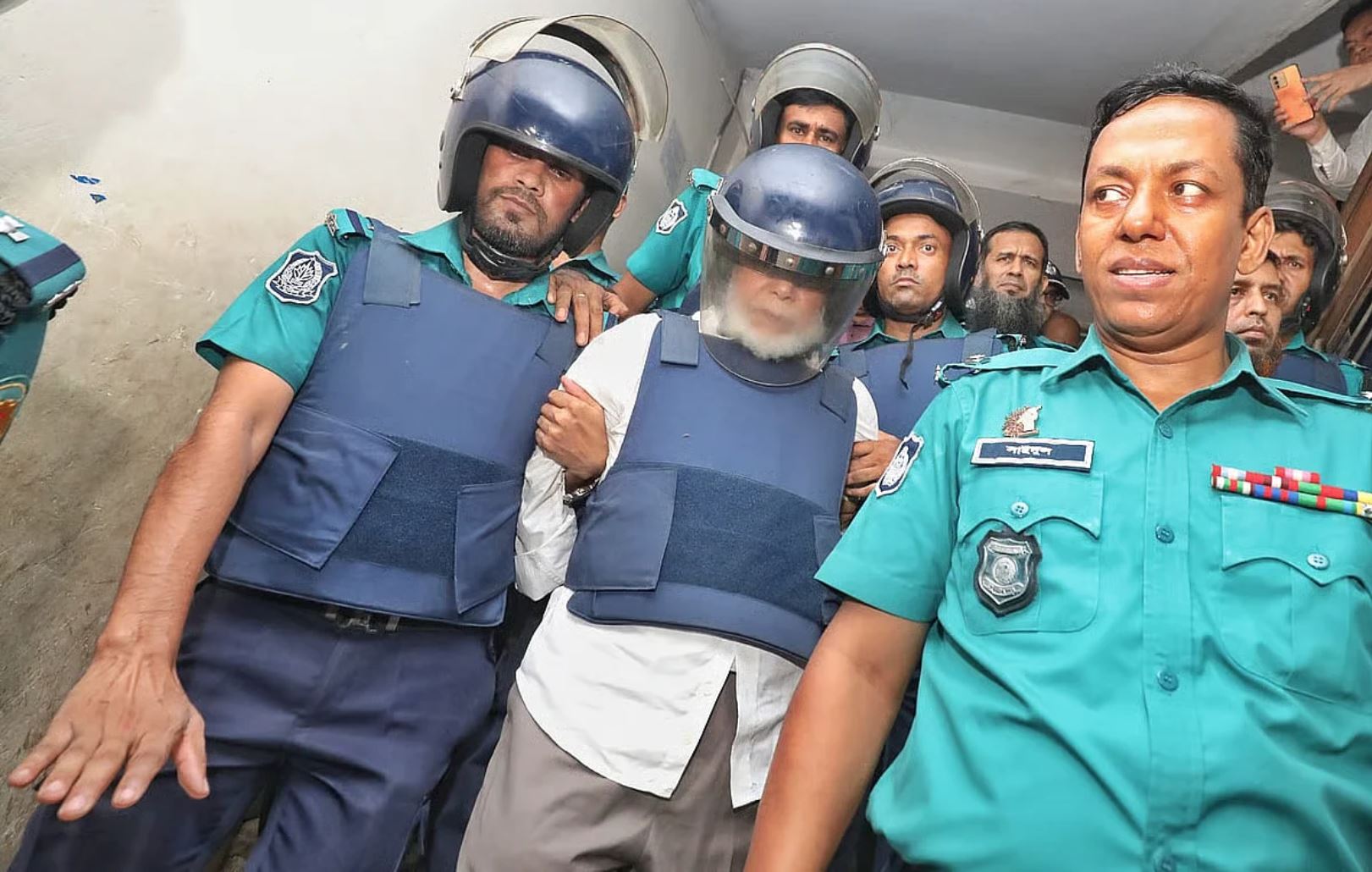
On November 30, 2025, the current government issued the Supreme Court Secretariat Ordinance, formally establishing a separate secretariat for the judiciary, the most vital of steps for an independent judiciary.
So why did it take 53 years to do something so clearly spelt out in Part II of the constitution under the Fundamental Principles of State Policy, that "the State shall ensure the separation of the judiciary from the executive organs of the State"?
There are two basic reasons: first, our political culture of non-accountability and, second, a bureaucratic stranglehold that never allows the growth of independent institutions, especially those that can question their authority.
From the start, we favoured a powerful government and brought in a constitution in which the distribution of power among the three organs of the State—the legislature, judiciary, and executive—favoured the last. We misinterpreted Lincoln's dictum of a "government of the people, by the people and for the people" to mean that as long as a government is elected, whatever it does reflects the "will" of the people and must therefore be allowed a free hand in running public affairs. In forming a powerful government, we missed the chance for an accountable one.
As for the legislative branch, from the very start, we did not allow it to evolve as an independent institution. It has always acted as a rubber stamp of the majority party in parliament. The fact that we never separated the role of the Leader of the House from that of the head of government—the prime minister—brought the House directly under the control of the latter.
First in Pakistan and later in Bangladesh, Quaid-e-Azam Mohammad Ali Jinnah and Bangabandhu Sheikh Mujibur Rahman, founders of the two states respectively, chose to occupy the highest executive office. This made the legislature totally subservient to the head of government. In both Jinnah's and Mujib's cases, the same person held the positions of Leader of the House, head of the government, and head of their party. This did not provide the opportunity for the House to emerge with any real degree of independence. In Pakistan's case, Jinnah chose to be governor-general—the post that Lord Mountbatten had held—instead of being prime minister, as Nehru did in India, thus diminishing the prospect of the rise of a parliamentary system of government in Pakistan for which the struggles continue even today.
Mujib, on the other hand, opted to be prime minister—although he was president of the government-in-exile—and thereby shifted the focus to the elected House. However, he did not show the foresight to appoint a separate Leader of the House and a different party president. Combining the three posts—prime minister, leader of the House, and party chief—created a lethal convergence of power that inevitably led to centralisation in governance that proved disastrous and found its ultimate expression under Sheikh Hasina.
The role of the Speaker was always that of a lackey rather than an independent manager of parliamentary proceedings. If we examine the type of individuals who were "appointed" as Speakers, it becomes clear that none had either the personality or the intention to uphold the interests of the House above those of the ruling party, and especially the prime minister. Most of them owed their positions to the PM—in the case of Shirin Sharmin, the last of them, she was not even an elected MP but a chosen one from the reserved seats for women—and hence they tended to serve the chief executive rather than the highest seat of law-making.
As for elected MPs, they rarely gave importance to the voters who elected them after the polls. Instead, their allegiance shifted almost entirely to the party that nominated them. This was due to the perks, development funds, and various executive powers that came only from the ruling party and government, and not from voters, resulting in further erosion of the legislature.

It was the judiciary that had some chance of keeping the executive accountable, and hence everything was done to clip its wings in every way possible. Here, the role of bureaucrats was critical. Not only did they act on their own to subvert the rise of an independent judiciary, but they also advised politicians that such an institution would pose a threat to the government's freedom to act.
There is also the fact that members of the judiciary itself, both at junior and higher levels, contributed to its subservience. There is not a single instance of a judge resigning in protest against the misuse of the justice system. On the contrary, several examples show that the judiciary, far from resisting, actually welcomed executive interference. Through denial of bail, jailing dissenters, permitting the misuse of remand, not questioning the merit of frivolous cases at the very outset, and not upholding an individual's right to liberty and protection from legal harassment, members of the judiciary often allowed the executive to flaunt its power and intimidate the people. They conveniently, and sometimes self-servingly, forgot that the law exists for justice. When its application compromises justice, a judge must opt for justice, not an interpretation that serves the government over citizens.
The law, for example, clearly states that only one case may be lodged for a particular crime, yet dozens—sometimes hundreds—were permitted. Why did the judiciary never question this? When denying bail, the court rarely seems to reflect on the fact that a person's liberty, guaranteed by the constitution, is being taken away. The misuse of remand barely enters a judge's mind. The handling of cases involving political opponents of past governments stands as the most shameful abdication of the courts' role. Regrettably, elements of this pattern remain even today, which we hope will soon cease.
The instances of naming hundreds of accused and, in many cases, arresting them without a shred of evidence have reduced the image of the judiciary to that of an extension of government. The judiciary may argue that these are abuses by law enforcement agencies and fall outside its purview. But when the misuse and abuse of the law denigrate the judiciary as a whole, should it not publicly condemn such practices or urge the government to stop them? The higher judiciary, especially the chief justice, can and should express such views. The moral and ethical values of their profession oblige this role.
The point we wish to emphasise is that even after all the rules are passed and judicial independence is formally guaranteed, its actual implementation will require moral courage from judges themselves. They must adhere to the spirit of dispensing justice, rather than just mechanically interpreting the law, and certainly not serving the executive branch or the "privileged accused." Under various legal loopholes, cases remain pending for years. The misery this causes for the poor, ordinary people, and the amount of money and time they have to spend to appear at each hearing, seems to elicit little concern from our judges.
So, judges, especially those of the High Court and the Appellate Division, must always uphold the supremacy of the judiciary and never do anything that directly or indirectly denigrates this revered institution. We think the most shameful insult that the higher judiciary inflicted upon itself was when five Appellate Division judges stood on their knees instead of their feet in compliance with the wishes of the then prime minister to oust a sitting chief justice, SK Sinha. The reason? Because he refused, on constitutional grounds, to do what Sheikh Hasina wanted. Instead of standing with the chief justice, they declared that they would henceforth not work with him. The credibility and prestige of the Appellate Division stood shattered.
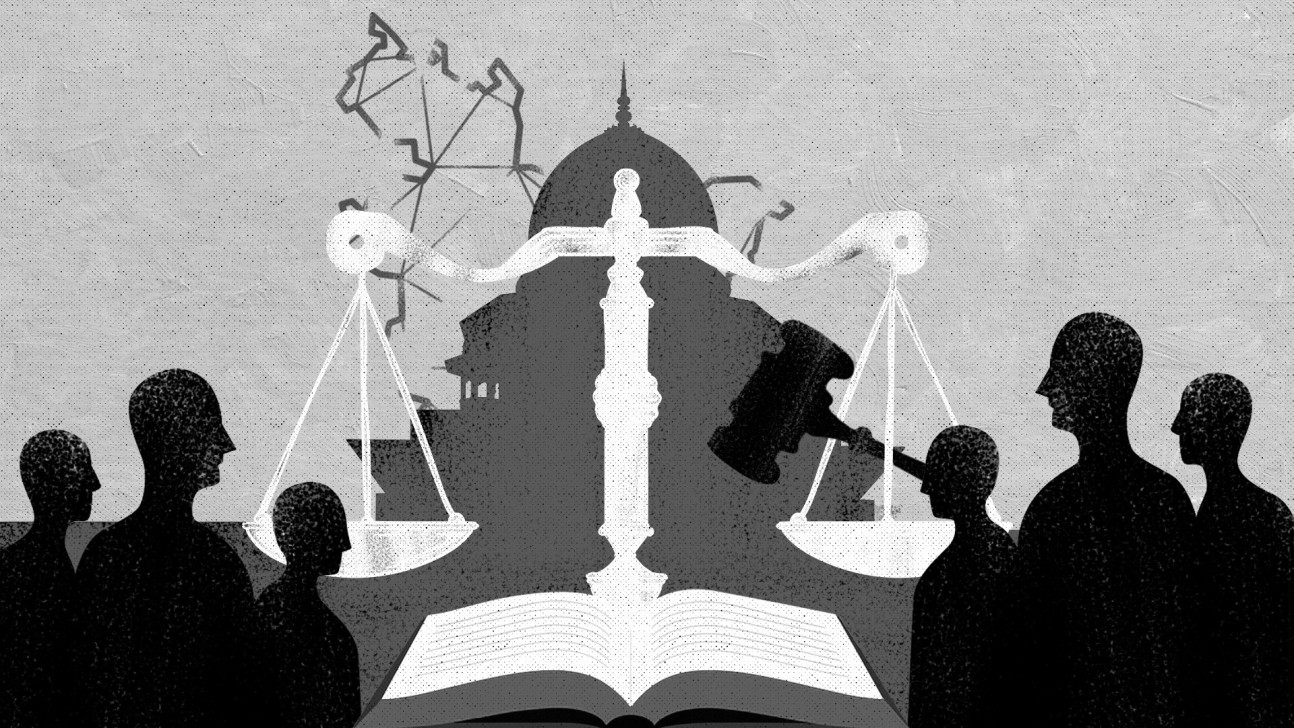
An immediate test of the coming elected executive will be how quickly and faithfully it passes into law the elements of judicial independence that have so far been put in place through ordinances. We also expect that future MPs will demonstrate greater respect for their voters, and not merely engage in habitual genuflection to their party, especially to its chief.
With the final guaranteeing of judicial independence, we hope this vital institution of modern civilisation will finally emerge here with the glory and prestige it deserves by serving the people rather than the government of the day.
If the executive operates within its limits, the legislature—especially MPs— restrains itself to build a transparent and accountable governance framework instead of advancing partisan interests or chasing so-called development projects, and the judiciary truly distinguishes itself in the service of accountability and justice for all, especially the poor, then—and only then—will we have a real chance to build a genuine democracy in this beloved country of ours.
Mahfuz Anam is the editor and publisher of The Daily Star.
Follow The Daily Star Opinion on Facebook for the latest opinions, commentaries and analyses by experts and professionals. To contribute your article or letter to The Daily Star Opinion, see our guidelines for submission.
Comments