


Why is our logistics policy failing to deliver on its promise?

In 2024, Bangladesh announced its first National Logistics Policy, a crucial reform for an economy where logistics costs devour 15-20 percent of GDP—nearly double the global average. The policy envisions a future characterised by increased efficiency and competitiveness, which are vital as the nation approaches its graduation from Least Developed Country (LDC) status. However, our field research uncovers a significant gap: the policy's objectives have scarcely been realised in practice. At a time when Bangladesh must accelerate its progress towards global integration, the widening gap between policy and implementation is emerging as a significant national vulnerability.
To better understand the logistics industry's operations and challenges, one of our research teams from North South University (NSU) visited multiple logistics companies and interviewed their CEOs. However, we discovered that the same systemic issues persisted across firms: unpredictable clearance times, fragmented regulatory processes, chronic port delays, and an implementation gap that prevents logistics policy from translating into real-world efficiency.
 For all latest news, follow The Daily Star's Google News channel.
 We visited The Eagles Company, a disciplined, internationally aligned firm that policymakers frequently highlight as proof of private-sector readiness. Eagles uses ISO-compliant methods, digital warehouse management systems, electronic documentation, and collaborates with worldwide networks such as UFS, Spedman Global Logistics, and 1UP Cargo. Their internal operations are coherent, well-controlled, and technologically advanced. However, the ecology in which they operate is not.
Discussing recurring port congestion and inconsistent clearance times, CEO Rais Uddin Ahmed said, "If delays happen outside of our control, our whole plan can fall apart. We're working hard in a system that can't keep up with us." The problem is bigger than any one company. When outside processes are unpredictable, internal efficiency doesn't mean much.
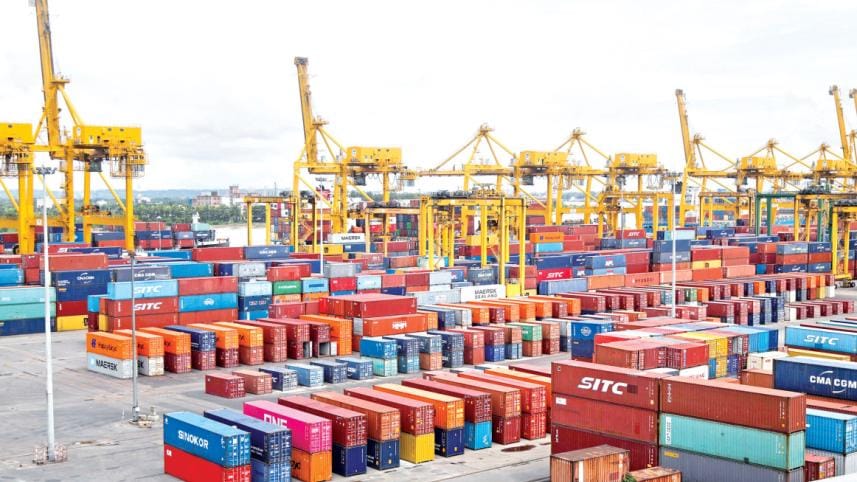
These delays are not just a coincidence. The World Bank's Container Port Performance Index (CPPI) Report (2023) ranked Chattogram port 334th out of 348 ports in the world. The trip from Dhaka to Chattogram still takes almost 20 hours on average, even though it's only 220 kilometres. More than 80 percent of goods are moved by road, which is the slowest and most expensive mode. Even if a company is disciplined, these structural flaws cause demurrage costs, cargo delays, and problems with planning for businesses.
A similar pattern emerged when we visited INTASL Logistics Ltd, a mid-sized operator working across freight forwarding, customs brokerage and warehousing. The success of their business hinges on reliable clearance windows and the efficient transit of trucks through port terminals and along highways. However, the landscape in which they function is characterised by unpredictability.

Mahaboob Mokammel Romel, group managing director of INTASL, said, "We've grown despite the system, not because of it. If the logistics environment became predictable, companies like ours could scale much faster." While mid-sized operators want to grow, they lack the necessary infrastructure to facilitate expansion.
The Review of Maritime Transport highlights that Bangladesh's reliance on feeder services and its restricted deep-sea capabilities result in lead times ranging from 40 to 45 days to reach significant Western markets. The current delays are undermining competitiveness at a time when global buyers are increasingly seeking faster and more reliable supply chains.
The National Logistics Policy presents a series of robust commitments, including the establishment of a National Single Window (NSW) for clearance, harmonisation of licensing processes, development of multimodal freight corridors, modernisation of cold-chain logistics, and the implementation of comprehensive digital documentation from start to finish. Companies have repeatedly indicated that the pace of implementation continues to be sluggish or goes unnoticed. Numerous individuals have characterised the policy as one that "exists but isn't felt."
Fragmentation across over 20 government entities continues to result in duplicate approvals and inconsistent processes. As a result, even sophisticated businesses are caught in manual clearance operations with uncertain timelines. According to Eagles' CEO, "Every agency talks about logistics modernisation, but when you need a simple approval, you realise how fragmented the process still is."

Bangladesh's regional competitors have demonstrated the remarkable outcomes that can result from effective execution. The customs process in Vietnam has undergone significant digitisation, leading to a remarkable reduction in clearance times. India has initiated private involvement in freight rail corridors, leading to significant improvements in efficiency. Türkiye and Malaysia enhanced their ports by implementing automation and streamlined clearance systems. Bangladesh faces the threat of losing its competitive edge, not because of insufficient private-sector capabilities, but rather because of sluggish coordination within the public sector.
Throughout our discussions, not a single company mentioned subsidies or incentives. They demand predictability—understanding of the duration of clearance processes, the timing of container releases, and the expected length of trips. Their demands are reasonable, yet they continue to be out of reach. "We don't require incentives to expand. We need a system where we can plan with confidence," summarised INTASL's group managing director.
As Bangladesh approaches its graduation from LDC status, the looming unpredictability could emerge as the nation's most significant challenge. With the fading of tariff benefits, countries are now vying for supremacy in efficiency, speed, and reliability—three crucial domains where logistics influences outcomes.
Companies such as Eagles, INTASL and others will be able to scale rapidly and compete effectively if Bangladesh can integrate its logistics governance, digitise the entire clearance process, and increase multimodal freight access beyond highways. If these improvements remain stagnant, even the most well-managed businesses will continue to struggle with inefficiencies that they did not cause and are unable to control. Now is the time for Bangladesh to take action.
MD Al Alif Hossain is research associate at North South University.
Views expressed in this article are the author's own.
Follow The Daily Star Opinion on Facebook for the latest opinions, commentaries, and analyses by experts and professionals. To contribute your article or letter to The Daily Star Opinion, see our guidelines for submission.
Comments