


What the BBC controversy tells us about Western media bias


The recent departure of BBC bosses Tim Davie and Deborah Turness is a masterclass in unspoken power dynamics. The headlines told a story of scandal and pressure. But if you listen closely, you hear the real plot twist: the story wasn't about their journalism; it was about whom they offended.
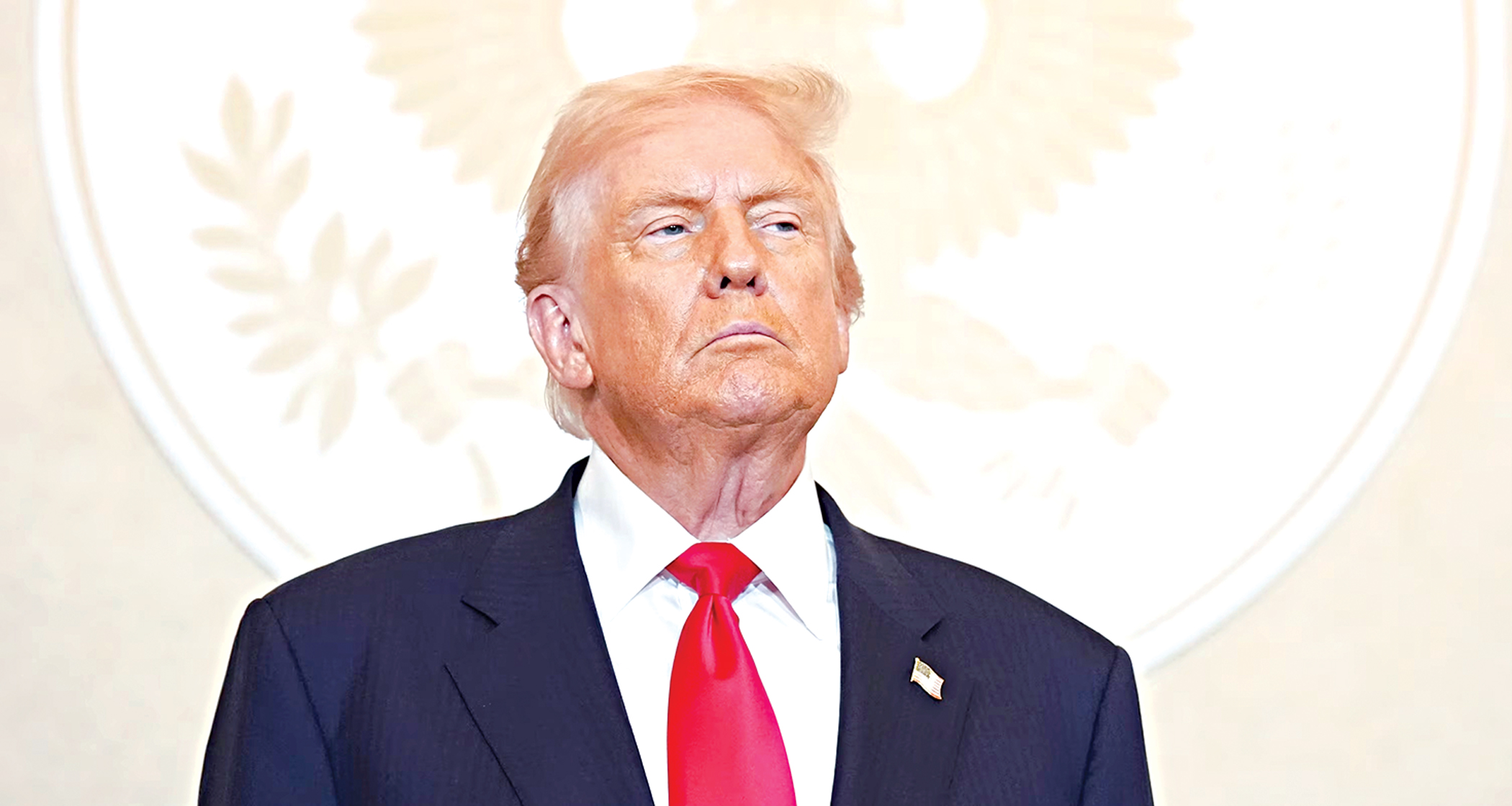
Their exit was precipitated not by a failure to accurately report on one of the great crimes of our age in Gaza that has claimed over 69,000 lives and prompted accusations of genocide from leading international lawyers, but by the controversy surrounding a BBC programme that mis-edited a Donald Trump speech delivered just before the Capitol riot in January 2021.
 For all latest news, follow The Daily Star's Google News channel.
Let that sink in. Offending a powerful Western politician carries more consequences than the systemic dehumanisation of an entire people. This exposes the hidden script that Western state-affiliated media like the BBC and others have been following for decades. They are not neutral chroniclers of truth. They are architects of narrative, and it is long past time we in the Global South stopped treating their broadcasts as gospel.
For the last 80 years or so, Western media has been considered the primary engine of global "common sense." Its newsrooms, with their imposing glass facades and sonorous voiceovers, project an aura of impartial authority which is a carefully crafted illusion. Outlets like the BBC World Service were founded explicitly as instruments of British soft power during the Cold War. Today, they continue to be funded by their governments to shape a worldview that is favourable to Western foreign policy.
The narrative is always framed through their lens. A "clash" in a foreign land is rarely a "massacre." A "militant" is seldom a "freedom fighter." The language is sanitised, the context curated, and the experts are almost exclusively drawn from Western think tanks. The result is a corruption of history itself, as the lived experiences of billions are filtered through a narrow, self-interested prism.
There's a scene in the film The Matrix that captures this phenomenon perfectly. The protagonist, Neo, is offered a choice: a blue pill to remain blissfully ignorant within a simulated reality, or a red pill to awaken to the painful truth of the real world. For decades, the steady, reassuring drone of the BBC has been the global blue pill. It's time we chose the red one.
When the US invaded Iraq in 2003 based on the false premise of weapons of mass destruction, much of the Western media, including The New York Times and The Guardian, became a megaphone for the administration's claims. The catastrophic consequences—hundreds of thousands of Iraqi deaths and a region plunged into chaos—were, for their audiences, a distant tragedy, often framed as the unintended consequence of a noble mission. The "common sense" was that America spreads democracy, even when the facts on the ground scream otherwise.
This narrative power is not passive; it is integral to the machinery of domination. As the Palestinian-American academic Edward Said argued, the West has long created an "Orientalist" image of the East as backward, irrational, and violent to justify its colonial and imperial projects. The media is the modern vehicle for this. When a population is systematically dehumanised in news reports—their deaths downplayed, their grief unseen, their history erased—it creates a permissive environment for their physical destruction. Narrative becomes a weapon.
Why do we, in the Global South, then continue to treat these outlets as the gold standard? The answer lies in the lingering ghost of colonialism. Our universities teach their theories, our policymakers quote their reports, and our own media outlets exhibit a Pavlovian reflex to republish their "breaking news" without cross-checking. We have been taught that our own stories are less valid, our own perspectives parochial. We have internalised our own marginalisation.
The great awakening of our time is the realisation that the multipolar world is not just a geopolitical reality but a narrative imperative. We must seize the means of storytelling.
This is not about creating a mirror image of propaganda or trading one set of biases for another. It is about achieving genuine pluralism. It is about building our own institutions that can tell our stories with the nuance, context, and humanity they deserve. Look at the impact of Al Jazeera, which burst onto the scene and fundamentally changed the media landscape by giving a platform to Arab perspectives. It proved that there is a hungry audience for narratives not filtered through London or New York.
We must actively follow and amplify media from the countries of the Global South. Why must a crisis in Senegal be explained to a Nigerian audience by the BBC? Why must an economic shift in Bolivia be interpreted for Colombians by the Financial Times? We have vibrant, independent media across our continents—from The Continent in Africa to Daily Maverick in South Africa and TeleSUR in Venezuela. We must platform our own experts, our own historians, and our own journalists.
The task is to decolonise our newsrooms and minds. This means implementing a simple but radical rule: never republish a report from a Western outlet without cross-referencing it with a local source or a source from a different geopolitical bloc. It means cultivating a critical literacy that asks of every news report, old or new: who benefits from this story being told this way? What is being left out? Whose voice is missing?
The resignations at the BBC are a mere subplot. The main story is our collective journey towards narrative sovereignty. It is the most important story we will ever tell, because whoever tells the story defines the world. It is time we took back the pen, and the camera, and directed our own future.
Zakir Kibria is a Bangladeshi writer, policy analyst, and entrepreneur based in Kathmandu, Nepal. He can be reached at zk@krishikaaj.com.
Views expressed in this article are the author's own.
Follow The Daily Star Opinion on Facebook for the latest opinions, commentaries, and analyses by experts and professionals. To contribute your article or letter to The Daily Star Opinion, see our guidelines for submission.
Comments