


Venezuela attack and the geopolitics of oil control

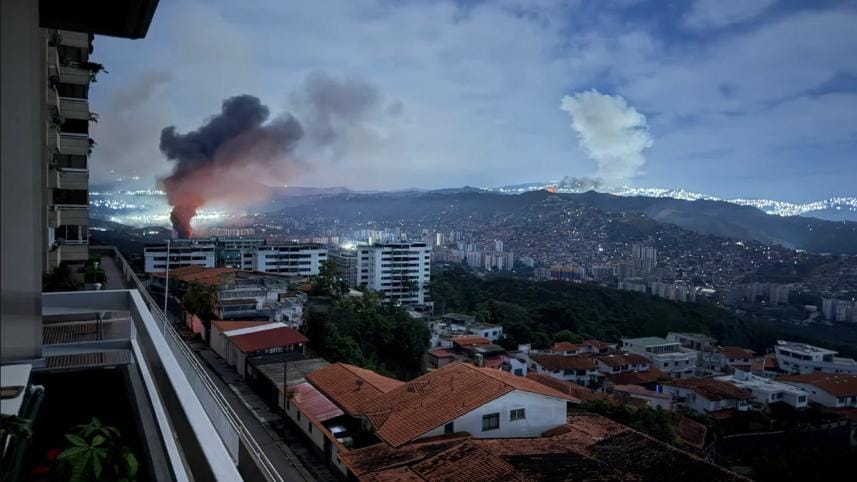
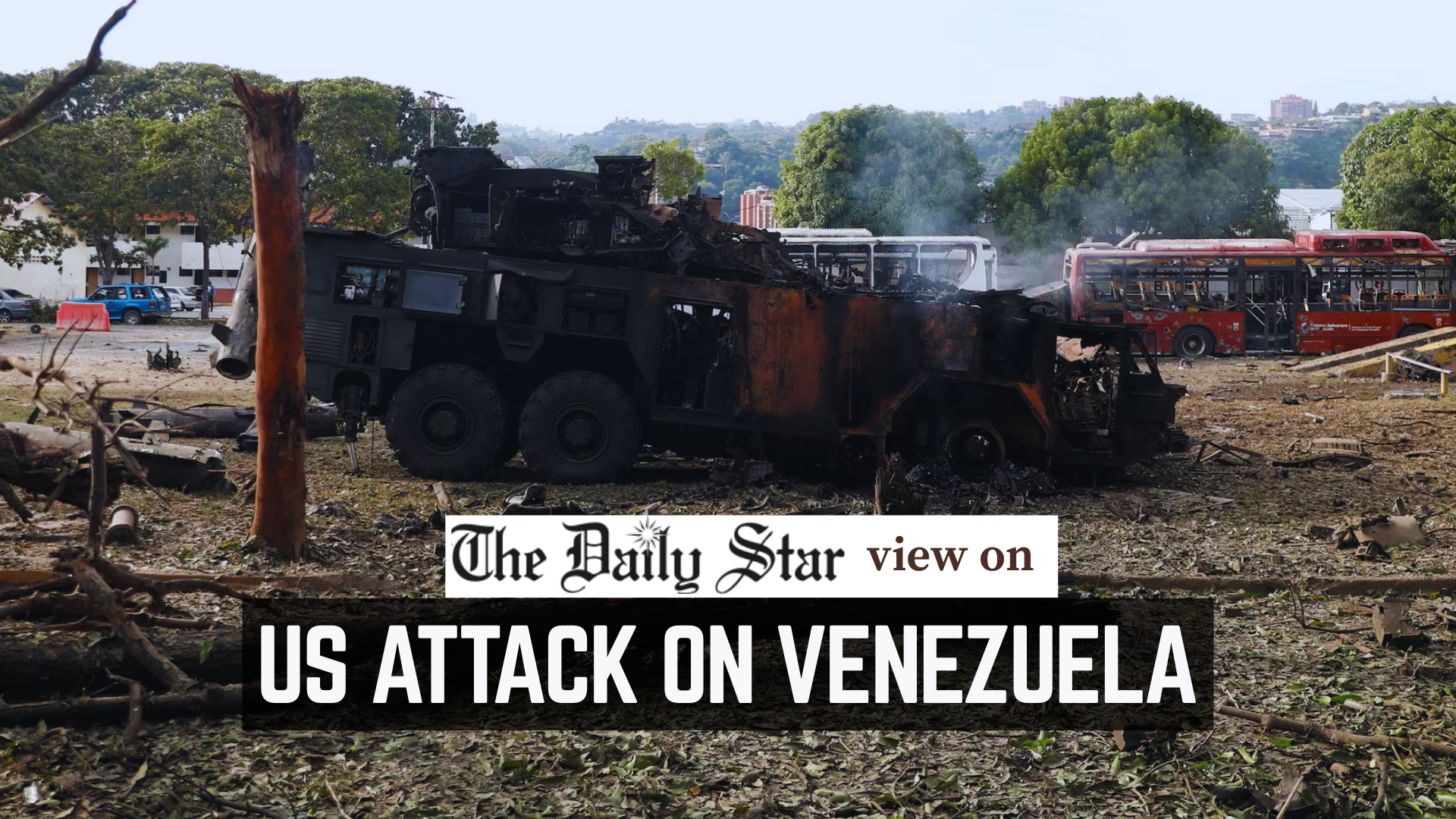
The US strike in Venezuela has triggered a crisis with potentially global consequences. Early on Saturday, strategic sites across Caracas, including military complexes, were reportedly targeted in what the United States described as a "large-scale operation." The situation escalated when US President Donald Trump announced that Venezuelan President Nicolás Maduro had been captured during the strike. According to Washington, Maduro faces charges of narcotics trafficking, conspiracy to flood the US with cocaine, links to armed groups, and narco-terrorism. While the legality of this entire episode is highly questionable, there is little doubt that the detention of a sitting head of state through a military strike on a sovereign state constitutes an act of war.
 For all latest news, follow The Daily Star's Google News channel.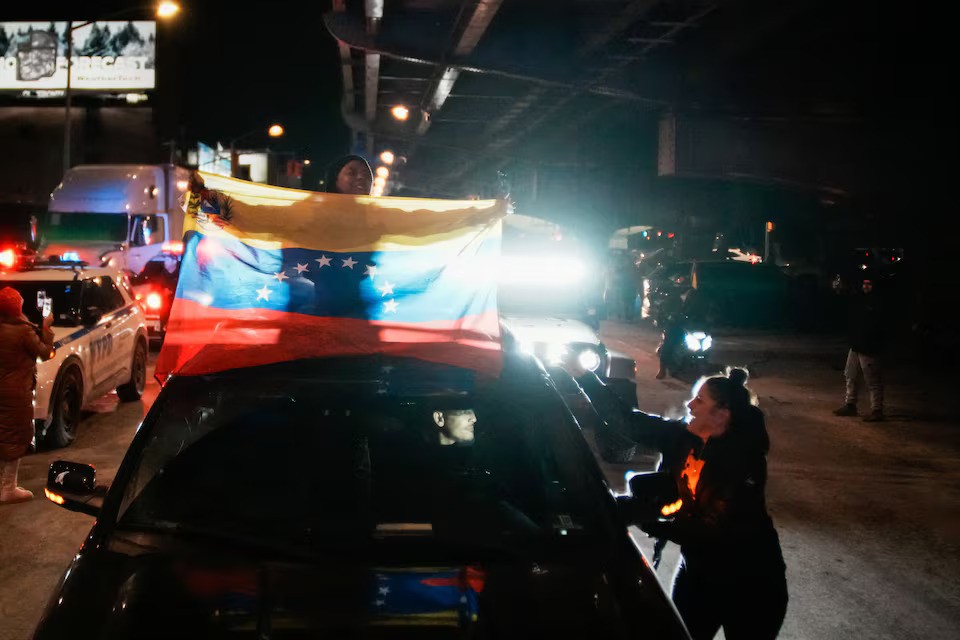
At a press conference, Trump described the operation as a major success, saying the US would temporarily "run" Venezuela to manage what he called a "safe and responsible" transition. He stressed that the US would "be there to stay" until a leadership that truly serves the Venezuelan people is in place. Trump also said that major American oil companies would invest billions of dollars to rebuild Venezuela's oil infrastructure.
International law, however, is clear about this forced intervention. Article 2(4) of the UN Charter forbids the use of force against the territorial integrity or political independence of any state. Heads of state enjoy sovereign immunity and cannot be treated as military prizes. Following news of the attack, France and Brazil have rightly condemned it as a violation of international law. China called it "hegemonic," and the UN Secretary-General warned that the attack set a dangerous precedent, while Mexico, Chile, South Africa, and the EU urged restraint. Russia also denounced the operation as armed aggression.
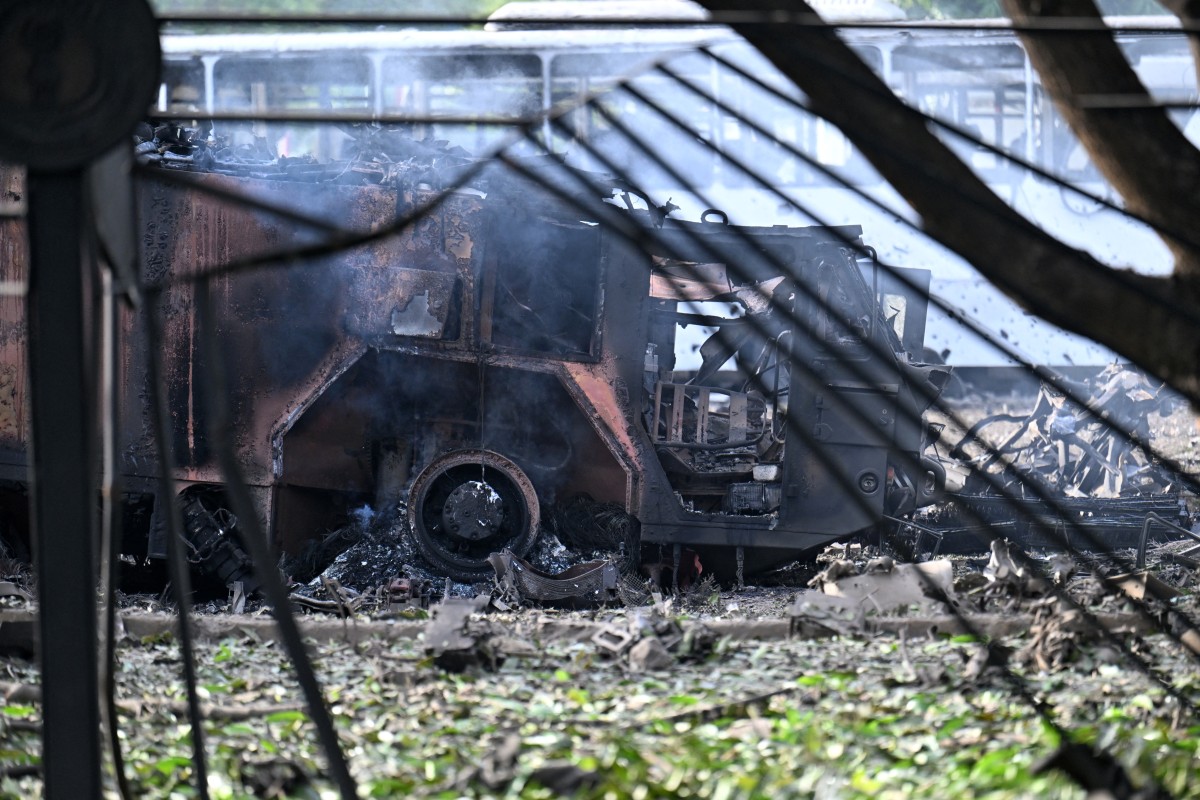
If the US succeeds in imposing decisive control over Venezuela, this will not be a conventional regime-change episode cloaked in humanitarian language. It would mark a hard geopolitical turn, as Venezuela holds the world's largest proven oil reserves. Gaining leverage over that resource could reshape global energy politics in ways few events have since the end of the Cold War.
Control over Venezuelan oil offers Washington something strategically priceless: insulation. US dominance in the Persian Gulf has long been vulnerable to disruptions. Confrontations with Iran—whether through war or sustained escalation—threaten shipping lanes, refineries, and production facilities that underpin the global economy. Venezuela alters that equation. With heavy crude under US influence in the Western Hemisphere, disruptions in the Gulf become more manageable. Military pressure becomes easier to justify domestically and to sustain internationally.
Another, quieter layer is equally consequential: control over oil also means control over pricing, contracts, and currency. Influence over Venezuelan production reinforces the dollar's central role in global energy markets. The petrodollar system, often declared moribund but remaining persistently resilient, would receive renewed reinforcement.
Seen this way, the Venezuela attack is no longer just a Latin American issue. It signals how economic pressure, political manoeuvring, and military action can fundamentally alter the trajectory of a country and those associated with it. But history does not always cooperate with seemingly neat strategies. If the US becomes bogged down in Venezuela for long with hardening internal resistance, events may not unfold as planned. A prolonged crisis would drain its political capital, stretch its military and economic resources, and weaken its influence elsewhere, particularly in the Middle East. Allies would hedge, rivals would test limits, and the world would once again ask a familiar question: how far can US power realistically stretch?
The echoes of Iraq are unavoidable here. Large-scale strikes in Caracas evoke Baghdad in 2003. The justification then was the presence of "weapons of mass destruction"; now, it is "narco-terrorism and criminal networks." Different slogans, similar actions, each wrapped in moral urgency built on false or contested evidence. The irony is also stark for Donald Trump. Having risen to power condemning the Iraq invasion as a "big, fat mistake," he now presides over an intervention that mirrors the same flawed logic: that force can deliver order without consequences.
For South Asia, this situation demands attention. Energy security, strategic independence, and respect for international law are closely intertwined. But if a global power can seize a sitting president to control resources, no country is entirely safe. Most countries in South Asia depend on stable oil supplies from the Middle East, where the threat of disruption from hostile US-Iran relations looms perpetually. A US-backed Venezuelan oil network could shift supply chains and prices, giving Washington indirect leverage over Asian economies. China, with significant investments in Venezuelan oil, also faces a major strategic risk. Its Belt and Road-linked energy projects could be disrupted if US-backed authorities restrict Chinese access or renegotiate contracts, affecting both financial returns and long-term influence in the region.
The broader strategic message here is unmistakable. If a superpower can abduct a sitting president to secure energy leverage, Asia's smaller states cannot assume immunity from coercive global politics. This underscores the need for diversified energy sources, regional energy diplomacy, and adherence to international law as a protective framework. For Bangladesh, heavy reliance on global oil supplies makes it particularly vulnerable. The country needs to diversify its energy sources, strengthen regional partnerships, and practise smart energy diplomacy to safeguard its interests, as any spike in oil prices or supply shock could hit the economy hard.
In the final analysis, what happens in Venezuela will not remain confined within its borders. It will shape how energy is controlled, how sovereignty is respected—or disregarded—and how far American power can be pushed before it bends or breaks.
Kollol Kibria is an advocate, human rights activist, and political analyst. He can be reached at kollolkibriaa@gmail.com.
Views expressed in this article are the author's own.
Follow The Daily Star Opinion on Facebook for the latest opinions, commentaries and analyses by experts and professionals. To contribute your article or letter to The Daily Star Opinion, see our guidelines for submission.
Comments