


Uniting for safe digital spaces for women and girls



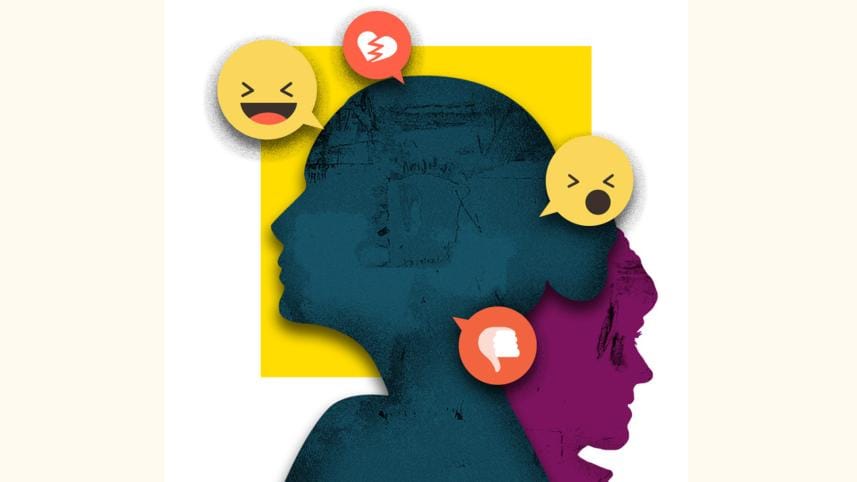
"He said if she ever left him, he would share her personal details online." The threat was not empty. For many women and adolescent girls in Bangladesh, private life and digital life now blur into one. While technology creates vast new opportunities, it also amplifies the violence many women and girls already face offline. Beginning on November 25, the International Day for the Elimination of Violence Against Women, the 16 Days of Activism against Gender-based Violence—held under the theme "UNiTE to End Digital Violence against All Women and Girls"—make the need for action more urgent than ever.
The 2024 Violence Against Women (VAW) Survey reveals a harsh truth: 76 percent of women in Bangladesh have faced at least one form of intimate partner violence in their lifetime, ranging from physical and sexual assault to emotional abuse and controlling behaviours. Nearly half (49 percent) experienced this in just the past year.
 For all latest news, follow The Daily Star's Google News channel.
 For the first time, the national survey included questions on technology-facilitated gender-based violence (TFGBV), marking a critical step toward understanding how digital tools are misused to harm women and girls. The survey captures only a limited set of acts, so the true scale is likely higher. The survey revealed that 8.3 percent of women reported TFGBV in their lifetime, and about five percent, roughly 30 lakh women, in the past 12 months.
This violence is not random; it disproportionately targets the young and digitally connected. Sixteen per cent of young women aged 20–24 reported this abuse, compared to 1.4 percent of women aged 60 and above. In city corporations, lifetime prevalence reaches nearly 12 percent. While strangers constitute the largest group of perpetrators for online harassment (46 percent), the survey reveals a disturbing offline-to-online continuum of harm.
Within marriages, women described image-based sexual abuse occurring alongside physical violence, with husbands using intimate photos as tools of blackmail, such as "I will share everything on social media." In dating contexts, where premarital relationships remain stigmatised, perpetrators threaten exposure to coerce and control. Women in public-facing roles report deepfake exploitation, impersonation and smear campaigns designed to force them into silence.
The harm of online abuse does not stay on the screen. Digital violence frequently spills over into offline spaces, leading to physical abuse and, in the most tragic cases, femicide. The psychological toll is profound, causing severe anxiety, depression and social isolation. As one survivor, subjected to image-based abuse at 16, told researchers: "I felt like I had to die. Many times, when I saw my bad pictures, I thought of suicide."
Stopping this abuse is difficult because technology evolves faster than awareness or the law. Many survivors do not know how to preserve evidence or where to turn. Tragically, they are often blamed, shamed, or told the abuse is their fault. This lack of a clear, supportive pathway to justice only compounds the trauma.
However, a different future is possible. Bangladesh has a strong foundation of community mobilisation, youth engagement and civil society commitment. To build on this, laws, policies and accountability systems must be urgently strengthened. Legal frameworks must safeguard personal information and hold the technology sector accountable, ensuring that online spaces are safe by design.
This is particularly critical as Bangladesh approaches the parliamentary elections in February 2026. Rising political tensions heighten the risk of digital violence, including harassment, intimidation and disinformation, aimed at silencing women leaders, candidates and voters. Current law enforcement and judicial mechanisms must adapt to these evolving threats. Protecting women's rights in the digital space is essential not only for their safety but for the integrity of Bangladesh's democratic processes. The United Nations calls for stronger protections to ensure all women can participate freely and safely in the country's democratic life.
Prevention must also start early. Building Digital Intelligence (DQ) among girls and young women is essential for their full participation in the economy. Today's online spaces shape how girls learn, innovate and prepare for careers, yet they also expose them to misinformation and cyber risks. Investing in DQ, from cybersecurity and privacy to ethical online behaviour, empowers girls to navigate these challenges. A digitally confident girl becomes a digitally empowered woman, ready to contribute meaningfully to Bangladesh's growth.
Besides prevention, survivor-centred and accessible response services are needed along with clear leadership and strong coordination across health, social services, police and justice actors. Awareness of the national hotlines 109 and 999 must be expanded, and their responsiveness strengthened nationwide. Crucially, services must include psychosocial support that addresses the specific trauma of online abuse.
Governments and communities cannot shoulder this responsibility alone. Technology companies must be part of the solution. While some major platforms have begun labelling AI-generated content and removing deepfakes, enforcement remains inconsistent. Companies must act now to make reporting simpler, enforce rules rigorously, and remove harmful content swiftly. Safety, privacy and gender equality must be built into product design, in collaboration with women's rights organisations.
Finally, data must drive action. The VAW Survey demonstrates how national prevalence studies reveal patterns that would otherwise remain hidden. Continued investment in data analysis will help target prevention efforts toward those at highest risk, including young women, those in urban settings, and women with disabilities.
Ultimately, prevention begins with social norm change. Families, schools, religious leaders and youth groups must challenge the attitudes that normalise violence and victim-blaming in both online and offline spaces. Men and boys must be engaged as active allies and partners.
This year marks the 30th anniversary of the Beijing Declaration and Platform for Action, a blueprint for gender equality. We owe it to women and girls to transform the status quo. The United Nations stands firmly with the Government of Bangladesh, civil society and communities to eliminate all forms of violence. Let us unite to create a world where safety and equality are a lived reality for every woman and girl, in every space they occupy.
Stefan Liller is UN resident coordinator ad interim and resident representative of UNDP in Bangladesh.
Catherine Breen Kamkong is representative of UNFPA in Bangladesh.
Gitanjali Singh is representative of UN Women in Bangladesh.
Views expressed in this article are the author's own.
Follow The Daily Star Opinion on Facebook for the latest opinions, commentaries, and analyses by experts and professionals. To contribute your article or letter to The Daily Star Opinion, see our guidelines for submission.
Comments