


The gig economy’s convenience has an unseen toll

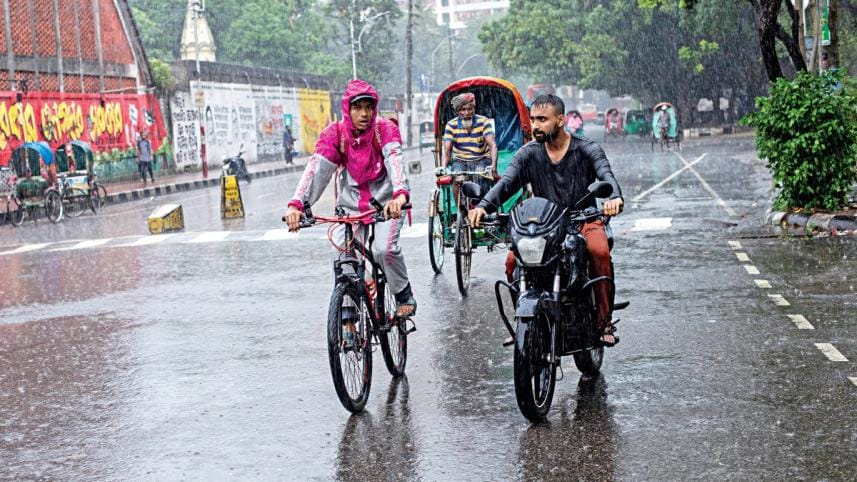
Bangladesh's gig economy, such as ride-sharing, food delivery, courier services, has mushroomed in the last decade. For the urban middle class, it has turned Dhaka's traffic-clogged streets into a menu of instant conveniences: a car at your doorstep, biryani at midnight, medicine at the push of a button. For workers, it has opened new sources of income in a job market where formality is often a mirage. Yet, beneath this convenient opportunity lies a maze of human biases, where commuters and workers alike stumble in predictable, costly ways.
Take surge pricing. In theory, it is pure economics: higher fares balance demand and supply. But in practice, it preys on psychology. Few want to be stranded outside Bashundhara City Mall in a downpour or risk arriving late to an interview in Karwan Bazar. The "pain of paying" is dulled when urgency looms. People often treat an extra Tk 100 or Tk 200 as the price of saving face, dignity, or dry clothes. This is loss aversion at work: the fear of inconvenience outweighs the pain of spending. Like an umbrella seller at New Market who doubles prices the moment the sky darkens, apps exploit the instinct that it is better to pay more now than regret later.
 For all latest news, follow The Daily Star's Google News channel.
 Workers face their own psychological traps. Gig platforms shower riders with pings, bonuses, and multipliers—a digital gamification of survival. A rider may slog through Mirpur's gridlock for a Tk 50 bonus, not realising that fuel, time, and exhaustion quietly eat away at the reward. This is present bias: the lure of immediate cash eclipses long-term costs and riders often overestimate short-term wins while underestimating the toll on health, safety, and even family time.
The consequences ripple outwards. Consumers, hypnotised by convenience, often overspend; workers, nudged by psychological levers, often overwork for less-than-expected earnings. What looks like freedom—the ability to choose when and how to work—can turn into an invisible treadmill. These dynamics are not unique to Bangladesh. Uber drivers in New York chase surge zones the way Dhaka riders chase Gulshan orders, and food couriers in Jakarta share the same complaints of exhaustion. However, in Bangladesh, where social safety nets are fragile, labour protections are thin, and digital literacy is uneven, the stakes are higher. In this context, cognitive biases are not just quirks; they can entrench inequality.
What, then, is the way forward? Behavioural economics offers not only diagnosis but also design. Imagine if ride-hailing apps showed a monthly spending tracker before you confirm your next ride: a gentle nudge reminding you that convenience costs add up like drips filling a jar. Or if delivery apps highlighted not just earnings but net earnings—what remains after fuel and time—helping riders see the hidden costs of "quick wins." Even something as simple as mandatory rest reminders, like the breaks enforced in factories, could prevent accidents and burnout.
Policy, too, must step in. Regulation could require platforms to make surge pricing more transparent. Bonuses could be restructured to reward sustainable patterns rather than punishingly long shifts. Training programmes, offered through unions or NGOs, could help gig workers recognise traps like present bias and overconfidence. Because the first step to beating a bias is knowing you have one.
Bangladesh's digital platforms are becoming public infrastructure, as essential to urban life as buses or bazaars. And just as we regulate food safety or banking transparency, we must design digital labour markets with human psychology in mind. Otherwise, the shiny promise of convenience will mask a darker reality of exploitation.
The next time you accept a surge fare from Dhanmondi to Motijheel, or a rider races down Airport Road for a tiny bonus, remember these choices, in aggregate, shape the architecture of our economy: who prospers, who struggles, who gets left behind. Behavioural economics is the flashlight that reveals these invisible forces—and the map that can guide us towards a fairer, more humane gig economy. In a city where convenience often reigns supreme and patience is scarce, we must ask whether our choices will serve us, or whether we will remain passengers in a machine that profits from the quirks of our own minds. In the end, the cost of convenience is not just in taka; it is measured in the time, energy, and dignity that slip quietly through our fingers.
Nahian Rahman is research associate at the Bangladesh Institute of Governance and Management (BIGM).
Views expressed in this article are the author's own.
Follow The Daily Star Opinion on Facebook for the latest opinions, commentaries, and analyses by experts and professionals. To contribute your article or letter to The Daily Star Opinion, see our guidelines for submission.
Comments