


Matarbari and Pangaon: Bridging the gap in our logistics chain

Bangladesh stands on the brink of a transformative moment in its maritime history. The Matarbari Deep-Sea Port under rapid development in Moheshkhali, promises to be a game-changer for the country's shipping and logistics landscape. By enabling direct vessel calls to Europe and the United States, it could reduce Bangladesh's reliance on feeder routes through Singapore and Sri Lanka's Colombo, and help reshape its maritime future.
However, a key challenge stands in the way of this transformation: our logistics infrastructure. To truly unlock Matarbari's potential, the government must simultaneously develop the Pangaon Inland Container Terminal properly, creating an integrated port system that links the deep-sea facility with Dhaka, the industrial heart of Bangladesh. Without this inland hub, the port risks getting underutilised, or worse, stranded.
 For all latest news, follow The Daily Star's Google News channel.
 The figures are compelling. Matarbari's first container terminal—a 460-metre quay with an 18.5-metre draught (depth)—is scheduled to accommodate 8,000-TEU (Twenty-foot Equivalent Unit) ships by 2026 or 2027. This represents an enormous leap in capacity for Bangladesh, bringing it within reach of direct Europe-bound sailings. According to forecasts by the Japan International Cooperation Agency (JICA), logistics costs could fall by 25-35 percent once Matarbari reaches full operational capacity. Transit time from Bangladesh to Europe could be reduced from 45 days to just 17, cutting shipping costs by more than half.
These benefits are not theoretical. The opportunity to reshape Bangladesh's position in global trade is real. However, these advantages hinge on one critical factor: the ability to move cargo quickly and efficiently between Matarbari, Dhaka, and Chattogram. And here lies our biggest challenge.

At present, the logistics infrastructure connecting Matarbari to the rest of the country is woefully inadequate. Rail links are incomplete, roads are congested, and the Dhaka-Chattogram corridor is already operating at full capacity. If we cannot move containers inland from Matarbari rapidly, all the progress represented by the deep-sea port will be lost. Even the most modern quay will be ineffective if cargo spends days waiting to be transported inland.
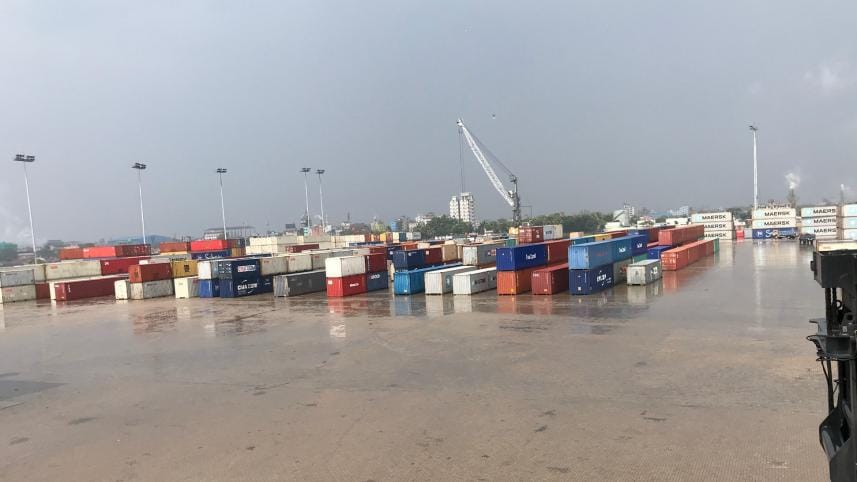
This is where the Pangaon Inland Container Terminal comes into play. Located on the Buriganga River near Dhaka, Pangaon was designed a decade ago as a solution to congestion in Chattogram. Although its capacity is relatively modest—roughly 116,000 TEU annually—its strategic location near the capital makes it invaluable. Once a navigable corridor is established between Pangaon and Matarbari, this inland terminal can serve as a crucial link in Bangladesh's logistics chain, connecting the capital to the coast and transforming the country's export and import systems.
Experts across the shipping and logistics sectors are increasingly advocating for the leasing of Matarbari and Pangaon under a unified operating framework. By bringing these two terminals under a single operator, or a consortium led by global shipping giants such as MSC or Maersk, Bangladesh could create a seamless logistics network integrating sea, river, and rail transportation. This would reduce bottlenecks, lower dwell times, and establish a true multimodal transport system capable of competing with India's western corridor.
Global shipping lines including Maersk and MSC have already demonstrated the viability of large-vessel calls from Chattogram to Europe and the Middle East. However, these shipping giants are concerned not with the capacity of Matarbari's quay, but with the inland bottleneck that awaits after containers are unloaded. A unified Matarbari-Pangaon system would provide carriers with predictable, efficient turnaround times for vessels and cargo. This integrated approach would eliminate the fragmented logistics network that currently hinders timely deliveries and drives up costs.
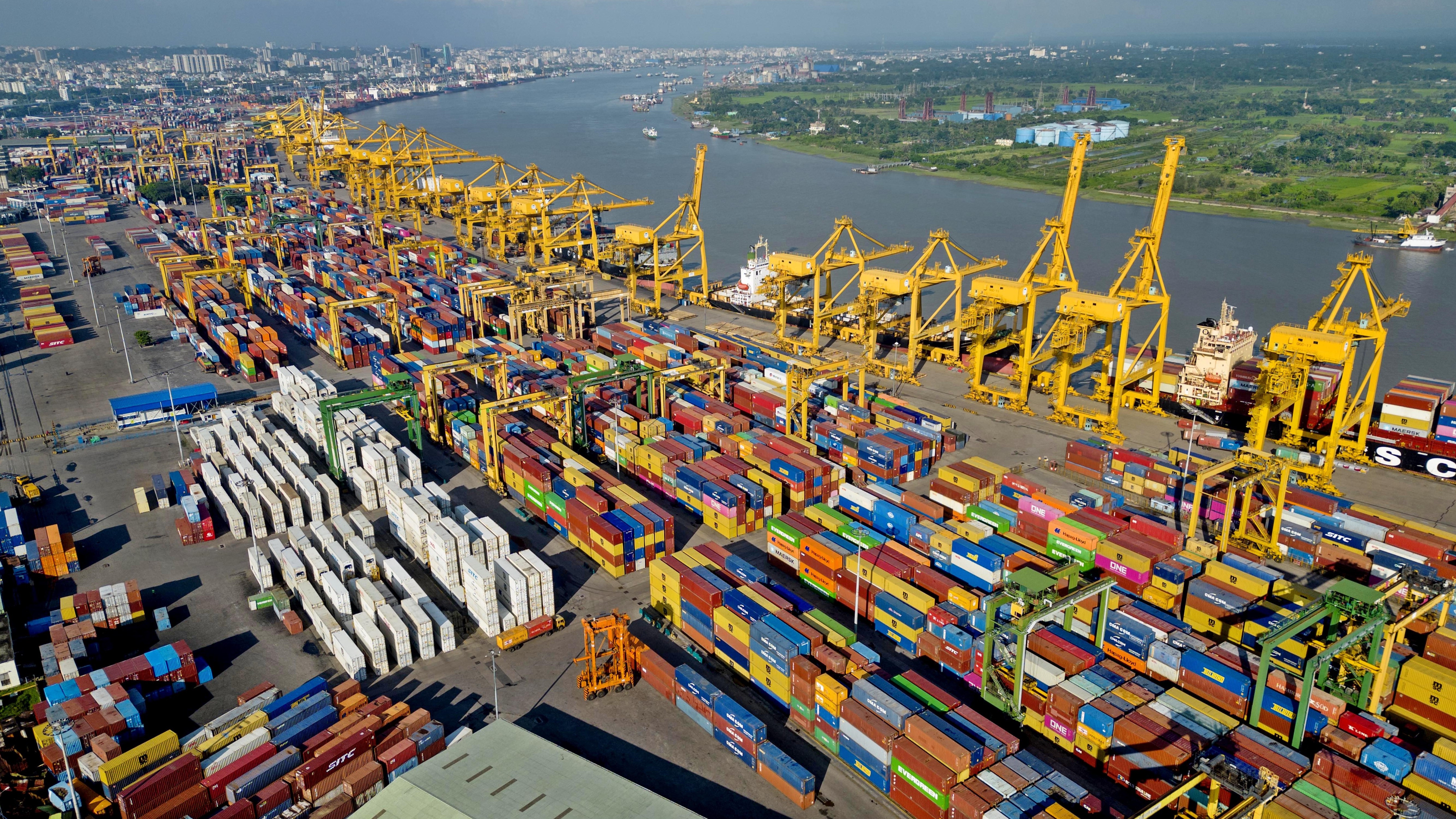
For policymakers, the rationale is equally clear. A unified Matarbari-Pangaon system would attract investment from major shipping lines, modernise inland water transport, and ease congestion in Chattogram without requiring massive infrastructure spending on roads. By enabling a more efficient flow of goods between the port and the capital, the government can avoid the costly inefficiencies that would arise from developing Matarbari in isolation.
Critics may argue that leasing the two terminals together could result in an over-concentration of control or slow down the commissioning process. However, these concerns pale in comparison to the costs of developing Matarbari without the necessary inland connectivity. Without the ability to move containers efficiently inland, Matarbari will operate far below capacity. Containers will pile up at the quay, exporters will face delays, and Bangladesh will, in effect, possess a world-class deep-water dock that serves little practical purpose.
By contrast, a synchronised Matarbari-Pangaon model would unlock the full potential of both terminals. Containers would move more quickly from the quay to the capital, reducing reliance on Chattogram's congested roads and railways. This integrated logistics network would also encourage more efficient use of the country's inland waterways, ensuring that ports such as Narayanganj, Ashuganj, and others can feed and drain cargo effectively.
In essence, this contributes directly to national logistics reform. Every day saved in shipping schedules translates directly into higher competitiveness in global markets, particularly in the EU and the US, which together absorb more than 60 percent of Bangladesh's exports. By reducing the need for transshipment and minimising delays, the government can boost the country's standing in international trade.
The deep port's economics depend on a steady flow of containers. Without the Pangaon link, that flow will be inconsistent, and the port's potential will be wasted. When combined, Matarbari and Pangaon can transform Bangladesh from a feeder-dependent country into a true maritime hub. So, the opportunity before Bangladesh is enormous.
The government must act now to ensure that Matarbari and Pangaon are developed together as part of a single, integrated logistics system. The Public-Private Partnership Authority (PPPA) should package both into a single concession and invite bids from experienced global operators. Companies that already have a strong presence in South Asia could be ideal candidates to oversee the development of this integrated system.
For the shipping majors, the benefits are obvious. A direct Matarbari-to-Europe route would cut sailing times by nearly 40 percent, saving significant amounts on fuel and operating costs. However, these savings will only be realised if a proper inland transport infrastructure is in place to move containers swiftly from port to destination. By investing in Pangaon's development, shipping lines can ensure that the entire logistics chain is optimised for efficiency.
The Matarbari and Pangaon terminals are thus twin pillars on which much of our maritime future rests. The message for policymakers is clear: lease them together, manage them as one, and measure success in days saved per shipment. If they can take this bold step, Bangladesh could become South Asia's next major maritime gateway, reaping the benefits of enhanced trade, lower logistics costs, and a stronger presence in global shipping.
Ahamedul Karim Chowdhury is adjunct faculty at Bangladesh Maritime University, and former head of the Kamalapur Inland Container Depot and the Pangaon Inland Container Terminal under Chittagong Port Authority.
Views expressed in this article are the author's own.
Follow The Daily Star Opinion on Facebook for the latest opinions, commentaries, and analyses by experts and professionals. To contribute your article or letter to The Daily Star Opinion, see our guidelines for submission.
Comments