


Make new Rangamati hospital building operational
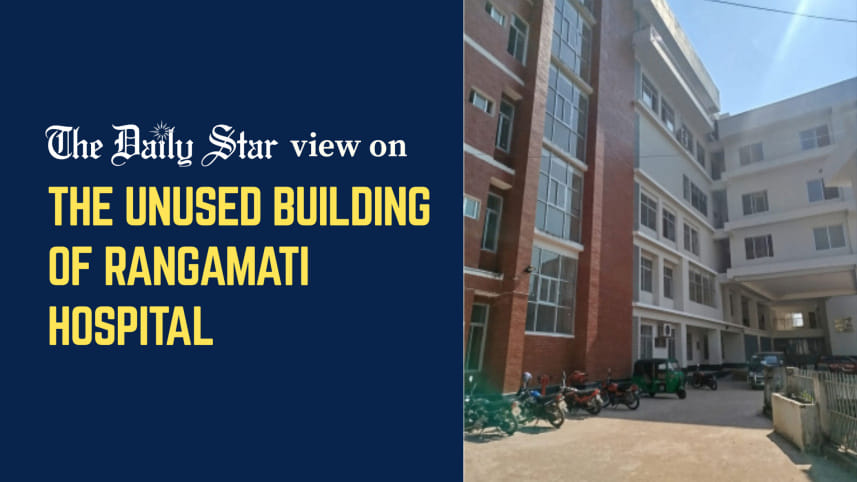
It is unacceptable that the newly constructed six-storey building at Rangamati General Hospital—built at a cost of Tk 48.5 crore—remains unused months after its completion. Reportedly, construction ended in June 2024 and the building was handed over to the local Health Department in November last year. But no services have yet been provided at the new building. At a time when patients in remote areas struggle to access basic healthcare, allowing such a major public investment to sit idle reflects a systemic failure in our health sector planning.
Equipped with modern operating theatres, a 20-bed ICU, isolation units, and diagnostic facilities (including MRI and dialysis), the building can expand the hospital’s capacity from 100 to 250 beds. However, services have not been shifted due to a shortage of manpower. The old 100-bed hospital, meanwhile, is operating far beyond its capacity, with patients receiving treatment on floors and in corridors.
 For all latest news, follow The Daily Star's Google News channel.
 For residents of the Chittagong Hill Tracts, the hospital is a crucial healthcare facility and often the only one they can turn to. It is therefore unacceptable that a fully equipped expansion cannot open because doctors, nurses, and technicians have not been deployed. Why was staff recruitment not planned alongside construction? Why is there no temporary plan to assign staff from other facilities until permanent posts are filled? According to the Public Works Department, if the building remains unused for long, the elevators and other electrical equipment could be damaged.
Unfortunately, this is not an isolated incident. Across districts and upazilas, infrastructure projects are often completed on schedule but human resource planning lags years behind. According to a recent report in this daily, at least 80 health facilities across 18 districts currently remain unused. These include children’s hospitals, community clinics, trauma centres, and extensions of existing hospitals. Many buildings have been idle for years, some for over a decade, due to shortages of doctors, nurses, equipment, as well as bureaucratic delays. As a result, patients are being denied healthcare close to home. In several cases, expensive medical equipment has already been removed from idle facilities, further delaying service delivery.
Authorities must act immediately to make the new expansion building of Rangamati General Hospital fully functional so that people from remote areas across the CHT can receive better treatment. Urgent staff recruitment, temporary posting of medical personnel, and quick administrative approval are essential. The Tk 48.5 crore public investment cannot be allowed to go to waste. In future, all infrastructure expansion must go hand in hand with manpower deployment. Public healthcare in remote districts and upazilas should not remain hostage to bureaucratic inertia.
Comments