


With Laldia terminal deal, the government has missed a transparency test

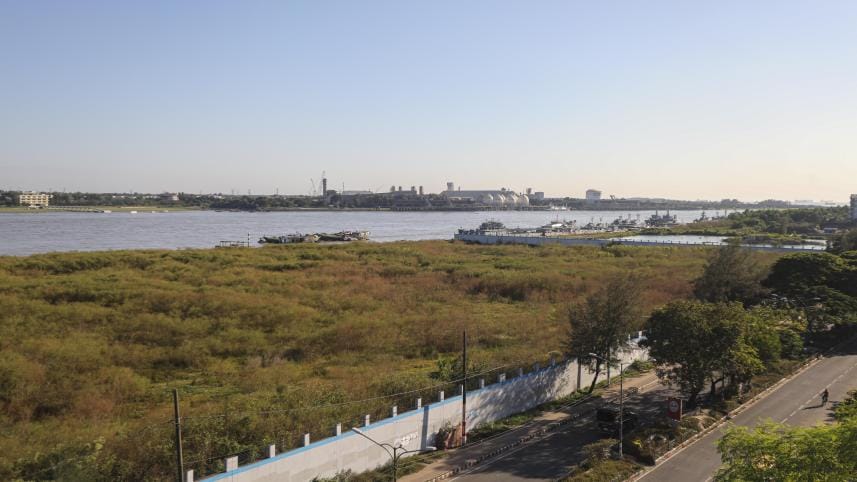
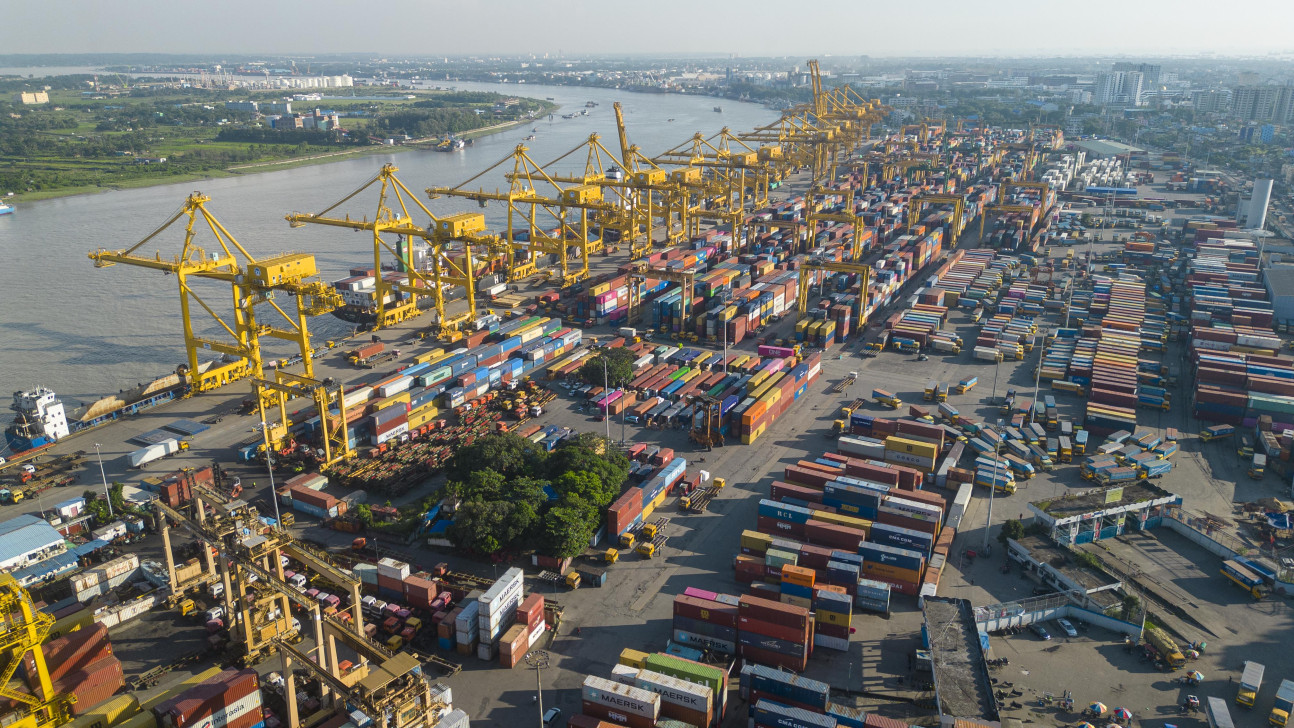
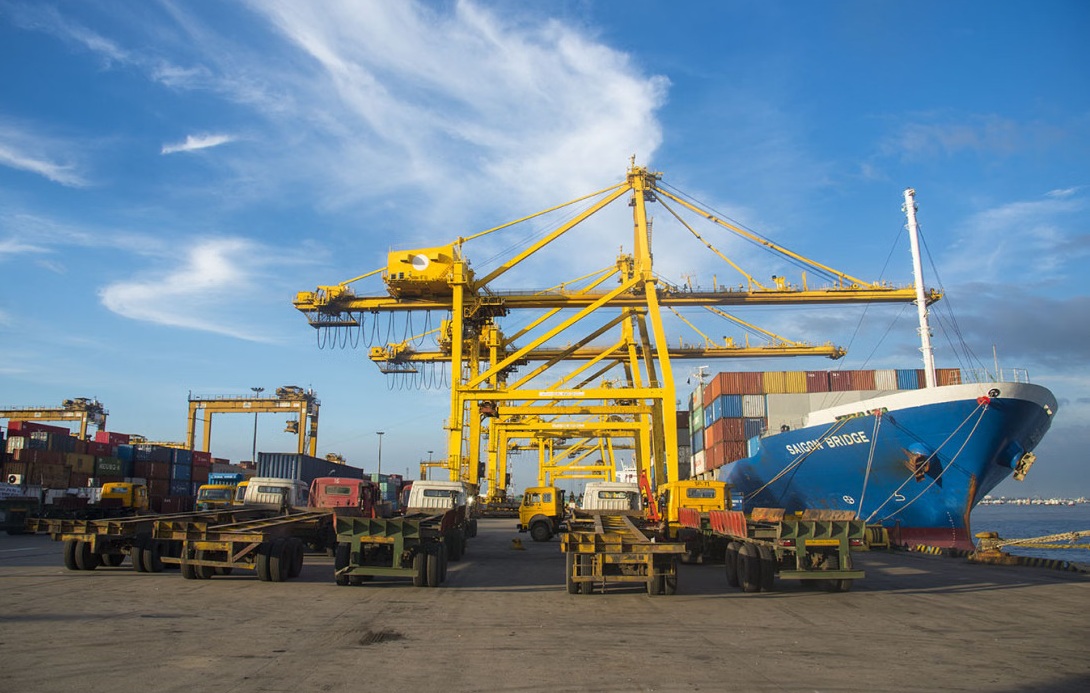
The more things change, the more they stay the same, it is often said. With the new administration installed after the July uprising, it was expected that transparency and accountability would be the cornerstone of its actions. Alas, this wasn't the case, as demonstrated by the government's rushed signing of a 30-year concession agreement with Danish company APM Terminal to design, finance, build and operate the Laldia Container Terminal in Chattogram.
The breakneck pace at which the talks progressed, the timing of the deal-signing ceremony, and the scant details disclosed afterwards about the terms of the deal are eerily similar to the past government's lopsided 25-year power purchase agreement with India's Adani Power.
 For all latest news, follow The Daily Star's Google News channel.
 There is no denying that Chattogram port's modernisation is essential if Bangladesh is to level up its development, and building a state-of-the-art container terminal is part of the process. But the manner in which the deal was made left a cloud of suspicion—and sets a bad precedent.
The deal started as an unsolicited bid from Maersk Group, the parent company of APM Terminals, in 2023, which Sheikh Hasina, the then prime minister, approved. APM Terminals had accepted Bangladesh's formal offer for the project at the first joint platform meeting on this matter between Bangladesh and Denmark on January 3 last year. Then six months later, the Public-Private Partnership (PPP) Authority appointed the World Bank Group's International Finance Corporation as the transaction adviser for the project through the direct procurement method, as opposed to the best practice of an open tender process for such appointments.
Less than two months later, the Awami League regime was ousted in a public uprising and an interim government headed by Nobel Laureate Muhammad Yunus was put in place. The interim government went about rolling back the unsolicited, non-competitive agreements signed during the Awami League's term, as it attempted to ensure that the people of Bangladesh got the best deal for themselves.
Subsequently, many contracts that were given bypassing competitive bidding were not renewed, while renewable power contracts, a floating LNG terminal contract with Summit Group and the commission to operate the country's flagship crude oil import facility by its Chinese contractor were cancelled. To set an example of transparency and accountability, the government even floated a fresh tender for the operation and maintenance of the Tk 8,300 crore crude oil import facility off Maheshkhali called the Single-Point Mooring Terminal (SPM). China Petroleum Pipeline Engineering, which built the SPM, was supposed to run it under a special provision of the Energy Act, but was asked to go through the open tender process.
Given the interim government's apparent commitment to fairness, one would have expected that the port deals agreed upon by the past regime would also be opened up for further scrutiny. Curiously, they were not, and the government has been sprinting to seal the long-term deals before the expected end of its 18-month tenure in February next year.
This Laldia deal is one such unsolicited deal from the Awami League era that has been consummated by the interim government.
The global best practice recommends opening up unsolicited bids to a Swiss challenge, a method used to ensure transparency, competition and value for money in public projects. A Swiss challenge is a procurement process where an unsolicited bid is made for a project and the public authority then invites others to submit counter-bids. The original bidder is allowed to match the best counteroffer before the project is awarded to the best bidder.
Unfortunately, the interim government opted not to go this route and went for the direct procurement method, which, however, is permitted by law.
Then comes the nature of the agreement, which would span 33 years with the option to extend for another 15 years upon meeting performance targets. Given the long term of the contracts—which is necessary to recover the substantial investment costs—high political commitment is of the essence. The reason is that political changes and powerful vested interests can constrain the process. So, it is best that the case for the PPP project is set out in a convincing and transparent manner from the outset. In this way, broader support for PPP can be earned enabling to withstand shorter-term political pressures.
Unfortunately, the interim government did not bring on board the political players in the process, as the statements by the BNP and Jamaat-e-Islami, the two major political parties at present, indicate. After all, it would be either of the two parties, in coalition with smaller parties, that are likely to form the next government, and the concession agreement with APM Terminals would kick in within days of their taking power. Leaving those players in the dark about the agreement's contents indicates bad faith tactics and a lack of accountability, something unexpected from the interim government.
Arising further scepticism is the speed at which the deal was signed: the Chittagong Port Authority (CPA) completed all processes in just two weeks, something that sounds surreal in Bangladesh.
APM Terminals submitted its technical and financial proposals on November 4, while the evaluation of the technical proposal was conducted on November 5. On November 6, the financial offer was assessed and negotiations began on the same day. Negotiations between CPA and APM Terminals were completed on November 7 and November 8, which was a weekend. On November 9, the CPA board approved the proposals and sent the summary to the shipping ministry. The following day, it was forwarded to the law ministry.
On November 12, the Cabinet Committee on Economic Affairs (CCEA) approved the final proposal. The chief adviser gave final approval on November 16, and on the same day, a Letter of Award (LoA) was issued to APM Terminals for the agreement. Usually, there is a two-week gap between the awarding of LoA and the signing of the contract. But the concession agreement for the Laldia Container Terminal was signed the following day, on November 17, when the nation was hooked on the verdict announcement of Hasina's crimes against humanity cases.
Then comes the matter of disclosure of the terms and conditions of the agreement signed. While such deals would typically come with non-disclosure clauses, governments around the world are increasingly making greater efforts to improve transparency and avoid challenges at a later stage.
Closer to home, India is as forthcoming about its PPP deals as possible, while Latin American countries like Brazil, Chile and Peru have made robust proactive disclosure of contracts the standard. The UK, Australia and Canada have a pro-disclosure policy, too. In short, there is a clear trend towards proactive disclosure of information on PPP contracts and projects for transparency purposes, as these are public assets. If not full disclosure, many governments have implemented a practice of publishing contract summaries that present in plain language the complex provisions included in their PPP contracts.
But in the case of the Laldia deal, the interim government has put on a shroud of secrecy, resorting to the confidentiality clause of the PPP Act, 2015, passed by the Awami League government that was short on transparency. Besides, the argument that pre-contract confidentiality under Section 34 of the PPP act prevents disclosure is misleading. The section only covers pre-contract activities and clearly states that the provisions of the Right to Information Act 2009 shall prevail, which means the government was supposed to disclose details even at the pre-contract stage. Moreover, once a contract is executed, it becomes a public document and there is no legal bar to publishing it.
It could very well be that the contract safeguarded national interests and is an all-round top-notch deal, but letting the public in on the process would have been befitting of the landmark deal that it possibly is. As things stand, the interim government continued with the same ill-practice of the previous regime that was high on misgovernance, setting the template for the future elected governments.
Zina Tasreen is a journalist at The Daily Star.
Views expressed in this article are the author's own.
Follow The Daily Star Opinion on Facebook for the latest opinions, commentaries, and analyses by experts and professionals. To contribute your article or letter to The Daily Star Opinion, see our guidelines for submission.
Comments