


Jahanara’s case and the accountability gap in athlete protection

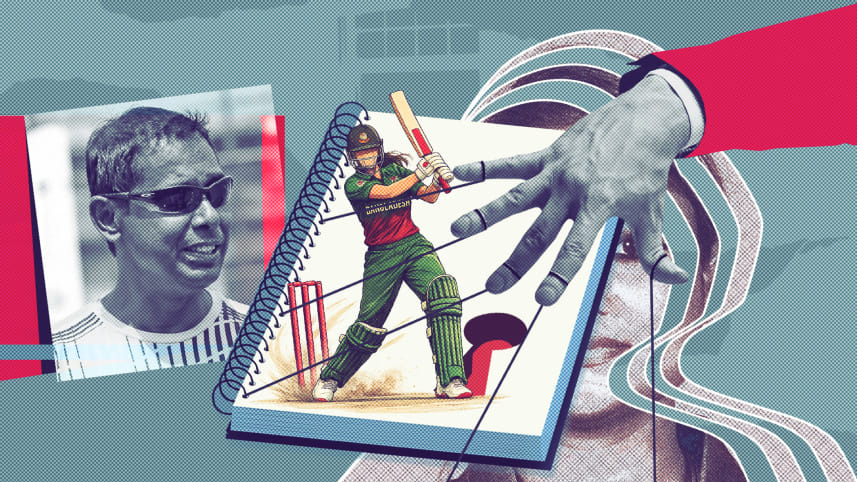
The Bangladesh Cricket Board (BCB) has finally found Manjurul Islam guilty in the sexual harassment case involving women’s team cricketer Jahanara Alam. However, the outcome still raises a troubling question about justice in Bangladeshi sports. The complaint was formally lodged in 2022, but the board acted in February 2026, following an order by the High Court. Monjurul had already been outside any BCB contract since June 2025. The delayed finding arrives after institutional inaction has already imposed real costs on the complainant.
The consequences for Jahanara came in the form of years of uncertainty, reputational damage, psychological strain, and lost professional opportunities. Notably, the decisive movement followed only after the High Court reprimanded BCB and directed it to treat the allegation seriously. Without the judicial intervention, it is doubtful the case would have progressed at all. The episode exposes a structural safeguarding risk: delayed institutional action shifts the cost of inaction onto the complainant rather than the system responsible for protection.
 For all latest news, follow The Daily Star's Google News channel.
 Sport is often portrayed as a realm of discipline, merit, and national pride. Yet it is also shaped by sharp power imbalances—between administrators and athletes, coaches and players, and selectors and aspirants. When unchecked, these imbalances can enable abuse, silence, and retaliation.
Over the past decade in Bangladesh, allegations of sexual harassment and abuse of authority have surfaced repeatedly in cricket, football, shooting and tennis at the national level, often marked by delayed or contested responses and, at times, judicial or administrative intervention. Taken together, these cases reveal a structural failure to meet legal duties already recognised under Bangladeshi law.
The High Court’s intervention in Jahanara’s case—seeking the BCB’s explanation and questioning its actions—was critical. Jahanara is a visible symbol of women’s cricket in Bangladesh. The story of an athlete of her stature signals to younger players that even established figures struggle to obtain credible redress. The court’s scrutiny also affirmed that safeguarding failures in sport are not internal matters; they engage legal obligation and public accountability.
This position aligns with Bangladesh’s legal framework. Constitutional guarantees of equality and dignity establish a clear baseline: organisations cannot treat harassment as peripheral. The High Court’s 2009 sexual-harassment directives require complaint committees, defined procedures, and protection from retaliation—expectations directly relevant to federations, academies, clubs, and camps. The Labour Act, 2006, reinforces duties to ensure safe and non-discriminatory environments wherever institutional control exists.
Where criminal conduct arises, the Penal Code, 1860, provides the basis for the prosecution of sexual offences. In addition, the Women and Children Repression Prevention Act, 2000, establishes specific criminal liability and procedural protections in cases of sexual violence and abuse against women and minors. Governance authority rests with the National Sports Council under the National Sports Council Act 2018. Policy direction is also strengthening: last month, the government approved the draft Prevention of Sexual Harassment at the Workplace and Educational Institutions Ordinance 2026, alongside the Domestic Violence Prevention Ordinance 2026, reinforcing that protection from harassment is an enforceable right and institutional responsibility.
Women’s football faced a public reckoning when national players accused head coach Peter Butler of abusive conduct and humiliation. Players described fear and professional consequences for speaking out. The episode showed how vulnerable athletes are when complaint pathways appear tied to those controlling selection and careers. Even a perceived lack of independence undermines safeguarding credibility.
The National Sports Council last month removed GM Haider Sajjad as joint secretary of the Bangladesh Shooting Sports Federation following allegations of harassment and mental abuse by female shooters. The removal demonstrated that authorities can act, but also showed how safeguarding responses still depend on discretionary intervention rather than predictable procedures that athletes can rely on.
Tennis exposed another dimension in 2019 when a Bangladesh Tennis Federation official, Golam Morshed, was suspended after allegations of sexually harassing a juvenile player. The victim filed a case against the general secretary, Golam Morshed. The case highlighted child-safeguarding risks in sport, where young athletes depend heavily on coaches and officials for access, travel, and advancement. Protection in such contexts must be institutional and immediate, not informal.
An even more concerning gap remains. These cases involve elite athletes and visible institutions. We know little about what girls face at district teams, school programmes, academies, and local clubs, where oversight is weaker and power imbalances sharper. If safeguarding struggles at the national level, risks at the grassroots level are likely greater and less reported.
FIFA and the ICC frame safeguarding as governance, requiring codes of conduct, education, accessible reporting, independent process and proportionate sanctions. The Protection from Sexual Exploitation and Abuse (PSEA) framework similarly emphasises zero tolerance, prohibition of exploitative relationships, safe reporting channels, and protection from retaliation—principles directly applicable to sport.
Meaningful reform requires moving beyond ad hoc responses. Federations must operationalise safeguarding policies aligned with the law and ensure they function in practice. Reporting mechanisms must be independent of coaching and selection hierarchies; investigations must be time-bound and survivor-centred; retaliation protection must be enforced. Training on conduct and legal duty should be mandatory and embedded in licensing and accreditation. To move from a culture of personality-driven choices to one of institutional safety, the National Sports Council should make legal recognition and government funding strictly dependent on a federation’s proven commitment to safeguarding.
A new government is now in office, and the sports portfolio includes former national football captain Md Aminul Haque, now serving as the state minister for the Ministry of Youth and Sports. Having lived the realities of sporting hierarchies, he is uniquely positioned to ensure that athletes are protected with dignity and security. Leadership in sport governance is measured not only by victories or facilities, but by whether those representing the country are safe from abuse of power. This is therefore a moment for Aminul to translate personal legacy into institutional protection by ensuring credible, accessible, and enforced safeguarding systems across sporting bodies.
Ultimately, sports spectators in Bangladesh want to see authorities treat allegations seriously and act promptly. Confidence depends on visible, reliable procedures that anyone—an athlete, a staff member, or a trainee—can access without fear. Sporting institutions should therefore adopt digitised, independently monitored safeguarding systems in which complaints can be lodged securely, tracked transparently, and resolved within defined timelines. Such mechanisms would signal that athlete protection is treated with the same seriousness as competition integrity. Accountability in sport is owed not only to athletes but to the public that sustains it.
Badrul Hassan is a development and humanitarian professional. He can be reached at badrulsocial@gmail.com.
Views expressed in this article are the author's own.
Follow The Daily Star Opinion on Facebook for the latest opinions, commentaries, and analyses by experts and professionals. To contribute your article or letter to The Daily Star Opinion, see our guidelines for submission.
Comments