


How interlinked crises are driving a more unequal and unstable world

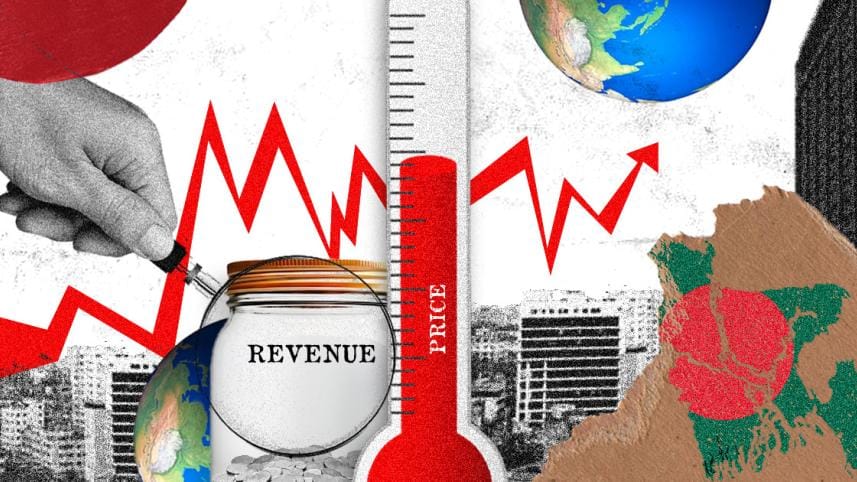
"We live in an unequal, unstable and unsustainable world."
The statement may sound simple, but it has far-reaching implications. Although it paints a broad-brush picture of the contemporary world, the reality is that for quite some time, the world has been facing multiple mutually reinforcing crises, occurring all at the same time.
 For all latest news, follow The Daily Star's Google News channel.
 Besides, inequality, instability, and unsustainability are interdependent: persistent inequalities in a society may result in instability, while instability in a country may give rise to unsustainability. Furthermore, inequalities, which operate on many planes—political, economic, social, cultural—might manifest not only in terms of outcome, such as income and wealth, but also in areas of opportunities in basic social services, such as education and health. Similarly, the instabilities may arise from conflicts and wars, both within and outside countries, as well as from economic shocks, recessions and meltdowns. Finally, sustainability is not just limited to the environment only; political, economic and social sustainability are equally important.
If we consider global income and wealth, the world is appallingly unequal. The top 10 percent of the global population makes 52 percent of the world's income, while the bottom 50 percent makes only eight percent of it. The contrast is even starker in wealth. The top 10 percent of the global population owns 76 percent of the global wealth, while the bottom half of humanity owns a meagre two percent of it. Similar trends would be observed regionally or at the country level. Such inequalities have three critical implications.
First, the scenario reflects unequal access to productive resources, social services and other economic and social opportunities. However, it is also the result of the dominance of one group in controlling resources and services. In other words, such inequalities are indicative of economic division and social hierarchies globally. Second, persistent and worsening inequalities create despair and frustration among the people. Those who are deprived see inequalities as a manifestation of injustice, which can evoke anger and frustration. If pushed to the extreme, inequalities may result in social and political instability. Third, inequalities weaken the social fabric, damage social cohesion and create fragility nationally and globally. Inequalities thus dampen the economic and socio-political sustainability of societies.
Meanwhile, wars and conflicts, in most cases, give rise to global instability. Due to differences in definitions and tracking methods, there is no single agreed-upon number for ongoing wars or conflicts. However, there are some estimates. The Global Peace Index notes that there are 59 state-based conflicts, the highest number since World War II. The International Committee of the Red Cross (ICRC) reports over 120 armed conflicts, with a significant increase in non-international conflicts. Sub-Saharan Africa continues to experience the highest number of conflicts classified as full-scale wars. Civilians are bearing the brunt of these conflicts. Over 58,700 civilians have already been killed in wars last year, with civilian fatalities in the Occupied Palestine Territory accounting for nearly one third of the global total.
Economic instability also characterises the global economy. It is partly due to wars and conflicts around the globe, but partly because of the global tariff hikes by the United States. Countries of the world are also moving more to something called "economic nationalism," where the focus is more on unilateral approach, rather than multilateral action; bilateral dealings are being chosen over multilateral negotiations; policymakers are leaning more towards closed economy, rather than openness. All these have been infusing elements of uncertainty in the global economic system, making it unstable and vulnerable.
Global instability, whether originating from wars, conflicts, or economic turmoil, does not impact the different groups of people in a society equally. Well-off people have many cushions to protect them from global instabilities, or at least to minimise their negative impacts. But the poor and the marginalised become even more vulnerable under unstable global conditions as they lack monetary or institutional shields. It is now well-documented that various groups of society are asymmetrically affected by wars and conflicts. For example, women and children are often used as weapons of war and form the main group of war casualties. Similarly, the poor and the marginalised groups not only suffer the most during economic shocks, but they also take more time and find it more difficult to bounce back. Thus, the impacts of instability are asymmetrical across different groups of people in countries.
In the world today, there are 122.1 million people—almost equal to the population of Japan—who have been uprooted from their homes and are currently homeless. These people have been forced to flee from their homes because of wars, conflicts and violence, fear of life, violation of human rights, or breakdown of law and order in their communities. Out of the forcibly displaced people, 42.7 million are refugees in countries other than their country of origin and 73.5 million are internally displaced people (IDPs) within their own countries.
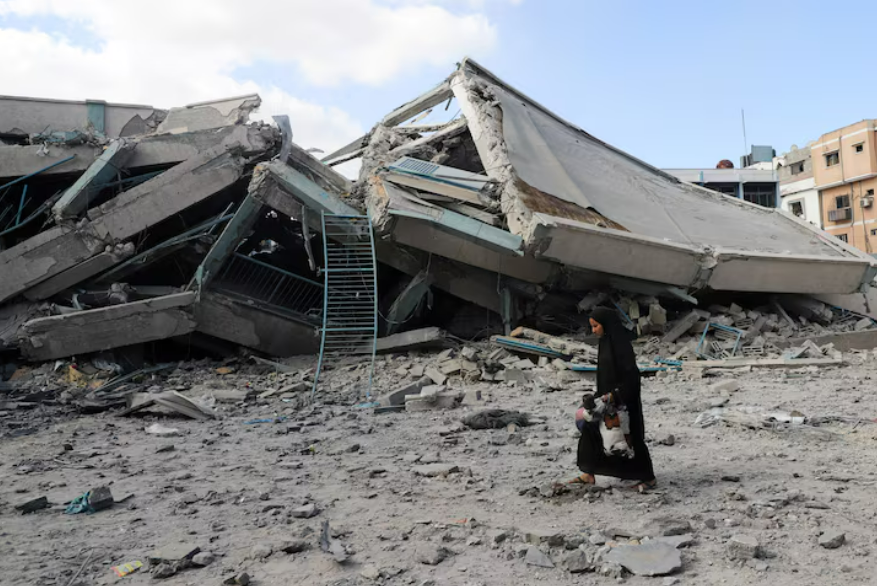
Globally, an estimated 1.2 billion people are at high risk from climate hazards like heatwaves, floods, and droughts. Every country is affected by environmental degradation, though the specific impacts and vulnerability levels differ. An estimated three billion people globally are impacted by land degradation, and over 200 million people will be displaced within their countries by 2050 due to the slow onset of environmental changes and disasters.
All these phenomena not only impact the environmental sustainability of our planet, but also affect the global inequality and instability. The burden of environmental impacts is borne unequally by the marginalised population of the world, and climate change impacts poor countries more than the rich ones. Besides, the fact remains that those who are affected the most by climate change are not responsible for creating it. The inertia of the developed world to help the affected countries through climate funding frustrates the developing countries and makes the relationship between the developed and the developing world tense.
In the ultimate analysis, since all the multiple crises of inequality, instability and unsustainability are interrelated and mutually reinforcing, tackling them will require a coordinated approach. The world has little choice left but to adopt such an approach, with all countries working together. Without this, the future of our world would be at stake.
Selim Jahan is former director of the Human Development Report Office under the United Nations Development Programme (UNDP) and lead author of the Human Development Report.
Views expressed in this article are the author's own.
Follow The Daily Star Opinion on Facebook for the latest opinions, commentaries, and analyses by experts and professionals. To contribute your article or letter to The Daily Star Opinion, see our guidelines for submission.
Comments