


The state must shun the machinery of erasure

A harrowing final report by the Commission of Inquiry on Enforced Disappearances again confirms that this heinous practice under the Sheikh Hasina regime was not an aberration but a deliberate tool used against political opponents. The findings of the commission, submitted to Chief Adviser Prof Muhammad Yunus on Sunday, also negate the notion that these abductions were the work of rogue officers. What emerges instead is a tightly coordinated system of political purging where disappearance became a primary instrument to silence dissent and physically eliminate opposition.
The commission verified 1,569 cases, although it estimates the real number may exceed 6,000. The pattern disclosed is unmistakable: nearly 97 percent of victims with known political affiliations belonged to opposition parties. For Jamaat-e-Islami and its student wing, it was particularly harrowing. They accounted for 75 percent of political victims, their members repeatedly cycled through secret detention and the criminal justice system, a process designed to harass, exhaust, and neutralise. For BNP, the principal challenger to Awami League's dominance, the objective was equally sinister. Though fewer in number, BNP activists constituted 68 percent of those who "never returned."
 For all latest news, follow The Daily Star's Google News channel.
The victim list thus reads more like a curated hit list, with the overwhelming concentration of disappearances among Jamaat, BNP, and their affiliates laying bare the operation's true nature. This was indeed systematic targeting by an authoritarian regime. As Awami League tightened its grip on power, the pace of disappearances accelerated, peaking at 215 cases in 2016. This unfolded as the security apparatus operated with near-total impunity, and continued through 2017 and 2018, hollowing out the opposition ahead of the elections. For three consecutive years, to put the scale in perspective, the state abducted nearly one person every two days.
Such an extensive programme of erasure could not have functioned without the corrosion of the entire security establishment. Rab, for example, became the regime's execution arm. Intelligence agencies, including DGFI and Detective Branch, worked in concert, coordinating cross-agency abductions that the inquiry commission concludes could not have occurred without explicit authorisation from the Prime Minister's Office. The "centralised style of decision-making" implicates Hasina directly. It means the orders did not merely end at the top; they often began there. The regime also constructed fictitious stories to disguise political cleansing as law enforcement. Sometimes victims killed in mangrove forests were labelled "pirates"; those in coastal regions were branded "drug dealers." These fabrications lent legal camouflage to extrajudicial executions.
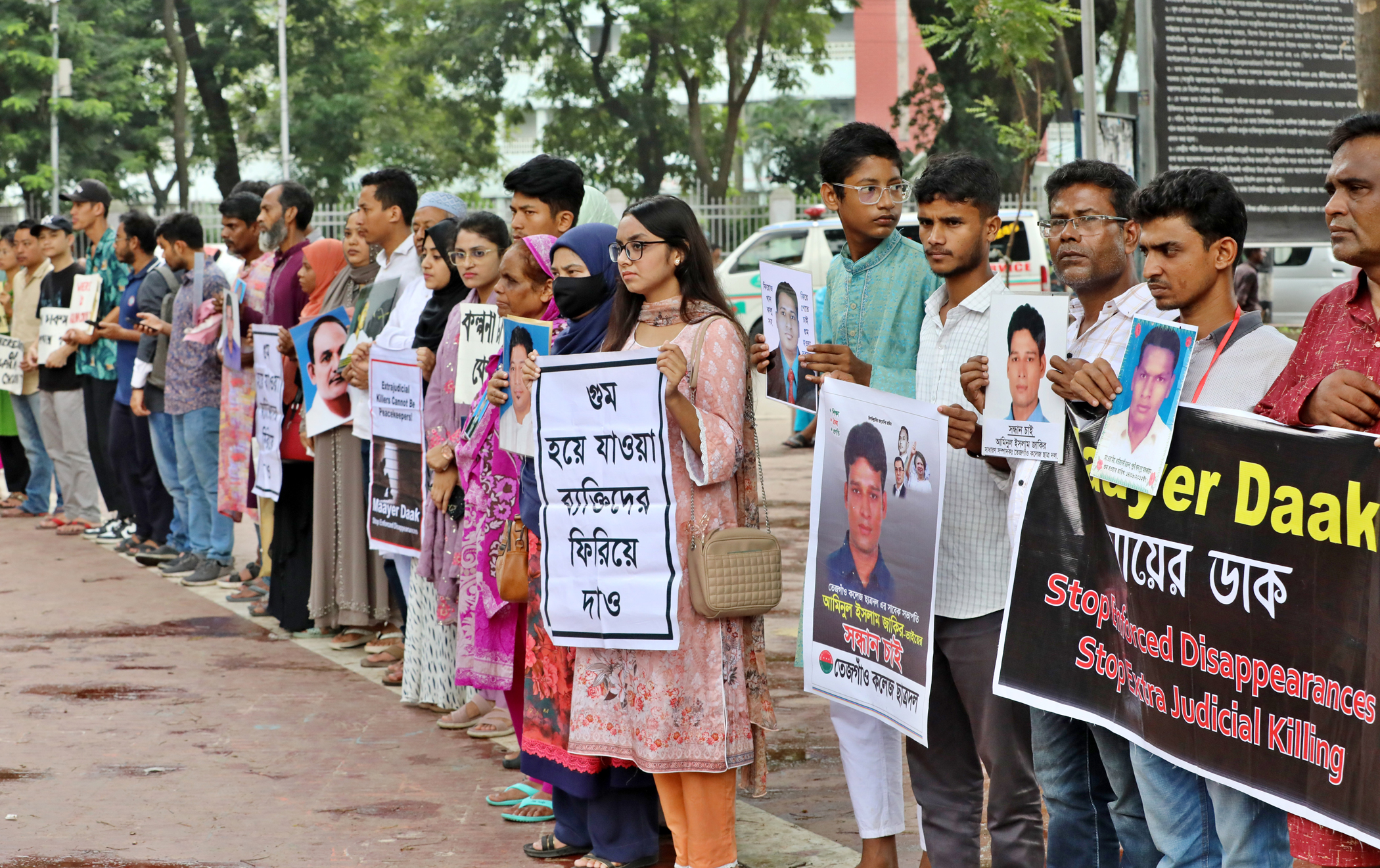
The chief adviser has rightly credited the inquiry report for documenting the "collapse of democratic institutions." It is also a moral indictment of a state that abandoned its role as guardian and became a predator of its own citizens. The task now is to dismantle this culture of impunity that allowed people to vanish without a trace or accountability. The lesson could not be clearer—when state machinery is politicised, it ceases to serve the public and becomes an instrument of terror, leading to gross human rights violations. Future elected governments must shun these practices entirely.
Comments