


Preventable deaths on roads must stop
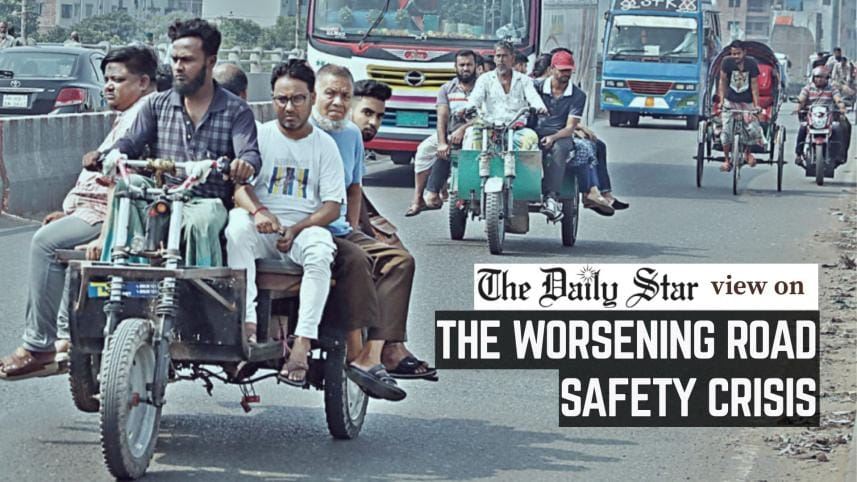
We are shocked and dismayed by the latest road crash data released by Bangladesh Jatri Kalyan Samity, revealing that at least 9,111 people were killed in 2025. According to their report, there were 6,729 road crashes last year, injuring a further 14,812 people. Beyond statistics, these numbers represent real lives lost and the persistent failure of the state to protect citizens on its roads. Road crashes are entirely preventable, yet they remain one of the most serious threats to public safety in Bangladesh. Students, transport workers, drivers, and teachers were among the victims of this catastrophe.
What is also alarming is the economic cost. Road crashes are estimated to drain around Tk 60,000 crore from the economy every year. This loss, stemming from deaths, injuries, medical expenses, and productivity setbacks, is a heavy burden on Bangladesh and its already-strained public services. Yet, road safety continues to be treated as a peripheral issue rather than a national priority.
 For all latest news, follow The Daily Star's Google News channel.
Compared to 2024, crashes rose by nearly seven percent, deaths by almost six percent, and injuries by a staggering 15 percent. Given the known politicised nature of the transport sector under the previous government, we had hoped that there would be significant changes in governance, enforcement, and accountability under the interim government. Instead, the numbers have worsened along with the everyday risks faced by ordinary citizens. Despite a change in power, the policies governing road transport remain largely unchanged. Poor enforcement, unfit vehicles, untrained drivers, dangerous overtaking, flawed road design, and a culture of impunity continue unchecked. Meanwhile, fare extortion and the dominance of owners' associations have made daily travel both unsafe and expensive.
What makes this situation even more unacceptable is that solutions are well known and have been discussed and publicised over many years. The Bangladesh Jatri Kalyan Samity has identified a number of causes of road crashes and put forward concrete recommendations over time. These include increasing the road safety budget, establishing a road safety wing under the Ministry of Road Transport and Bridges, strict enforcement of the mandatory training of drivers at BRTA-approved driving schools, and ensuring good governance in the transport sector by ending monopolies of owners' associations, corruption, irregularities, and extortion. We urge that these recommendations be taken seriously. As the country moves towards another national election, political parties must commit to road safety reforms and improved public transport in their manifestos to curb the loss of lives from road crashes.
Comments