


Persistent violence must be reined in
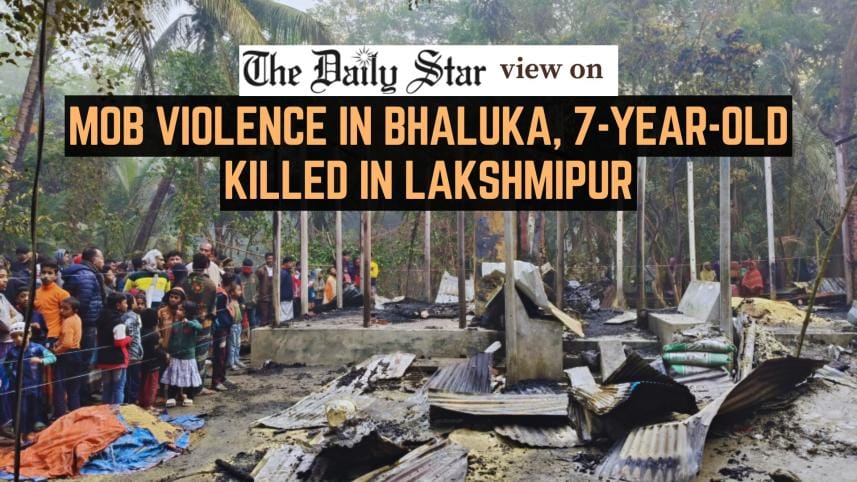
We are deeply alarmed by the terrifying speed with which law and order is fraying, and we unequivocally condemn the authorities' failure to halt this slide. This lawlessness was again on full display in two atrocities committed less than 48 hours apart—one in Mymensingh, the other in Lakshmipur—united by their sheer, uninhibited brutality.
 For all latest news, follow The Daily Star's Google News channel.
On Thursday night, outside a knitwear factory in Bhaluka, a small industrial town in Mymensingh, a mob bayed for the blood of Dipu Chandra Das, a 27-year-old employee falsely accused of "hurting religious sentiments." Inside, factory staff feared for the safety of their building. Their decision was morally repugnant as the worker was forcibly ejected from the premises to "protect the factory." The mob promptly beat him to death, hung his body from a tree on the Dhaka-Mymensingh highway, and set it on fire. The horror of the lynching is compounded by its baselessness. The Rapid Action Battalion later confirmed there was no evidence—digital or otherwise—against the worker. It now appears he was murdered over a rumour. But the guilt extends beyond the mob. The decision by factory management to hand a worker over to a violent crowd is grotesque. It suggests that factory managers have become complicit in the barbarism outside their gates.
This ghastly spectacle is not an isolated incident but part of the prevailing anarchy in the country. On Saturday in Lakshmipur, the target was a politician. Belal Hossain, a local leader of the Bangladesh Nationalist Party, was asleep when unidentified assailants locked his family from the outside and set their home ablaze. Belal narrowly survived, but his seven-year-old daughter, trapped in the inferno, did not. Two other daughters are now in a burn unit, severely injured and fighting for their lives. There is nothing that can excuse such depravity. Locking a family inside a burning home is an act of barbarism that transcends any claim of political rivalry.

Taken together, these atrocities paint a terrifying picture for the interim government as it prepares for a national election in less than two months. It must be careful as violence has been evolving and changing colour. In Lakshmipur, it appears to be a political vendetta executed with extreme cruelty. In Mymensingh, it was the weaponisation of religious sentiment, where an accusation alone has become a death sentence.
This lawlessness must be met with unyielding resolve. The prompt arrest of seven suspects in the Mymensingh case is a start, but it is reactive. The government must make it unequivocally clear that neither mobs nor arsonists will find sanctuary in the chaos of transition. It is the state's paramount duty to ensure that citizens are protected from such brutalities and intimidation. Bangladesh stands at a perilous juncture. The authorities must arrest this slide into lawlessness and ensure that the rule of law is not supplanted by the rule of the mob. The culture of impunity must be crushed.
Comments