


A marine crisis we can no longer ignore
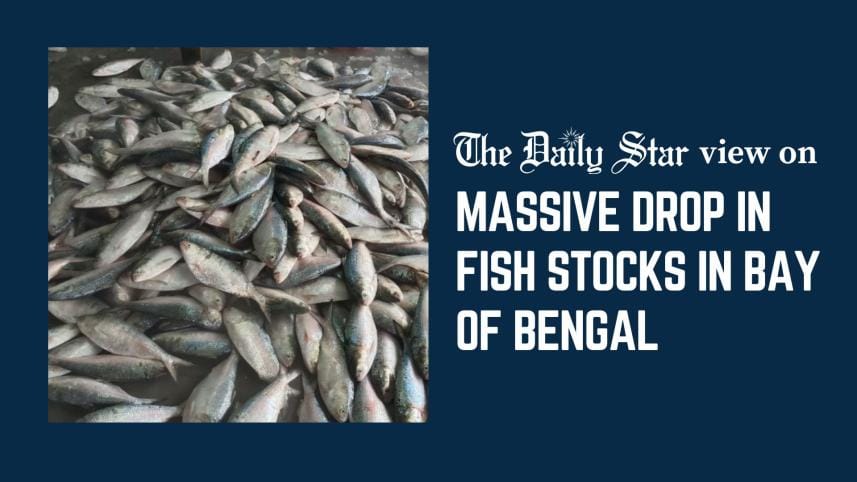
Bangladesh is facing one of the most substantial declines in marine fish stocks in its history. According to a new comprehensive fisheries survey, the stock of small pelagic species in the Bay of Bengal has dropped by a staggering 78.6 percent in just seven years—from 158,100 tonnes in 2018 to only 33,811 tonnes in 2025. This collapse follows earlier warnings, including the 2019 Department of Fisheries assessment, that categorised several species, such as tiger shrimp, Indian salmon, and large croakers, as severely depleted. Overfishing remains the central driver of this transformation: the number of commercial trawlers has nearly tripled since the mid-1980s, from around 100 to 273, putting heavy pressure on the bay's fragile ecosystem. Officials and surveyors caution that the shrinking number and size of commercially important species reflect a marine environment under acute stress.
The recent findings also point to deeper patterns of ecological disruption, with excessive and unregulated fishing, improper use of technology on industrial trawlers, rising microplastic pollution, and depleting oxygen in coastal zones—all playing a part in it. The survey recorded 418 microplastics, mapped abnormal jellyfish proliferation across the trawl stations, and observed that bycatch and wastage have increased due to poor monitoring. Notably, of the country's 20 major commercial fish species, only five are now viable for harvest, down from nine in 2018. Experts have repeatedly warned that without effective management, Bangladesh risks losing both biodiversity and the marine resources on which coastal communities depend.
 For all latest news, follow The Daily Star's Google News channel.
 This accelerating degradation, we must say, is largely a consequence of policy failures. Despite years of warnings, licences for industrial trawlers have continued to rise while monitoring mechanisms remain weak. Of the 273 industrial trawlers currently operating, 72 use advanced technology, yet its misuse has worsened bycatch. Oxygen depletion, high concentrations of microplastics, and collapsing pelagic stocks have all combined to threaten not only fish populations but also long-term food security, livelihoods, and the credibility of state-led conservation commitments.
We urge the government to take this crisis seriously. Going forward, the issuance of new trawler licences should be strictly limited, and the total fleet size must be reduced in phases. Industrial trawlers using illegal nets or violating designated zones should also face immediate suspension. Equally importantly, the state's marine research capacity must be strengthened to ensure continuous monitoring and informed policymaking. Protecting our marine resources is no longer an environmental preference; it is an economic and ecological necessity that demands urgent response and sustained commitment.
Comments