


Make tobacco products pricier
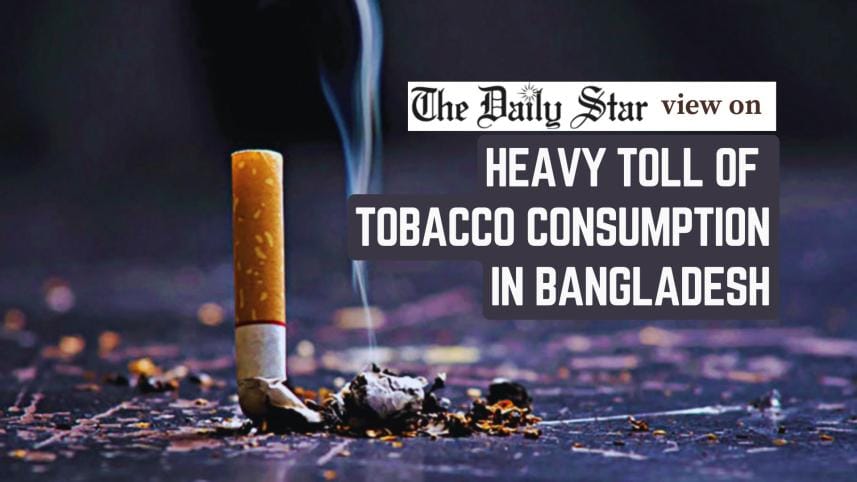
We are deeply concerned by the staggering economic toll of tobacco use and production in Bangladesh. A new study by the Institute of Health Economics at Dhaka University shows that the losses caused by tobacco far exceed the revenue it generates. According to the findings, tobacco cost the country Tk 87,544 crore last year, more than double the approximate Tk 40,000 crore earned from tobacco taxes in FY 2023–24. The study further reveals that, far from contributing to the economy, tobacco depletes national resources, intensifies health crises, and accelerates environmental degradation.
According to a recent World Health Organization report, although tobacco use in Bangladesh has declined over the past 15 years, it still exceeds both the global and South-East Asia regional averages, an alarming reality that demands urgent intervention. Another study by Bangladesh Medical University (BMU) found that the slow pace at which tobacco use is decreasing in the country will make it difficult to achieve the UN-set target of reducing consumption by 40 percent by 2030. Against this backdrop, the new findings underscore that the government must strengthen its tobacco-control policies and take decisive action to curb consumption.
 For all latest news, follow The Daily Star's Google News channel.
Reportedly, health-related costs alone amounted to Tk 73,063 crore, including Tk 30,771 crore in direct medical expenses and Tk 42,292 crore in productivity losses. Added to this are environmental damages worth Tk 14,525 crore—resulting from marine pollution, greenhouse gas emissions, waste clean-up, deforestation, and other ecological harms linked to tobacco cultivation and manufacturing.
Equally troubling is the availability of tobacco, particularly to the youth. A study, conducted by the Power and Participation Research Centre (PPRC) on 121 schools across four divisions, found an average of 5.5 tobacco points of sale (POS) within 100 metres of each school. Nearly 70 percent of these POSs advertised tobacco products, while 21 percent actively promoted them to attract students. Moreover, the widespread sale of flavoured cigarettes and single sticks demonstrates the industry's aggression in targeting children. The placement of tobacco beside candies and toys in 66 percent of shops further exposes the manipulative marketing tactics at play.
The government must, therefore, impose a comprehensive ban on POS advertising, prohibit flavoured cigarettes, and end single stick sales. Taxes on tobacco products must be substantially increased to create real deterrence. Without decisive action, the country will continue to lose far more than it gains from this industry. Most importantly, protecting the youth is a national responsibility which should be backed by stronger laws and a more effective tax structure that makes tobacco products less affordable.
Comments