


Israel must let medical supplies enter Gaza
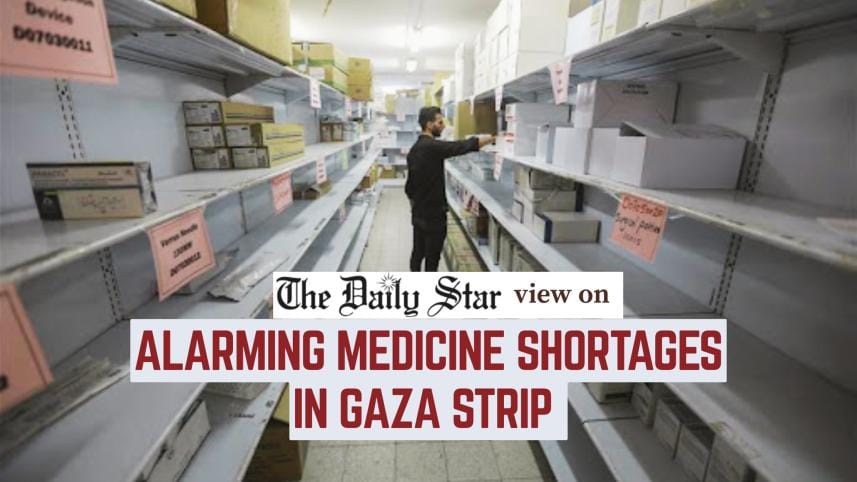
As Israel continues to violate the ceasefire and block urgent humanitarian aid to the war-ravaged Palestinian territory, Gaza has been suffering from an acute medicine shortage, which is making it difficult to provide diagnostic and treatment services to its people. According to Gaza's ministry of health, more than 52 percent of essential medicines are now completely out of stock in Gaza, alongside 71 percent of basic medical consumables and nearly 60 percent of laboratory and blood bank supplies. Emergency departments are running dangerously low on intravenous fluids, antibiotics, and painkillers—the bare minimum required to treat the wounded and critically ill. The situation is deeply alarming.
During Israel's more than two-year-long genocidal war, almost all of Gaza's hospitals and healthcare facilities have come under attack, resulting in damage to at least 125 health facilities, including 34 hospitals. Health authorities are now struggling to save lives, as Israel is not allowing the most essential medical supplies to enter the enclave. Meanwhile, Israeli authorities have breached the ceasefire at least 875 times since it came into effect on October 10, according to Gaza's Government Media Office. These violations include ongoing Israeli air and artillery strikes, the illegal destruction of Palestinian homes and other civilian structures, and at least 265 incidents of Israeli troops shooting Palestinian civilians. Since the ceasefire took effect, at least 411 Palestinians have been killed and 1,112 others injured in attacks across Gaza. Clearly, for Palestinians, neither safety nor access to life-saving treatment or aid has materialised under the ceasefire.
 For all latest news, follow The Daily Star's Google News channel.
 Israel's refusal to allow tents, blankets, and other supplies into Gaza is directly threatening Palestinian lives. Winter storms have compounded the crisis, as hundreds of thousands of displaced families face increased risks of illness while hospitals lack the means to respond. Reportedly, since the ceasefire began, only 17,819 aid trucks have been allowed into Gaza, out of the 43,800 that were meant to enter. This translates to an average of only 244 trucks per day, far below the 600 daily deliveries Israel had committed to permit under the ceasefire deal.
Under international law, Israel, as the occupying power, is obligated to ensure Palestinians' access to medical care. Blocking or severely restricting medical supplies while continuing military operations constitute a grave violation of this responsibility. A ceasefire that does not guarantee unhindered humanitarian and medical access is a ceasefire in name only. We, therefore, urge the UN and the international community to take a strong stance against Israel's restrictions on humanitarian aid. They must act decisively to stop ceasefire violations and ensure immediate and sustained flow of medicines and medical supplies into Gaza.
Comments