


An independent police commission at last
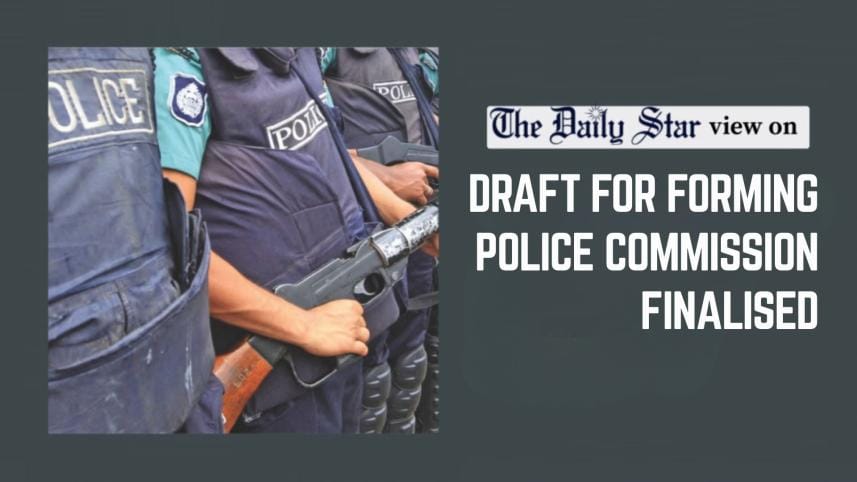
We welcome the government's finalisation of a draft ordinance for forming an independent police commission that aims to ensure accountability within the force and help make it more people-friendly. After decades of politicisation of the police by successive governments, particularly the Awami League regime, the prospect of having a truly professional force that upholds human rights gives us hope. In the wake of severely diminished public trust in the police, as well as low morale within the force itself, this is urgently needed.
According to our analysis of a copy of the draft Police Commission Ordinance 2025, one of the most important functions of the commission will be to investigate citizen complaints against police officers, determine responsibility, and take appropriate action, ensuring the confidentiality and safety of the complainants. It will also have the authority to prevent abuse of power by the police. The politicisation of police in Bangladesh has long been a serious concern as it led to clampdowns by successive governments to repress political opponents and dissenting voices. Among the tools used for that purpose were false cases, arbitrary incarceration, extrajudicial killings, enforced disappearances, etc. Politicisation also created a culture of impunity within the force, providing the scope for unbridled corruption and crimes, including extortion and bribery.
 For all latest news, follow The Daily Star's Google News channel.
This culture must end, and an independent commission represents a real opportunity to finally begin reversing it. According to the draft ordinance, the commission will have several units to ensure that complaints are handled properly. The police will be required to set up an internal system to handle complaints within 90 days. If a citizen still feels their case has not been handled fairly, they can appeal within 30 days to a divisional Police Accountability Unit, which must then resolve the complaint within 60 days. Another body will hear appeals against the unit's decisions within 30 days and will have the authority to initiate investigations, summon witnesses, and publish outcomes. A separate Police Grievance Redress Board will address complaints from police personnel regarding unfair treatment, transfers, promotions, or disciplinary actions.

Of course, the success of all this will ultimately depend on the political will of future governments and the sincerity of those in charge. The demand for such a commission has existed for many decades, but proposals have repeatedly been met with bureaucratic resistance. An ordinance can become law only after parliament passes it, and a law is meaningful only when the administration sincerely enforces it. We expect all political parties to commit themselves to upholding the mandate of this commission if elected to power. A professional police force, free of undue influence, is a basic requirement for good governance.
Comments