


Govt must act now to curb air pollution
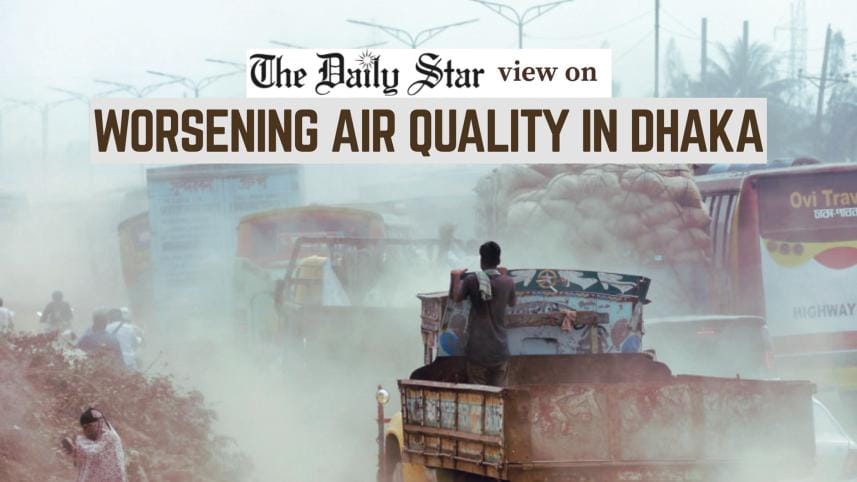
With the arrival of winter, air pollution in Dhaka and across the country has once again reached hazardous levels. On Sunday morning, Dhaka was ranked as the world's third most polluted city, with an Air Quality Index (AQI) of 216. Classified as "very unhealthy," such air poses serious risks to children, the elderly, and people with heart or respiratory diseases. This should set off alarms at the highest levels of the government. Unfortunately, while this is every winter's grim reality, it is met with little to no action from the authorities.
While Dhaka is the hardest hit by air pollution, the rest of the country is also in a bad situation. Even more concerning is that air pollution is no longer just a seasonal problem; it affects us year-round, with Bangladesh ranked as the worst-affected country in South Asia, according to a recent World Bank report. The sources of pollution are well known: industrial emissions, brick kilns, outdated vehicles, construction dust, household cooking, agricultural burning, and polluting power plants. Moreover, about 40 percent of Dhaka's pollution is reportedly transboundary.
 For all latest news, follow The Daily Star's Google News channel.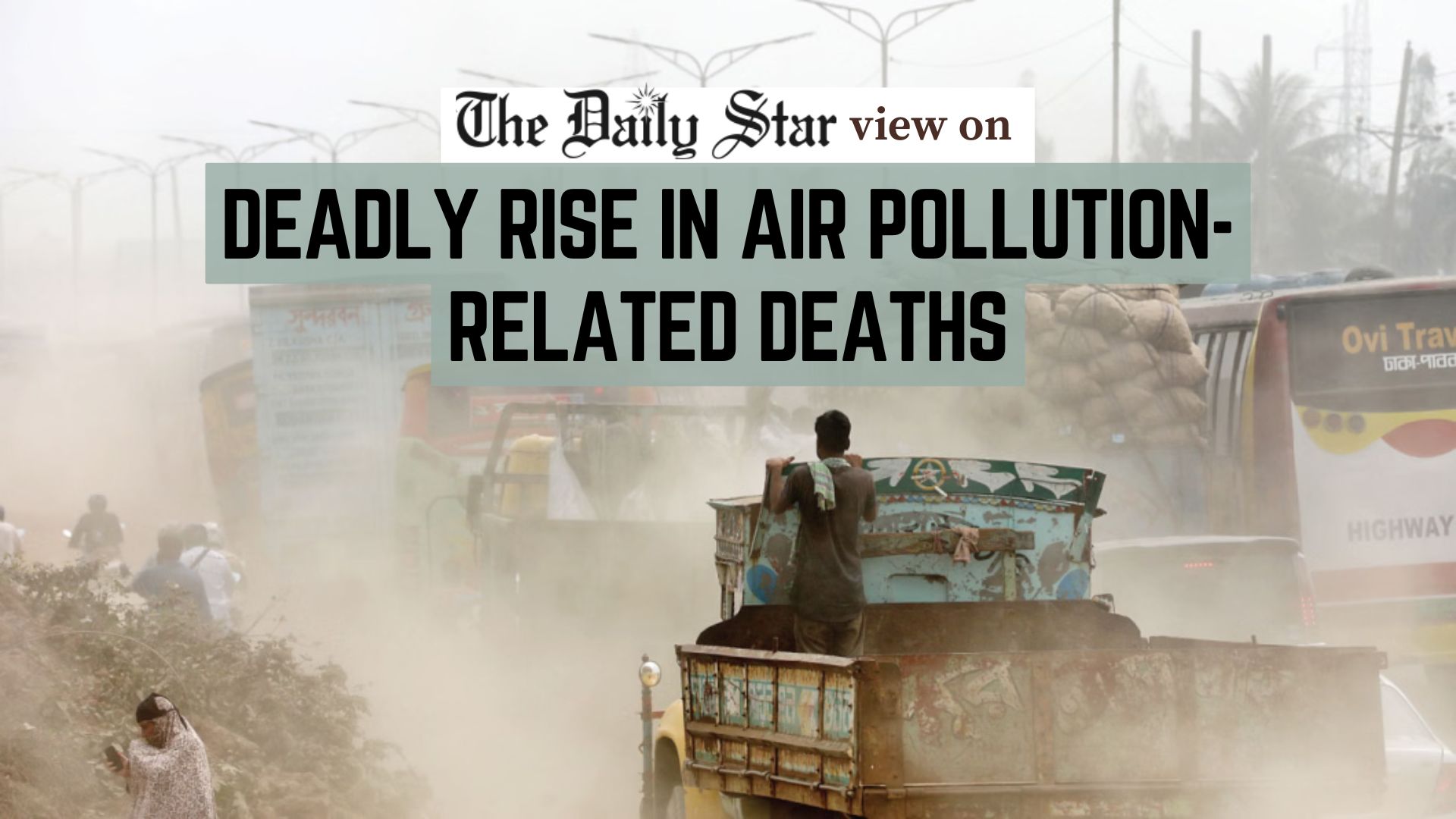
According to the World Health Organization (WHO), air pollution causes an estimated seven million premature deaths worldwide each year, primarily from stroke, heart disease, chronic obstructive pulmonary disease, lung cancer, and acute respiratory infections. Numerous studies over the years have shown that air pollution remains a silent, pervasive threat in the country. Yet the government's response remains lacklustre. While some initiatives were taken to shut down illegal brick kilns and promote environment-friendly alternatives, the goals have largely remained unfulfilled. Outdated vehicles continue to operate on city streets, and hundreds of construction sites remain uncovered, contributing heavily to dust pollution.
The impact of these failures is devastating, particularly for children. According to the recent World Bank report, 100 percent of schoolchildren in Dhaka and nearby areas are exposed to unsafe levels of PM2.5, fine particulate matter that penetrates deep into the lungs and bloodstream. Alarmingly, even modest increases in PM2.5 are linked to learning losses equivalent to several weeks of schooling. But Bangladesh still lacks clear, systematic protocols, such as school protection measures or closure guidelines, during episodes of extreme pollution.
Air pollution has become a full-blown public health emergency, and the government must treat it as such. Ensuring access to clean cooking fuels, modernising industries and transport, improving fuel quality, and strictly controlling construction dust are urgent priorities. The government must also take immediate policy measures to protect schoolchildren from toxic air. Clean air is a basic right, and the government must act decisively to protect it.
Comments