


Chaos returns in Dhaka’s underworld
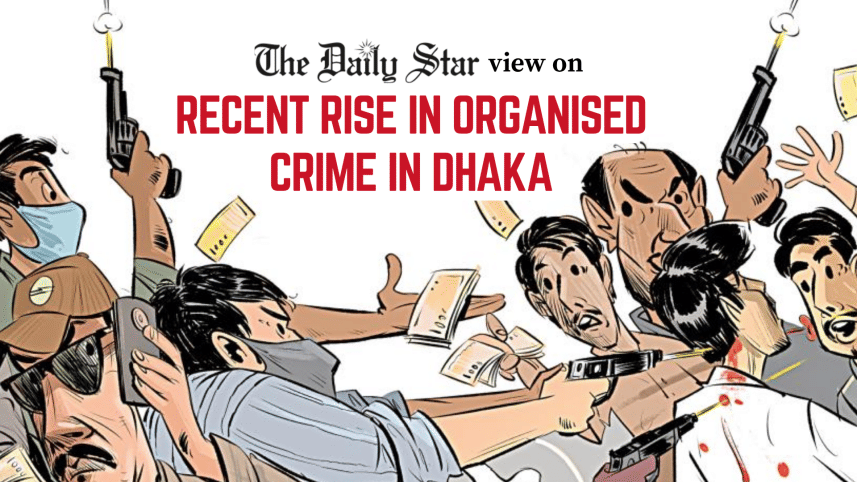
The recent spate of violence by criminal groups across Dhaka points to a dangerous resurgence of organised crime in the capital that is reminiscent of underworld activities more than two decades ago. A recent report by Prothom Alo reveals that the weak law and order following the political changeover on August 5, 2024, opened doors for organised criminals to make a comeback. Many high-profile criminals secured bail at the time. Now, many of them have unleashed a wave of violence across the city to carve out territories to control.
Over the past 21 months, there have been reports of at least 23 incidents involving professional criminals. Among these incidents, several killings were carried out in public. In the latest incident, Khandokar Noyeem Ahmed Titon, a top criminal who had been out on bail on August 13, 2024, following a long stay in prison, was gunned down by rivals in the New Market area on April 28. In many of these cases, the victims were targeted by their rivals in a bid to remove competition in “business.” A number of them have some sort of political affiliation. Besides public execution, the criminal gangs are attacking establishments, issuing threats and making extortion demands—often via foreign numbers.
 For all latest news, follow The Daily Star's Google News channel.
 The report notes a pattern in these attacks that reflects a disturbing level of coordination and brazenness. Many of these incidents have been planned by fugitive kingpins abroad, communicated digitally, and executed by local gangs. Police say several local operatives are recruited from a pool of unemployed, vulnerable youths who are desperate for a source of income. These turf wars are rooted in a crime-driven economy where illegal income streams dictate power dynamics. Criminal groups are using violence as a tool to assert dominance, while ordinary businesspeople are silently enduring extortion demands, fearing retaliation and lacking confidence in legal protection.
A top police official confirmed to Prothom Alo that they were preparing an area-wise list of criminals and their associates, and would soon launch a “combing operation” against them. However, past experiences show that such operations often fail to root out this menace. Another failure on the police’s part was weak monitoring of criminals who were out on bail. The lack of proper monitoring, combined with a gap in law enforcement since August 2024, provided these criminals a fertile ground to regroup.
Dismantling these organised crime networks, therefore, requires a practical approach. What we expect law enforcement agencies to prioritise is better intelligence coordination to identify the criminals and their locations, cutting off their reach from beyond the border, shutting down the flow of funds that facilitate such criminal activities, and ensuring airtight monitoring of bail-released criminals. Beyond that, the links binding these criminals and their political patronage must be severed. In addition, awareness campaigns and employment opportunities must be urgently planned to prevent jobless youths from turning to criminal gangs to make a living.
Comments